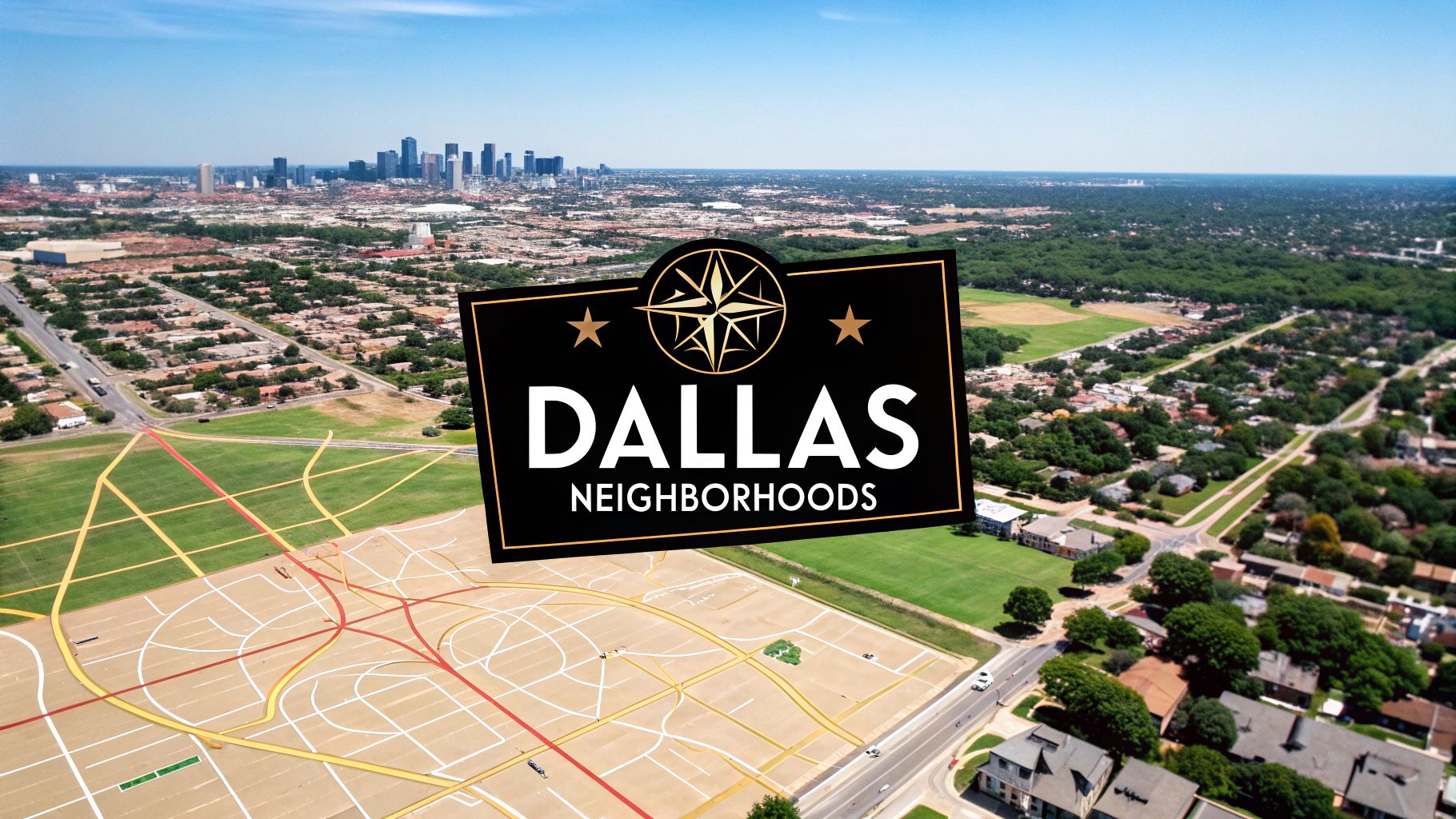
So, you want to get to know Dallas? The real Dallas, I mean. Forget what you think you know. This city isn’t just one big sprawl; it’s a living, breathing collection of unique communities, each with its own vibe, history, and story to tell. Our interactive map of dallas neighborhoods is your compass for this journey, helping you see the boundaries and get a feel for what makes each corner of Dallas, Texas, so distinct.

How to Use This Interactive Dallas Neighborhood Map
Think of this map as your visual sidekick while you read. It’s not just for finding streets. It’s designed to give you a real sense of place, connecting the dots between the city’s history, its growth, and the unique personality of every neighborhood we cover.
Dallas didn’t just appear overnight. It grew outwards from its downtown core, almost like ripples in a pond. This pattern created an incredible tapestry of communities, from the dense, high-energy urban heart to the quieter, more spread-out residential pockets further out. Grasping this basic layout is the first step to truly understanding the city.
Getting Started with the Map
Before you dive into the details, get the big picture. We’ve grouped Dallas into several major regions, and each one is home to a bunch of distinct neighborhoods. Play around with the map—zoom in, zoom out, click on different areas, and see how they all fit together.
As you read through the guide, keep the map handy. When we talk about a specific landmark or boundary, find it on the map. This turns names on a page into actual, tangible places.
You can’t talk about Dallas without talking about its dividing lines, both natural and man-made. Major highways like the Central Expressway and the Trinity River aren’t just for getting around; they’ve historically shaped the city, carving out separate economic and cultural zones that define the metroplex to this day.
To get you oriented, the table below gives you a quick rundown of the main regions in Dallas. It’s a snapshot to help you get your bearings before we go deep.
Dallas Regions at a Glance
Here’s a quick overview of the primary geographic areas within Dallas, highlighting their general character and key neighborhoods.
| Region | General Vibe | Notable Neighborhoods |
|---|---|---|
| Downtown/Central | The bustling urban core, packed with high-rises, arts, and history. | Downtown, West End, Arts District, Deep Ellum |
| East Dallas | Eclectic and historic, with a laid-back, community-focused feel. | Lakewood, Munger Place, Lower Greenville |
| North Dallas | Affluent and established, known for large homes and premier shopping. | Preston Hollow, Northwood Hills, Bluffview |
| South/Southeast Dallas | Rich in history and culture, with diverse communities and green spaces. | Oak Cliff, Bishop Arts District, South Dallas |
| West Dallas | A rapidly evolving area with a mix of industrial roots and modern development. | Trinity Groves, La Bajada |
This table is just your starting point. Now, let’s explore the history, evolution, and unique stories that make each of these communities tick.
So, How Are Dallas Neighborhoods Actually Defined?
Before you dive into the interactive map of dallas neighborhoods, let’s pull back the curtain on how these areas get their names and boundaries. Think of this as the unofficial legend for our map, explaining the forces—both seen and unseen—that have drawn the lines all across Dallas, Texas.
It’s rarely as simple as an official city sign. A neighborhood’s identity is a complex stew of city planning documents, deep-rooted historical divides, and the shared identity of the people who call it home. What a real estate agent markets as one area, a long-time resident might call something else entirely. It’s fluid, it’s layered, and it’s what makes Dallas so interesting.
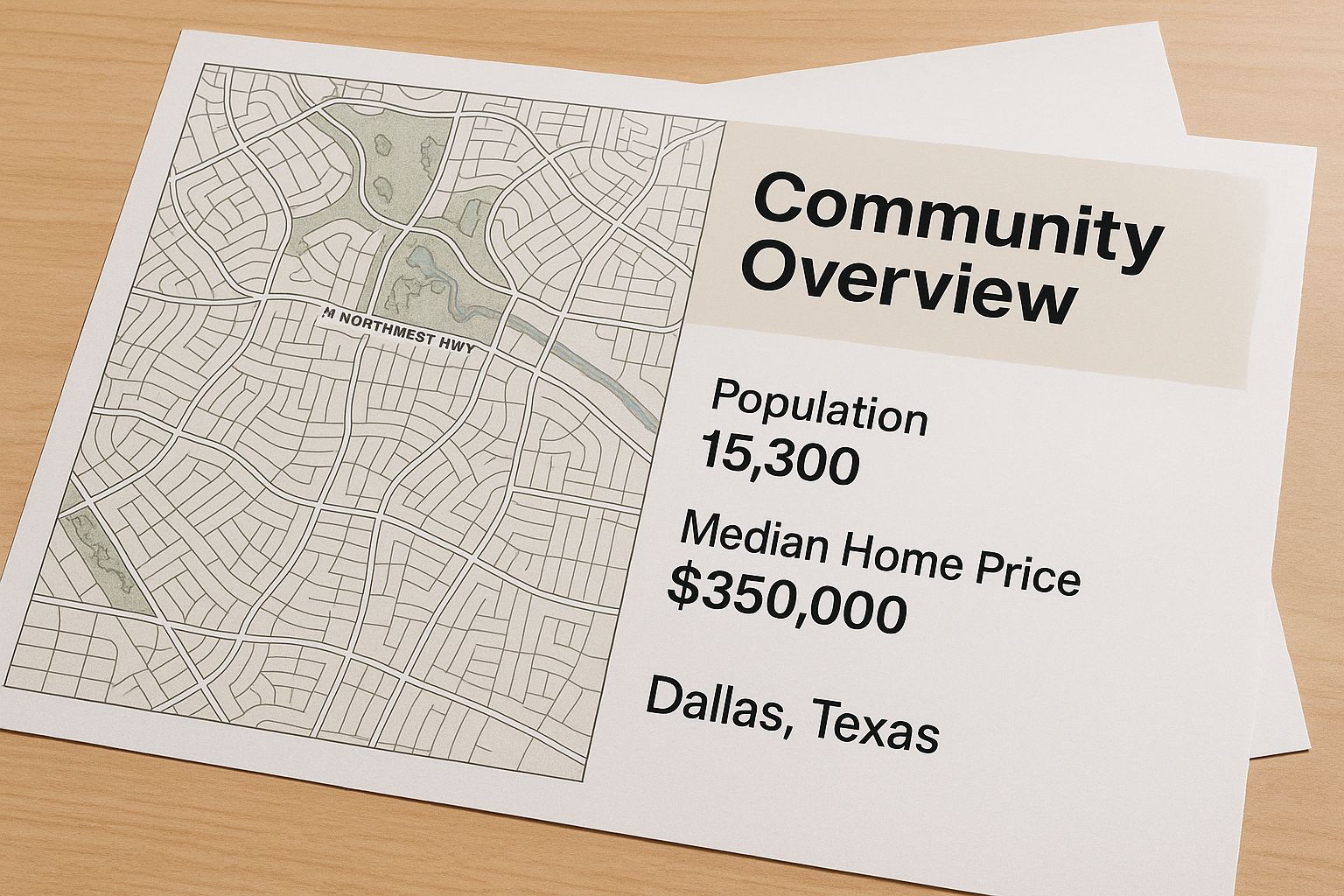
This blend of official designations, cultural identity, and geography is what gives each neighborhood its unique fingerprint.
The Role of Geographic and Man-Made Dividers
You can’t really get Dallas without understanding the massive geographic features and infrastructure projects that act as powerful, though often invisible, walls. They’re fundamental to the city’s layout.
- The Trinity River: This natural waterway has long separated West Dallas from the city’s core. That separation influenced its development from day one, creating a truly distinct identity for the communities on its banks.
- Central Expressway (US-75): It’s so much more than just a highway. When it was built, this massive artery sliced right through the city, creating a clear east-west divide that still impacts everything from property values to community character.
- Railroad Lines: Dallas’s early industrial growth followed the railroads. This led to the rise of entire neighborhoods like The Cedars, which were built specifically to support the industries that the tracks served.
These weren’t just barriers for traffic; they directed the flow of investment, culture, and residential life for decades.
A good way to think about it is that Dallas’s growth happened in concentric circles, expanding outward from the downtown core. A neighborhood’s character is often directly tied to how far it is from that original center, reflecting different eras of the city’s expansion.
A Mix of Official and Unofficial Lines
To truly get a feel for the city, you have to recognize that some lines are drawn in ink, and others are drawn in sand. Both are equally important.
For example, a Historic District like Munger Place has legally defined boundaries. They were created to preserve its stunning architectural integrity, and those borders are non-negotiable and officially recorded with the city.
Then you have an area like Lower Greenville. While everyone knows the main commercial strip on Greenville Avenue, the residential streets that people consider “part of” the neighborhood can shift from block to block. The boundaries are more porous, shaped by local culture and the ever-changing real estate market. This mix of hard and soft lines is what gives the map of Dallas neighborhoods its unique complexity and character.
The Historic Roots of East Dallas
To really get a feel for any map of Dallas neighborhoods, you have to look past the modern streets and see the history that shaped them. This is especially true in East Dallas, where the forward-thinking planning of the early 20th century forged community identities that are still incredibly strong today. This wasn’t random growth; it was growth by design.
If you could travel back in time, you’d see how some of Dallas’s most beloved residential areas came to be. Long before today’s sprawl, developers in East Dallas were trying out a new idea for the city: master-planned communities with very strict standards. It was about more than just building houses—it was about creating a specific lifestyle and architectural vibe.
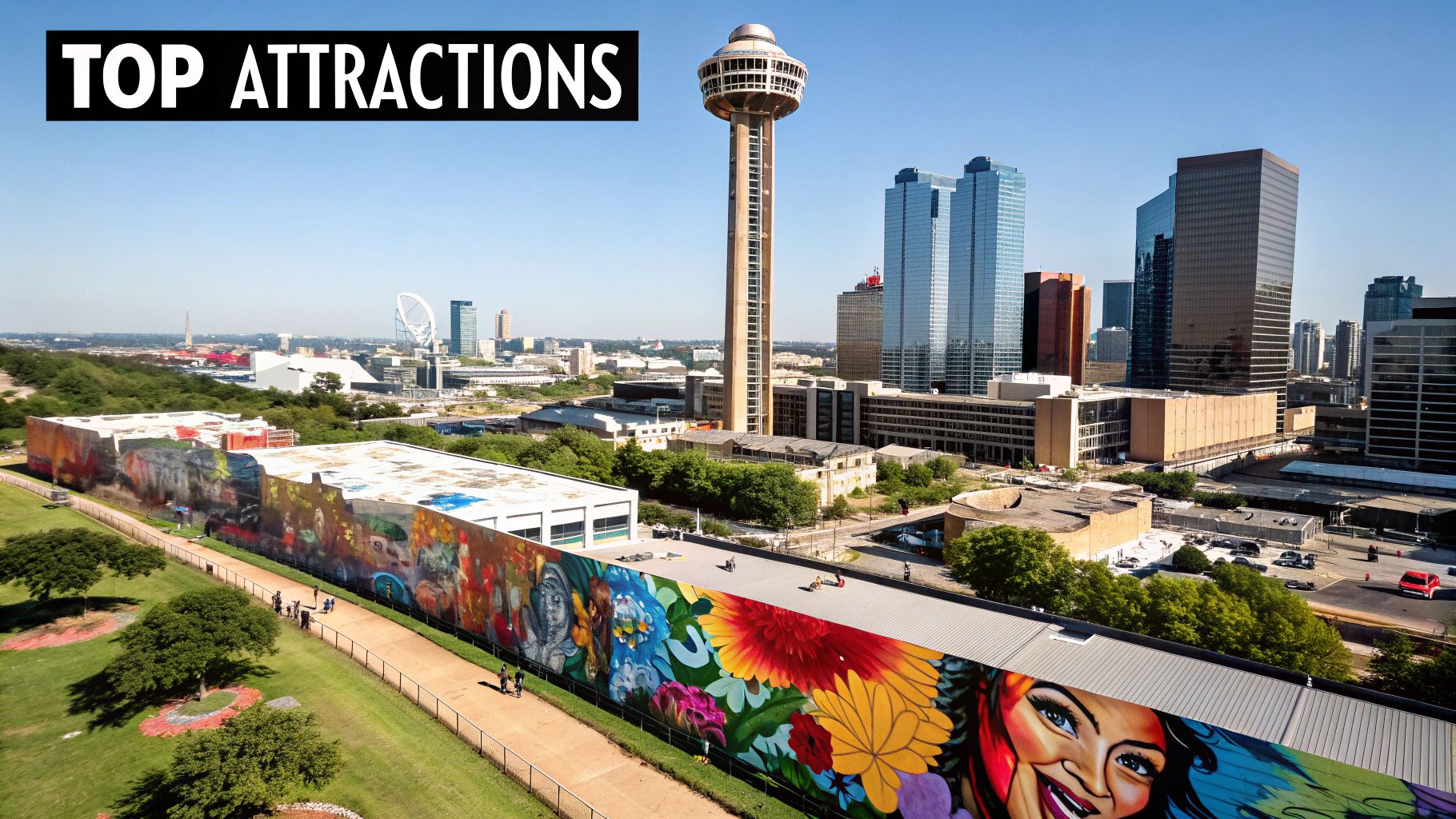
Those early decisions left a legacy of beautiful homes and a unique neighborhood character you can still feel today. They gave real meaning to the lines and names you see on a map, turning simple boundaries into symbols of a rich heritage.
The Birth of Master-Planned Dallas
Places like the Belmont Addition and Munger Place offer a fantastic window into this era. These weren’t just subdivisions; they were some of the first experiments in urban planning for Dallas.
Take the Belmont Addition, one of the earliest planned neighborhoods. In 1890, Colonel Henry Exall bought 170 acres and mapped out 624 lots. It became the city’s first deed-restricted neighborhood, with homes intentionally built on raised lots to give a sense of cohesion and privacy.
Just 15 years later, in 1905, Munger Place arrived as one of Dallas’s first true suburbs. Its founder, Robert S. Munger, pictured a highly exclusive community. He set demanding rules, like requiring all homes to be at least two stories and cost no less than $10,000—a fortune at the time and a clear signal of the upscale lifestyle he was selling.
This kind of vision cemented a unique identity for these areas. By setting architectural guidelines and minimum investment levels, the developers created a high-quality, consistent environment that has lasted for more than a century.
An Architectural Showcase
The real magic of these historic districts is their incredible architectural diversity. Walking through Munger Place or down the famous Swiss Avenue feels like stepping into a living museum of early 20th-century home design.
The planners of areas like Munger Place didn’t just sell lots; they sold a vision. They understood that architecture could forge a powerful sense of place, creating a lasting neighborhood identity that would transcend generations.
This is where the character of East Dallas truly comes alive. You’ll find an amazing collection of homes that tell the story of the city’s ambitions during its formative years.
- Craftsman Bungalows: Famous for their inviting front porches, low-pitched roofs, and handcrafted details, these homes embody a spirit of artistry and simplicity.
- Prairie Style: With their strong horizontal lines, hipped roofs, and open interiors, these houses were a distinctly American take on modern design.
- Tudor Revival: Known for their steep gables, decorative half-timbering, and brick or stone exteriors, these homes brought a bit of old-world English charm to Dallas.
This rich architectural mix was no accident; it was a central part of the master plan. The variety was encouraged within the established rules, creating a streetscape that is both interesting and cohesive.
The historic roots of these areas have a direct impact on the market today. For a deeper look, check out our expert tips for the 75206 market, where this legacy continues to attract buyers. This historical foundation is key to understanding why East Dallas neighborhoods remain some of the most sought-after in the city.
The Constant Reinvention of Central Dallas
While East Dallas was busy carving out its identity with master-planned communities, the neighborhoods clustered around the downtown core were on a completely different trajectory. Their story isn’t one of neat, linear development. Instead, it’s a constant cycle of reinvention, shaped by everything from industrial booms and the rise of the automobile to modern urban renewal projects.
If you look at a map of Dallas neighborhoods, you’ll see these central districts as distinct entities, but their histories are deeply woven together. They tell a fascinating tale of urban transformation. Many started as Dallas’s first residential enclaves, only to be swallowed by industry, sliced apart by highways, and then, decades later, rediscovered and reimagined.
No neighborhood tells this story better than The Cedars, just south of Downtown. By tracing its path, we can see how the very definition of a “neighborhood” can flex and change over time, pushed and pulled by economic forces and new ideas about city living.
From Quiet Community to Industrial Hub
The Cedars wasn’t always the edgy, arts-centric district it is today. Back in the 1870s, it was a peaceful residential pocket, named for the thick groves of cedar trees that dotted the landscape. In fact, it was one of Dallas’s very first elite communities—a desirable place to build a home just outside the commercial frenzy of the city center.
That all changed with the arrival of the railroad in the early 1900s. Where the tracks went, industry followed. The Cedars’ prime location next to a booming downtown made it irresistible for development. This pivot from a residential village to a mixed-use zone mirrors a pattern seen across major American cities as they industrialized. You can dive deeper into how these settlements evolved into districts to understand the broader context.
Cotton mills, candy factories, and other manufacturing plants began to pop up, completely altering the feel of the area. Grand homes were gradually torn down to make way for warehouses and industrial facilities, shifting the neighborhood’s identity from a place to live to a place to work.
The Impact of Highways and Suburban Flight
The next dramatic shift arrived in the mid-20th century with the construction of the interstate highway system. The massive expressways that now crisscross Dallas, like I-30 and I-35E, effectively carved up The Cedars, isolating it from Downtown and its neighbors.
This new physical separation, combined with the post-war obsession with suburbia, sealed the neighborhood’s fate. The highways made it easier than ever to live far from the city center and commute in, and most of the remaining residents packed up and left.
For decades, The Cedars became a forgotten no-man’s-land of industrial buildings and commercial zoning—a place people drove through, not to. Its original identity as a vibrant community was nearly wiped from memory, leaving behind a gritty landscape of brick warehouses and empty lots. It was a textbook case of the urban decay that hollowed out so many American city cores during that era.
Rebirth as a Creative and Residential Hub
But the story doesn’t end in decay. Starting in the 21st century, a new chapter began. A renewed interest in urban living and a craving for authentic, historic spaces sparked a revival.
Artists and creatives were the pioneers. They saw the potential in the sturdy, old brick buildings left behind by the industrial age. They began converting former factories and warehouses into lofts, studios, and galleries, breathing new life and energy back into the streets. This grassroots movement set the stage for a much larger transformation.
Today, The Cedars is once again a thriving mixed-use neighborhood, known for:
- Residential Lofts: Many of those historic industrial buildings have been beautifully repurposed into unique living spaces, attracting people who want character and a short walk to downtown.
- Arts and Culture: It’s now a bona fide hub for art galleries, creative businesses, and legendary music venues like the iconic Gilley’s.
- New Development: Alongside the lovingly preserved historic structures, new apartment buildings, restaurants, and entertainment venues have sprung up, creating a dynamic mix of old and new.
The evolution of The Cedars is a powerful reminder that the lines on a map are never set in stone. They capture just one moment in a long, ongoing story of change, decay, and rebirth that continues to shape the heart of Dallas, Texas.
How Infrastructure Transformed West Dallas
Let’s shift our focus across the Trinity River to a part of Dallas that tells a dramatic story of transformation. A quick look at the map of dallas neighborhoods shows that few areas have been so completely redefined by a single piece of infrastructure as West Dallas. For decades, this community was known for its industrial roots, physically and culturally cut off from the city’s core.
The story of modern West Dallas really pivots on one iconic piece of engineering: the Margaret Hunt Hill Bridge. When it was completed in 2012, this beautiful structure did more than just connect two pieces of land; it was like a spark that ignited a firestorm of investment, redevelopment, and rapid change that’s still shaping the area today.
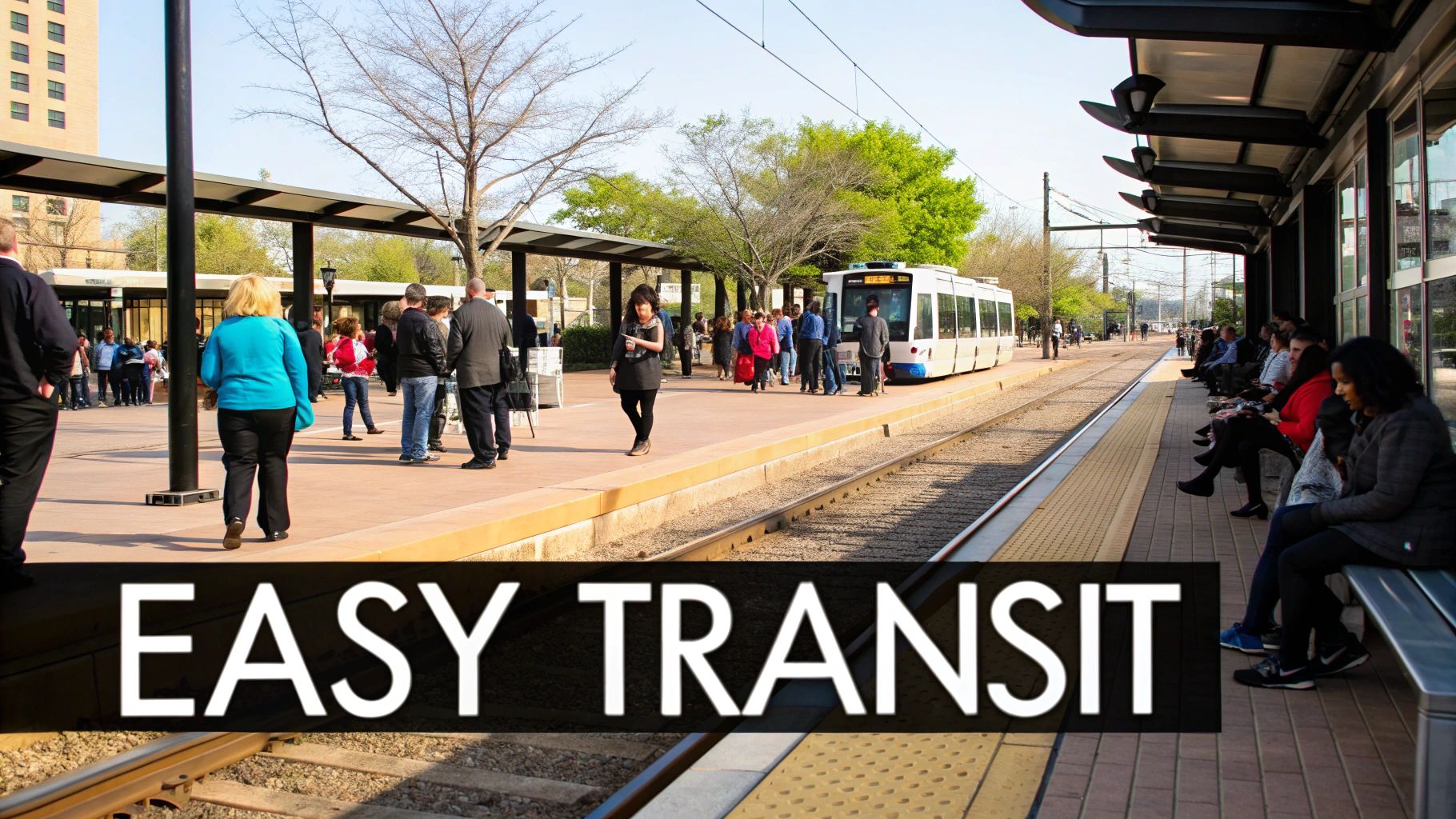
What’s happened here is a powerful case study in urban renewal. It’s a fascinating look at the complex relationship between a city’s history, its major infrastructure projects, and the identity of its communities.
A History of Migration and Industry
To really get what West Dallas is today, you have to look back at its past. The area’s story truly began around 1907 as a destination for workers looking for opportunity, many of whom were fleeing the Mexican Revolution. Pushed to the less-developed land across the river, they built a tough, resilient community from the ground up.
By the mid-20th century, however, West Dallas was grappling with serious economic and environmental issues as industry encroached further. This long history of being on the margins is what set the stage for the incredible changes that would eventually come.
The Bridge That Changed Everything
The Margaret Hunt Hill Bridge was the turning point. It wasn’t just another route—it was a symbolic and physical link to Downtown Dallas that simply hadn’t existed before. Suddenly, with this newfound accessibility, West Dallas was on the radar for developers and investors in a big way.
The bridge stands as a perfect example of how a single infrastructure project can fundamentally alter a neighborhood’s destiny. It didn’t just shorten a commute; it bridged a century-old divide and unleashed powerful market forces.
Of course, this new connection was a double-edged sword. While it certainly breathed new life and investment into the area, it also kicked development pressures into overdrive, creating complex challenges for longtime residents and the neighborhood’s original character.
The Rise of Trinity Groves and Modern Development
The most obvious result of this new era is Trinity Groves. This massive restaurant and entertainment complex literally rose from the ashes of the old industrial landscape. It quickly became a major destination, pulling in visitors from all over the Dallas-Fort Worth metroplex.
Its success kicked off a wave of even more development, including:
- New Residential Projects: Sleek, modern apartment buildings and townhomes shot up, offering brand-new housing options with killer skyline views.
- Retail and Commercial Growth: Where people go, businesses follow. Boutique shops, art galleries, and offices moved in, creating a much more vibrant, mixed-use environment.
- Shifting Demographics: The area has seen a major change in its population, as new residents are drawn to the prime location and all the new amenities.
This boom has its own unique West Dallas flavor. While the transformation has brought undeniable economic perks and fresh energy, it also creates a stark contrast with the community’s working-class, industrial history. The continuing evolution of West Dallas is a living lesson in the powerful—and often complicated—effects of urban renewal.
For those curious about diverse housing options across the city, from rapidly changing areas like West Dallas to more established communities, our Lake Highlands Dallas homes guide provides great insights into another unique corner of the city.
A Tour of Popular Dallas Neighborhoods
Let’s apply what we’ve learned and take a look at some of the most popular spots you’ll find on any map of Dallas neighborhoods. Think of this as a quick tour of four very different areas in Dallas, Texas, where you can see the city’s diverse character come to life.
This is a quick, scannable comparison to help you feel out the unique atmosphere, key landmarks, and typical homes in each area. It’s a real-world look at how moving just a few miles in Dallas can lead to a completely different living experience.
Dallas Neighborhood Snapshot
This table offers a comparative look at these prominent Dallas neighborhoods, helping you quickly understand their unique character and offerings.
| Neighborhood | Primary Atmosphere | Known For | Common Housing Types |
|---|---|---|---|
| Uptown | Urban & High-Energy | Walkability, Nightlife, M-Line Trolley | High-Rise Apartments, Luxury Condos |
| Bishop Arts | Creative & Independent | Boutiques, Art Galleries, Indie Restaurants | Craftsman Bungalows, Tudor Cottages |
| Deep Ellum | Edgy & Artistic | Live Music Venues, Street Art, Gritty Vibe | Converted Lofts, Modern Apartments |
| Preston Hollow | Secluded & Affluent | Sprawling Estates, Privacy, Prominent Residents | Large Single-Story Estates, Mansions |
Each of these neighborhoods tells a different story about Dallas. Whether you’re drawn to the electric energy of the urban core or the quiet elegance of an established estate, there’s a corner of the city that fits your lifestyle.
Uptown: The Epicenter of Urban Energy
Uptown is Dallas’s true live-work-play district, a vibrant hub of activity just north of the downtown business core. With a Walk Score often hitting the 90s, it’s one of the most pedestrian-friendly areas in the city, defined by its modern, high-energy feel.
The neighborhood buzzes with upscale restaurants, a lively nightlife scene along McKinney Avenue, and high-end shopping at West Village. A ride on the free M-Line Trolley is an iconic Dallas experience, shuttling residents and visitors through the heart of it all. As for housing, Uptown is dominated by sleek mid-rise and high-rise apartment buildings and luxury condos, designed for people who want a dynamic, amenity-rich urban life right at their doorstep.
Bishop Arts District: The Creative Soul of Oak Cliff
Head south into Oak Cliff, and you’ll discover the Bishop Arts District, a neighborhood with a fiercely independent and creative spirit. It feels like a different world from the glass towers of Uptown, trading urban polish for small-town charm with a decidedly artistic, eclectic vibe.
This area is famous for its 60+ independent boutiques, art galleries, cozy coffee shops, and critically acclaimed restaurants, most tucked into historic storefronts. It’s a community that proudly supports local makers and entrepreneurs. The homes here are just as diverse, featuring a mix of charming Craftsman bungalows, Tudor-style cottages, and beautifully renovated single-story houses that speak to its early 20th-century history.
Deep Ellum: The Historic Entertainment Hub
Just east of Downtown lies Deep Ellum, Dallas’s legendary entertainment district with deep roots in blues and jazz music. The neighborhood has a raw, artistic energy that pays tribute to its industrial past while pulsing with a modern creative scene.
Deep Ellum’s identity is built on its history as a musical incubator. Its streets are lined with iconic live music venues, vibrant street murals, and unique bars that have been neighborhood mainstays for decades.
Housing here is mostly made up of converted industrial lofts and newer apartment complexes that have popped up during the district’s ongoing revitalization. It’s a magnet for residents who thrive on being at the center of the city’s nightlife and cultural pulse. For those looking to invest in diverse Dallas neighborhoods, exploring local financial resources is a smart move. You can find excellent information from hard money lenders in Dallas TX to better understand your financing options.
Preston Hollow: The Estate of Dallas
Preston Hollow represents the pinnacle of quiet, established wealth in North Dallas. Known for its sprawling lots, winding, tree-lined streets, and incredible sense of privacy, the atmosphere here is one of secluded prestige.
This neighborhood is defined by its massive, impressive estate homes that showcase a wide range of architectural styles, from classic Georgian mansions to stunning contemporary designs. It’s home to some of the city’s most prominent residents and offers a much more serene, residential feel compared to the bustling urban core. While almost entirely residential, it offers convenient access to high-end shopping centers and top-tier private schools. You can learn more about this part of the city in our North Dallas 75240 home buying guide.
Frequently Asked Questions About Dallas Neighborhoods
As you start exploring any map of Dallas neighborhoods, a few questions always seem to pop up. The city’s sheer size and complexity can make it tough to get a clear picture just by looking at lines on a page. Let’s tackle some of the most common questions to give you a real-world understanding of Dallas.
What Is the Difference Between Uptown and Downtown Dallas?
Think of it this way: Downtown is Dallas’s corporate and cultural heart, while Uptown is its trendier, more residential next-door neighbor.
Downtown Dallas is the city’s central business district. It’s defined by its iconic skyline of towering skyscrapers, major corporate headquarters, and cornerstone cultural spots like the Dallas Museum of Art. While more people are starting to call Downtown home, its primary pulse is still commercial.
Uptown, located just north of the central core, is a dense, highly walkable community practically built from the ground up for a live-work-play lifestyle. It’s famous for its upscale apartments, the buzzing nightlife scene along McKinney Avenue, and some of the city’s best shopping. The free M-Line Trolley is its signature—and most charming—feature, connecting residents to all the hotspots.
How Are Dallas Neighborhood Boundaries Defined?
The borders you see on a map can be deceptively simple. In Dallas, neighborhood lines are a unique blend of official city designations, deep-rooted historical precedent, and—this is the big one—local perception.
Some boundaries, like those for historic districts, have firm, legally recognized borders designed for preservation. They’re set in stone.
However, many of the city’s most well-known areas are defined more by a collective agreement among the people who live and work there. These “lifestyle” neighborhoods, like Knox/Henderson or Lower Greenville, have fluid boundaries that can shift and evolve with new developments or cultural trends. This is exactly why you might see different maps showing slightly different lines for the very same community.
The official city plan might say one thing, but a neighborhood’s true identity is often shaped by the people who live there. It’s a living definition, constantly evolving block by block.
Which Dallas Neighborhoods Are the Most Walkable?
If you’re looking for a car-optional lifestyle, you’ll find that walkability in Dallas is highly concentrated in its densest urban areas. The best bets are neighborhoods built on a tighter street grid with a high concentration of shops, restaurants, and parks.
Here are the top contenders:
- Uptown: Often named Dallas’s most walkable neighborhood, it packs shops, restaurants, and offices tightly together, putting almost everything you need just a short stroll away.
- West Village: This is a specific, ultra-pedestrian-friendly shopping and residential hub located right within Uptown.
- Bishop Arts District: This Oak Cliff gem has a charming village-like feel, where independent boutiques, cozy cafes, and art galleries are all within a few blocks of each other.
- Downtown: As the central business district, it was fundamentally designed for pedestrians, making it incredibly convenient for anyone who works and lives in the area.
As you explore these dynamic areas, you’ll likely have more questions about daily life and local amenities, including the various services available in Dallas that can make moving and settling in a breeze.
Navigating the diverse real estate landscape of Dallas requires local expertise. Whether you’re buying, selling, or relocating, Dustin Pitts REALTOR Dallas Real Estate Agent provides the in-depth knowledge and personalized guidance you need to make your next move a success. Visit https://dustinpitts.com to start your journey today.