
You've navigated the inspections, secured your loan, and are now on the home stretch. The final step in buying your Dallas home is the closing, and it's where all the pieces come together. So, what exactly happens at closing?

Think of it as the official, final handshake that legally transfers the property from the seller's name to yours. It’s the culmination of weeks of work, ending with you signing the last documents, paying the remaining costs, and—the best part—getting the keys to your new place.
The Grand Finale of Your Dallas Home Purchase

The closing, sometimes called the settlement, is a formal meeting where the entire transaction is finalized. It’s not just a casual handover. This event usually happens at a neutral third-party location, like a Dallas title company's office, ensuring everything is handled by the book.
During this appointment, a flurry of activity happens in a very specific order. You’ll be presented with a stack of documents to review and sign. At the same time, your lender will wire the loan money, and the seller gets paid. Once all the ink is dry and the funds have cleared, the title company takes the new deed and files it with Dallas County. That's the moment that makes it official—you’re a homeowner.
So, Who’s at the Table?
A lot of people work behind the scenes to get you to closing day, but a few key players will be there—either in person or represented by the paperwork. Understanding who does what can demystify the process.
Here's a quick look at the essential people involved and what they do at a typical Dallas closing.
| Participant | Primary Role in the Closing |
|---|---|
| Closing Agent (or Escrow Officer) | A neutral third party from the title company who facilitates the meeting, explains documents, and ensures funds are distributed correctly. |
| Buyer (You!) | You're there to sign the mortgage documents and deed, provide funds for the down payment and closing costs, and get your keys. |
| Seller | The seller signs the deed to transfer ownership and receives payment for the property. They may attend in person or sign their documents ahead of time. |
| Real Estate Agents | Both your agent and the seller's agent are there to support their clients, answer last-minute questions, and ensure a smooth closing. |
| Lender's Representative | While the lender is rarely there in person, they are a huge player. They fund the loan and their instructions are part of the closing package. |
Having this team in place ensures every legal and financial detail is managed correctly, from start to finish.
Key Milestones That Make It Official
The closing itself is the peak of a carefully managed process. To legally and securely transfer a property in Dallas, several critical things need to happen.
- Signing the Paperwork: You, the seller, and representatives from the title company will sign a mountain of paperwork. The most important documents are the deed (transferring ownership) and your mortgage note (your promise to repay the loan).
- Exchanging the Funds: This is where the money moves. You’ll bring a cashier’s check or wire the funds for your down payment and closing costs. Your lender sends the loan amount directly to the title company.
- Recording the Deed: The title company doesn't just file your documents in a cabinet. They take the new deed to the Dallas County clerk's office to be officially recorded, creating a public record that you are the new owner.
A real estate closing is the final, legally-binding step where ownership officially transfers. A neutral closing agent oversees the process, ensuring all documents are signed and funds are handled correctly before the new deed is recorded.
From the day you sign the contract to the day you get the keys, the whole process typically takes between 30 to 45 days in the Dallas market. This buffer gives everyone enough time for appraisals, inspections, and final loan underwriting. For a broader view, you can check out JPMorgan's latest insights on the U.S. housing market.
Understanding Who Manages Your Closing
Walking into a Dallas title company for your closing can feel a bit like stepping onto a stage. You'll see a handful of people around the table, and each one has a specific part to play. It might seem a little intimidating at first, but knowing who's who will help you feel much more in control.
Let's break down the key players who work together to make your property purchase official.
At the center of it all is the Escrow Officer from the title company. Think of them as the neutral captain of the ship. Their job is to make sure every document gets signed correctly, all the money is accounted for, and the legal transfer of the property goes off without a hitch, all according to Texas law. They don’t work for you or the seller—they work for the transaction itself.
The Team Behind the Transaction
Along with the Escrow Officer, your own trusted advisors are there to help see the deal across the finish line. Each of them had a role in getting you to this final, crucial step.
- Real Estate Agents: Your agent and the seller’s agent will almost always be there. They’ve been your guides since the very beginning and are present to offer support, answer any last-minute questions, and make sure everything aligns with your best interests.
- Lender Representative: A person from your mortgage company probably won't be sitting at the table, but their presence is definitely felt through the stack of loan documents you’ll be signing. They’re the ones funding the loan that makes the whole purchase possible.
- The Buyer and Seller: Of course, the most important people in the room are you and the seller! The seller is there to sign the deed, officially transferring ownership. You, the buyer, will be signing the loan documents to lock in your financing.
This whole process is a team effort designed to ensure every detail, from legal paperwork to the final numbers, is handled perfectly. The title company is a huge part of this, especially when it comes to protecting your ownership rights. To really get a handle on their importance, it’s worth understanding what is title insurance and the security it provides for your investment.
The Escrow Officer acts as a neutral third-party referee, ensuring all the rules are followed so that the property transfer is legitimate and secure for everyone involved in the Dallas transaction.
Your Closing Timeline from Contract to Keys
So, how long does it really take to get the keys to your new home in Dallas? Once you and the seller have a signed contract, you can generally expect the closing process to take between 30 and 45 days. This isn't just a waiting game; it's a busy period packed with critical steps that all have to fall into place.
It all kicks off with the option period, a unique feature of Texas real estate that gives you a short window to get the property inspected. After that, things move into the appraisal and the lender's underwriting phase, where they'll comb through your finances with a fine-tooth comb. Getting that final loan approval is the last major milestone before you can finally schedule your closing day.
This whole process is a team effort, as you can see below.
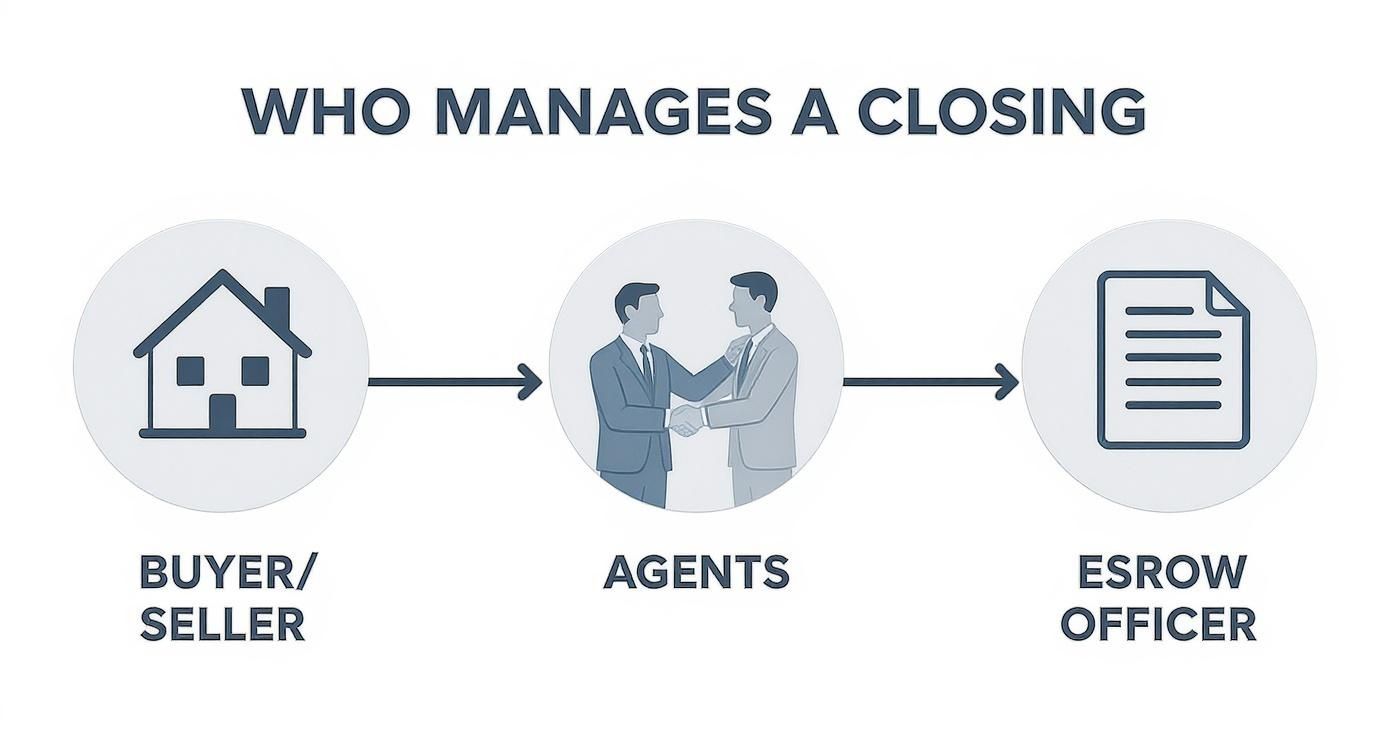
As the infographic illustrates, everyone—the buyer, seller, agents, and the escrow officer at the title company—has a role to play in getting the deal across the finish line.
From Underwriting to Final Approval
Be prepared for the underwriting stage to be the longest stretch of the whole process. This is where your lender dives deep into your financial history to confirm you're a solid candidate for the loan. Any hold-ups here, like if you're slow to provide a requested document, can easily delay your closing date.
It's also worth noting that the wider market can play a role. When real estate sales volume in the Dallas-Fort Worth area shifts or investor confidence wavers, it can ripple down and affect individual transaction times. For example, with U.S. home price appreciation expected to remain modest, the overall pace of real estate deals can sometimes slow.
The 30-to-45-day closing window is a standard for a reason. It allows enough time for the lender's due diligence, the title search, and the appraisal—all essential checks and balances for a secure and legal property transfer in Dallas.
Of course, things can sometimes take longer. A slow-moving lender, a backlog of appraisal requests, or a surprise issue with the property's title can all extend the timeline. For a deeper dive into what can speed up or slow down the process, check out our guide on the average time to close on a house.
Once you've finally signed the last document and have the keys in hand, a good new homeowner checklist can be a lifesaver for getting settled in.
Decoding Your Dallas Closing Costs

Aside from your down payment, the biggest check you'll write when buying a home is for closing costs. These are the fees for all the services required to finalize your Dallas real estate deal, and they can be a real shock if you're not ready for them.
Think of it this way: buying a house isn't as simple as just handing over money for the keys. A whole team of people—lenders, appraisers, title agents—works behind the scenes to make the sale official and legal. Closing costs are how they get paid.
On average, you can expect closing costs to be between 2% and 5% of the home's final sale price. For a home in Dallas, that can add up quickly, so it's a chunk of cash you'll need ready to go on closing day, completely separate from your down payment.
Common Fees You Will See in Dallas
Every home sale is a little different, but you’ll see a handful of standard fees on almost every Dallas closing statement. Getting familiar with them now is the best way to budget properly and dodge any last-minute financial stress. A great way to prepare is by learning about avoiding unexpected closing costs.
Here are the usual suspects you'll find on your closing documents:
- Lender Origination Fees: Your mortgage lender charges this for the work of creating, processing, and approving your loan.
- Appraisal Fee: An independent appraiser has to confirm the home's value, which protects the lender from loaning more than the property is worth.
- Title Insurance: This is a crucial one. It protects both you and the lender from any old claims or ownership disputes on the property that might pop up down the road.
- Escrow Fees: The title company, a neutral third party, charges this to manage the transaction and make sure all money goes to the right place at the right time.
- Dallas County Recording Fees: This is the fee the county charges to officially record the sale, making you the legal, public owner of the property.
A lot of people mistakenly think closing costs are just a bunch of random taxes. The reality is they’re specific fees for services rendered by the professionals who make sure your Dallas home purchase is legally sound and secure.
To get a better handle on what your final numbers might look like, it's smart to run some estimates. You can get a head start on your budget by learning how to calculate closing costs for your specific situation.
How to Navigate Common Closing Hurdles
https://www.youtube.com/embed/X-UAY3pY1Fg
Even the smoothest Dallas home purchase can hit a few snags on the way to closing day. The good news? Most of these "hurdles" are common and completely manageable, especially if you see them coming.
Knowing what to watch out for gives you the power to sidestep potential delays. Think of it less like a disaster waiting to happen and more like a checklist of small issues you can proactively solve to keep everything moving forward.
Addressing Financing and Appraisal Gaps
One of the most common reasons a closing gets delayed is a last-minute financing snag. This is exactly why getting a solid loan pre-approval is so critical—not just a flimsy pre-qualification. A real pre-approval means your lender has already dug into your financials, verifying your income and credit, which leaves very little room for nasty surprises during final underwriting.
Another classic issue, particularly in a hot market like Dallas, is the dreaded appraisal gap. This is when the home's official appraised value comes in lower than the price you agreed to pay.
An appraisal gap is a big deal because your lender will only finance the property up to its appraised value. You'll either have to renegotiate the price with the seller or have the cash ready to cover that difference yourself.
Tackling Title and Property Condition Issues
The title search is essentially a background check on the property. Sometimes, it unearths old baggage, like an unpaid lien from a previous owner or a messy ownership claim that was never sorted out. While that might sound scary, your Dallas title company specializes in untangling these knots—it just might add a little time to the clock.
Then there’s the final walk-through. This is your last look before you sign on the dotted line, and it’s your chance to confirm everything is as it should be. If you find that the seller skipped out on promised repairs or a new problem has popped up since your inspection, you need to speak up immediately.
Here’s how you handle these situations:
- For title issues: Let your title company do its job. They are the experts here. Your role is to stay in touch with them and your agent to understand the timeline for getting it resolved.
- For walk-through problems: Call your real estate agent right away. They can negotiate a solution, which could mean getting a credit from the seller at closing or having funds set aside in escrow to pay for the fixes.
Ultimately, staying on top of things and keeping the lines of communication open with your agent and lender is the best way to conquer these challenges and make sure your Dallas closing day goes off without a hitch.
Your Dallas real estate Closing Questions Answered
Even with a solid grasp of the timeline and costs, a few specific questions always seem to pop up as the big day approaches. Let's tackle some of the most common ones we hear about the closing process in Dallas, giving you clear, straightforward answers for the final leg of your journey.
Think of this as your personal FAQ for those last-minute details. Having this knowledge in your back pocket can calm any nerves and help you walk into the title company's office feeling completely prepared.
What Is the Closing Disclosure and Why Is It So Important in Texas?
The Closing Disclosure (CD) is, without a doubt, one of the most critical documents you'll see. It’s a five-page form that lays out the final, locked-in numbers for your mortgage. You'll see your exact interest rate, your final monthly payment, and a detailed breakdown of every single closing cost.
Federal law gives you a built-in cooling-off period. Your lender must deliver the CD to you at least three business days before you’re scheduled to sign. This "three-day rule" is a crucial protection, giving you time to breathe, review every line item, and compare it to the original Loan Estimate you received. If something looks off, now is the time to ask questions. In Texas, you have to formally acknowledge you've received the CD before you can legally close, so take this review seriously.
Do I Need a Real Estate Attorney for a Closing in Dallas?
Texas is what’s known as a "non-attorney" state when it comes to real estate. In simple terms, this means you aren’t legally required to have an attorney handle your closing. The entire process is usually managed by the title company and its escrow officer, who act as a neutral third party for everyone involved.
That said, bringing in an attorney is a smart move for complicated deals. If you're buying a property with tricky title issues, have concerns about the contract's fine print, or are navigating an unusual transaction, a lawyer is your advocate. They can provide legal advice and protect your specific interests. For a standard home purchase in Dallas, though, most buyers feel perfectly comfortable relying on their real estate agent and the title company to get them across the finish line.
When Do I Actually Get the Keys to My New Dallas Home?
This is the moment everyone waits for! Getting the keys to your new place boils down to two key events: closing and funding. The "closing" is the actual appointment where you sit down at the title company and sign a mountain of paperwork.
"Funding" is what happens right after you've signed. This is when your lender wires the loan money to the title company. The title company then acts like a financial traffic controller, disbursing the funds to the seller and paying off any other relevant parties. As soon as the deal is funded and the new deed is on its way to be recorded with the county clerk, you're officially the owner. Your agent will then get the green light to hand over the keys. Most of the time, this happens on the same day as your closing, but don't be surprised if it occasionally pushes to the next business day.
Navigating the complexities of a Dallas real estate transaction requires expert guidance. For personalized support from start to finish, connect with Dustin Pitts REALTOR Dallas Real Estate Agent at https://dustinpitts.com.