
When you're buying a home in Dallas, two terms you'll hear constantly are appraisal and inspection. They might sound similar, but they are completely different—and equally critical—parts of the process.

Let's clear up the confusion right away: an appraisal is all about the money, while an inspection is all about the physical condition of the house. One protects your lender's investment, and the other protects your investment.
Navigating The Two Key Hurdles in Dallas Real Estate

Think of buying a home in the competitive Dallas market as clearing a couple of major hurdles before you get to the closing table. Both the appraisal and the inspection are non-negotiable steps, but they have entirely different goals and serve very different people. Getting this right from the start is key to a smooth and confident purchase.
The Appraisal: What Is This House Actually Worth?
The home appraisal is something your mortgage lender will require. Period. Their goal is simple: to make sure the house is worth the amount of money they’re about to lend you. They hire an independent, licensed Texas appraiser who acts as a neutral third party.
This appraiser will analyze the property's size, features, and overall condition, then compare it to similar homes that have recently sold in Dallas neighborhoods like Lakewood or Preston Hollow. The end result is a formal valuation report. If the appraisal comes in at or above the sale price, the loan moves forward. If not, it can create a snag that needs to be resolved.
The Inspection: What Am I Really Buying?
A home inspection, on the other hand, is for you. You are the one who hires a licensed inspector to get a top-to-bottom look at the property’s real-world condition. This is your chance to do your homework.
The inspector will crawl through the attic, check the foundation, fire up the HVAC, and examine the plumbing and electrical systems. Their job is to find any existing or potential problems—from a leaky roof to an outdated electrical panel. This detailed report gives you serious leverage. You can use it to negotiate repairs with the seller, ask for a price reduction, or, if the issues are too big, walk away from the deal. It's an essential part of your real estate due diligence checklist.
The appraisal is about value for the bank; the inspection is about condition for the buyer. Confusing the two can lead to costly assumptions about the property you're buying.
Of course, both of these steps have costs. In the Dallas area, you can expect a home appraisal to run between $450 and $650, while a typical home inspection costs between $400 and $600. While the appraisal is mandated by the lender to confirm value, the inspection is your tool to understand exactly what you're getting into and negotiate from a position of strength.
At a Glance Appraisal vs Inspection for Dallas Buyers
To make it even clearer, here’s a straightforward breakdown of the fundamental differences you'll encounter in any Dallas property transaction.
| Attribute | Home Appraisal | Home Inspection |
|---|---|---|
| Primary Purpose | Determines the property's market value. | Assesses the property's physical condition. |
| Who It Protects | The mortgage lender. | The homebuyer. |
| Who Orders It | The lender, via a third party. | The homebuyer. |
| Key Outcome | A valuation report for loan approval. | A detailed condition report for negotiations. |
Seeing them side-by-side really highlights their distinct roles. One is a financial safeguard for the bank, while the other is an informational safeguard for you, the buyer. Both are absolutely necessary for a successful home purchase in Dallas.
Decoding The Dallas Home Appraisal Process

So, you’ve found a home in Dallas and your offer has been accepted—congratulations! The next step, initiated by your mortgage lender, is the appraisal. Think of this as a crucial protection for the bank. It's not optional; it’s a required step to ensure their investment is sound.
The lender will bring in a licensed, third-party Texas appraiser to give an unbiased, professional opinion on the property's fair market value. Their entire job is to confirm that the price you've agreed to pay is actually supported by the current Dallas market. This way, the lender isn't loaning you more money than the home is truly worth.
What A Dallas Appraiser Actually Looks At
An appraiser's work is a deep dive into the property's bones and its place in the local market. They aren't just taking a quick tour; they're gathering hard data to build a valuation.
Here's what they're focused on:
- Property Condition: They assess the overall state of repair, noting any obvious structural issues or recent, high-value upgrades.
- Square Footage: This is about verified, official gross living area, not just an estimate.
- Bedrooms and Bathrooms: The total count and overall layout are key data points.
- Unique Features: In Dallas, things like a swimming pool, a fully renovated kitchen, or a luxurious primary suite can significantly impact value.
An appraiser’s focus is on permanent features and overall marketability. They are calculating value based on established facts, not speculating on the home’s future potential or identifying minor repair needs like an inspector would.
After evaluating the home itself, the appraiser looks outward for "comps," or comparable properties. These are recently sold homes in the same area—whether it's the M Streets or Preston Hollow—that are similar in size, age, and condition. By analyzing what these homes sold for, the appraiser can land on a solid, data-driven value for the property you want to buy. You can get a much deeper understanding by exploring the complete real estate appraisal process.
How The Final Value Impacts Your Loan
Once the appraisal report is finished, it goes straight to your lender. If the value comes in at or above your offer price, everything moves forward as planned. If the appraisal comes in low, however, it creates a financing gap that you, the seller, and your agents will need to figure out before you can close.
The appraisal is truly a cornerstone of any Dallas real estate transaction. The numbers speak for themselves: the Texas real estate appraisal and inspection market represents a significant portion of the professional services sector, underscoring how critical these assessments are for protecting both buyers and lenders in our dynamic market.
What a Dallas Home Inspection Actually Uncovers

If the appraisal is for the lender, the home inspection is 100% for you. This is your chance to bring in a licensed professional who acts as your personal detective, performing a deep dive into the property's true condition.
Forget market value for a moment. This process is all about the home's physical health. The inspector’s job is to spot everything from minor quirks to major red flags—the kind of issues that could turn your dream home into a financial nightmare. Their final report is what gives you real leverage at the negotiating table.
Key Systems Examined in a Dallas Home
Here in North Texas, our homes face some unique challenges. A good inspector knows exactly what to look for, focusing on the systems that take the most abuse from our climate and soil.
A thorough Dallas inspection will always put these areas under the microscope:
- Foundation Integrity: This is non-negotiable in Dallas. Our expansive clay soil is notorious for causing foundations to shift and crack, so inspectors are trained to spot the earliest warning signs.
- HVAC System Performance: Can the AC keep up with a brutal 105-degree August afternoon? The inspector will run the system through its paces to make sure it’s up to the task.
- Roof and Attic Condition: They'll be looking for tell-tale signs of hail damage, missing shingles, and poor ventilation that can lead to big problems down the road.
- Plumbing and Electrical Systems: This means checking for old aluminum wiring, a maxed-out electrical panel, low water pressure, or hidden leaks.
The inspection report isn't just a list of problems; it's an owner's manual for your new house. It gives you the power to ask for repairs, negotiate a better price, or walk away if the issues are too big to handle.
Turning the Inspection Report into Action
With the inspector's report in hand, you can finally see past the staging and fresh paint. It helps you understand what you're really buying. For buyers wanting to get ahead, it's smart to learn about key plumbing features to check before you buy a new home.
The industry itself is also getting more sophisticated. Modern home inspection software allows Dallas inspectors to deliver incredibly detailed, media-rich reports right to your phone, making the findings easier than ever to understand. This technology helps clarify complex issues found in local properties.
Ultimately, a detailed report empowers you to move forward with confidence. Our guide offers more home inspection tips for buyers to help you make the most of this crucial step. This is all about protecting your investment and ensuring there are no costly surprises waiting for you after closing.
Comparing Costs, Timelines, And Outcomes in DFW
When you're buying a home in Dallas, you'll quickly encounter two major hurdles: the home appraisal and the home inspection. People often confuse them, but they serve completely different purposes and operate on entirely different schedules and budgets. Getting a handle on these differences is key to a smooth transaction.
How Much Do They Cost?
In the Dallas-Fort Worth area, the costs for both services are fairly similar, but who you pay and why is different.
-
A home inspection will typically run you between $400 and $600. This fee depends heavily on the square footage and age of the house. You'll pay this directly to the inspection company you choose to hire.
-
A home appraisal usually costs somewhere in the $450 to $650 range. While you, the buyer, are footing the bill, this fee is paid to your lender. The lender then orders the appraisal from a third-party, state-licensed appraiser to ensure an unbiased valuation.
Timelines From Order to Report
Here's where the two processes really diverge. Speed is the name of the game with an inspection. You can typically get an inspector out to the property within a few days, and you'll have a comprehensive report in your hands within 24 hours of the visit. This quick turnaround is crucial because it happens during your option period, which is your tight window to negotiate or walk away.
The appraisal, on the other hand, is a much slower beast. It's tied to the mortgage process. After your lender orders it, it could take a week just to get the appraiser to the property, and another week or more for them to compile the data and submit the final report. All told, you're often looking at a two to three-week process from start to finish.
An inspection provides fast, actionable data for negotiations within days. An appraisal delivers a slower, financially critical valuation that directly impacts your mortgage approval weeks later.
How Each Outcome Shapes Your Next Move
The report from each service kicks off a very different chain of events. A detailed inspection report arms you with direct negotiating power. If it uncovers issues—like a shifting foundation, which is all too common in North Texas—you can go back to the seller and request repairs, ask for a credit at closing, or, if the problems are severe enough, legally terminate the contract.
A low appraisal presents a completely different challenge—it's a financing hurdle, not a negotiation tool. If a Dallas home appraises for less than your agreed-upon purchase price, your lender will only loan you money based on the lower appraised value. This leaves you with a few tough choices:
- Renegotiate: You can ask the seller to lower the price to meet the new appraised value.
- Cover the Gap: You can bring extra cash to the closing table to make up the difference.
- Dispute the Appraisal: If you and your agent spot legitimate errors in the report, you can submit a formal challenge to the valuation.
Navigating these outcomes requires a clear strategy. To get a better sense of potential costs and values for your Dallas home purchase, using specialized real estate estimation tools can provide helpful context as you prepare for these critical milestones.
To put it all in perspective, here's a side-by-side breakdown.
Head-to-Head The Buyer's Comparison Guide
This table breaks down the core differences between getting a home appraisal and a home inspection in the Dallas market. While both are essential steps, they have distinct goals, timelines, and impacts on your ability to close the deal.
| Factor | Dallas Home Appraisal | Dallas Home Inspection |
|---|---|---|
| Primary Goal | Determine the property's fair market value for the lender. | Identify the physical condition and safety of the property. |
| Who It's For | The mortgage lender. | The home buyer. |
| Average DFW Cost | $450 – $650 | $400 – $600 |
| Typical Timeline | 2-3 weeks from order to final report. | A few days for scheduling + 24 hours for the report. |
| Key Outcome | Confirms the home is worth the loan amount. A low value can jeopardize financing. | A detailed report of defects, empowering buyer negotiations or contract termination. |
| Is It Required? | Almost always required by the lender for a mortgage. | Optional, but highly recommended for buyer protection. |
Understanding these distinctions helps you anticipate costs, manage your timeline, and prepare for the different negotiations that might arise. Each report is a critical piece of the puzzle, giving you the information you need to make a confident and financially sound decision.
How to Handle Common Appraisal and Inspection Issues
So, what happens when things don't go perfectly? Navigating the Dallas real estate market means you have to be ready for a few bumps in the road. It’s pretty common for an appraisal or inspection to uncover issues, but what matters is having a solid strategy to handle them. Knowing your options beforehand can turn a potential deal-breaker into a simple negotiation.
When a problem pops up, your first call should be to your real estate agent. Their experience in the local market—whether you're buying in Plano or Oak Cliff—is your single greatest asset. They’ve seen it all before and can help you make sense of the reports and figure out a plan that protects your investment without blowing up the deal.
Responding to a Low Appraisal
In a hot Dallas market, bidding wars can sometimes push offer prices above what an appraiser thinks a home is worth. This is a classic snag: a low appraisal. If the appraiser's valuation comes in below your offer, the bank will only lend you money based on that lower value.
Don't panic. You have a few clear paths forward:
- Renegotiate the Price: The most direct route is to go back to the seller and ask them to lower the sales price to match the new appraised value.
- Cover the Appraisal Gap: If you have the cash on hand and still love the house, you can simply pay the difference out of pocket.
- Challenge the Appraisal: This is a tougher road, but if your agent finds legitimate errors—like the appraiser missed a key feature or used weak comparable sales—you can submit a formal rebuttal with better data to support your case.
Thankfully, most Dallas-area contracts include an appraisal contingency. This little clause is your safety net, giving you the right to walk away with your earnest money if you and the seller can’t agree on a new path forward.
A low appraisal is a financing problem, not a defect with the house. The goal is to bridge the financial gap with the seller or lender, not to start asking for repairs.
Negotiating After a Tough Inspection
An inspection report that comes back with a list of problems—think an old HVAC system on its last legs before a brutal Texas summer or roof damage from a recent hailstorm—gives you immediate negotiating power. This is precisely what your Texas option period is for.
During this crucial window, you have the legal right to terminate the contract for any reason. That power gives you the leverage to ask the seller to address the issues the inspector found.
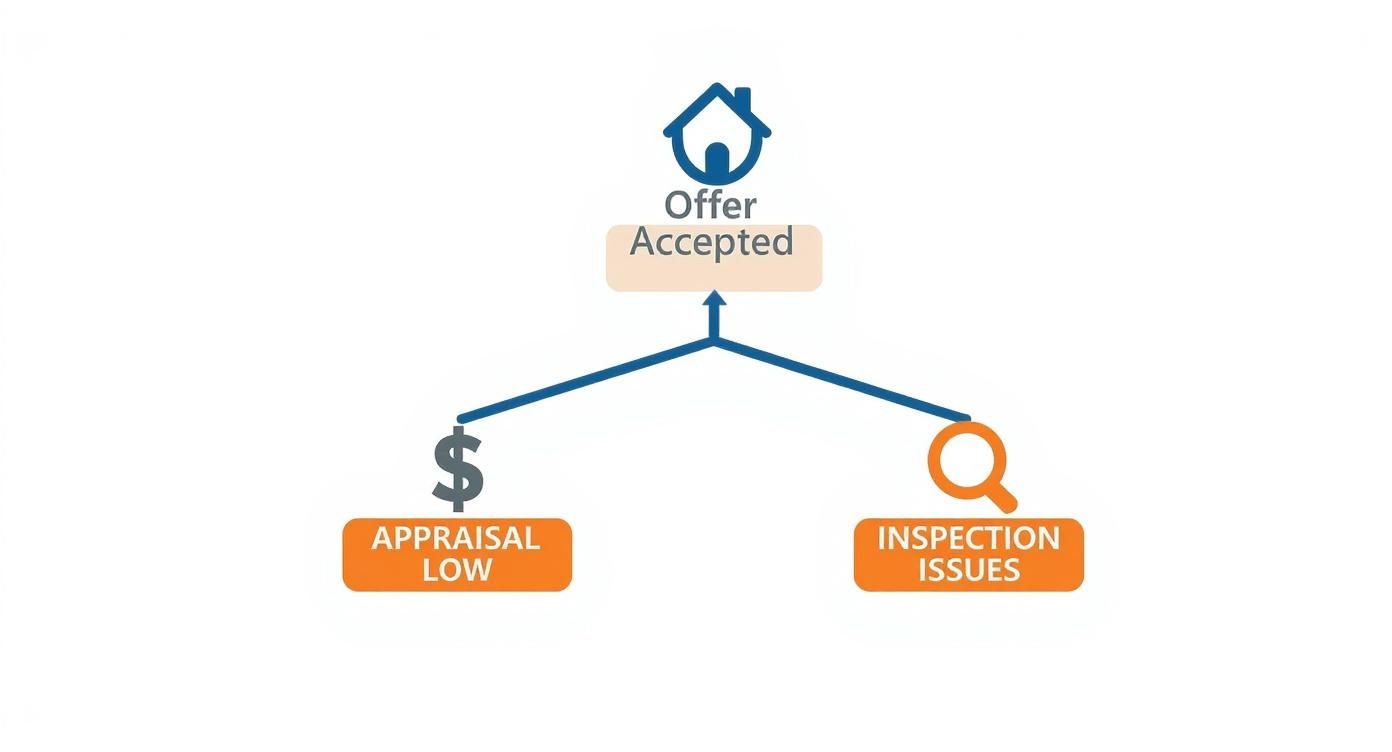
As you can see, whether you're dealing with a valuation gap or a leaky roof, you're not stuck. You can renegotiate, cover the difference yourself, or choose to walk away.
Here’s a pro tip: instead of asking the seller to make specific repairs (which can drag things out and might not be done to your standards), consider asking for a seller credit. This is a specific dollar amount the seller agrees to give you at closing, which you can apply toward your closing costs. It lowers the cash you need on closing day and gives you the freedom to hire your own contractors to do the work right after you get the keys.
Bringing It All Together for a Smart Dallas Investment
When you get right down to it, figuring out the appraisal vs. inspection puzzle is all about protecting your financial future here in Dallas. It’s easy to see these steps as just more hurdles in the home-buying race, but that’s the wrong way to look at it. Think of them as your two-part defense system.
The appraisal is the bank’s reality check. It’s the objective, numbers-driven confirmation they need to see before they’ll sign off on a loan, ensuring the house is actually worth what you’ve agreed to pay. The inspection, on the other hand, is for you. It’s your chance to get a real, unvarnished look under the hood and find out about problems that could drain your bank account later. You absolutely need both.
Treat the appraisal and the inspection as two sides of the same coin. One protects the loan, the other protects you. Together, they turn you from a hopeful buyer into a savvy investor.
Your Final Steps to a Confident Purchase
Buying property in a market as fast-paced as Dallas demands a smart approach, especially in these final stages. To make sure you cross the finish line without any regrets, keep these things in mind:
- Don't Fight the Process: Lean into it. Both the appraisal and inspection are there to give you critical information. Let them do their job.
- Lean on Your Pros: A great Dallas real estate agent is your best asset here. They’ll have a list of trusted local inspectors and the experience to help you make sense of both reports when they land in your inbox.
- Get Ready to Negotiate: The findings from these reports aren't just for your information; they're your leverage. This is where you can make smart moves, whether that means renegotiating the price or simply budgeting for future repairs.
By using the distinct insights from the appraisal and the inspection, you’re putting yourself in the strongest possible position to make a solid, rewarding investment in the Dallas market. Your agent is your guide through all of this, making sure every decision is clear, informed, and always in your best interest.
Your Top Questions About Dallas Appraisals and Inspections, Answered
When you’re buying a home in Dallas, the appraisal and inspection can feel like the final hurdles. You’ve found the perfect place, made an offer, and now it’s time for the experts to weigh in. Naturally, you probably have a few questions. Let's clear up some of the most common ones.
Can I Pick My Own Appraiser in Dallas?
That's a great question, but the short answer is almost always no. Federal regulations are very strict about this to keep the process completely unbiased. Your lender will be the one to order the appraisal, and they’ll use a third-party company called an Appraisal Management Company (AMC) to assign a licensed appraiser.
Even though you’re the one paying the fee, the appraiser’s client is technically the lender. This structure is in place for a good reason: it prevents anyone—the buyer, the seller, or even the real estate agents—from putting pressure on the appraiser to hit a certain number.
What Happens if the Dallas Appraisal Comes in Low?
Seeing an appraisal value come in under your offer price is stressful, but it's far from a deal-breaker. This is a moment where you lean heavily on your real estate agent's expertise. Don't panic; it's time to strategize.
You generally have three main routes to take:
- Go back to the negotiating table. The most common approach is to ask the seller to reduce the sales price to the new, appraised value.
- Bridge the gap yourself. If you're in a strong financial position and still want the house, you can choose to pay the difference in cash at closing.
- Dispute the appraisal. If your agent finds legitimate errors in the report or can produce better comparable sales that the appraiser overlooked, you can file a formal challenge.
Thankfully, most Dallas-area contracts include an appraisal contingency. This is your safety net, allowing you to walk away from the deal with your earnest money if you and the seller can't agree on a solution.
A low appraisal isn't a judgment on the home itself. Think of it as a professional opinion on its current market value, and focus on solving the financial puzzle it creates.
Should I Actually Go to the Home Inspection?
Absolutely. It is always a good idea for Dallas homebuyers to be there. You don’t need to shadow the inspector for the entire 3-4 hours, but showing up for the last hour or so is incredibly valuable.
Being there in person allows the inspector to walk you through their findings. They can physically point out any issues, show you critical things like the main water shut-off valve and electrical panel, and answer your questions right then and there. It gives you a level of understanding and context that a written report, no matter how detailed, just can't replicate.
Ready to navigate the Dallas real estate market with an expert by your side? The team at Dustin Pitts REALTOR Dallas Real Estate Agent has the local knowledge and negotiation skills to guide you through every appraisal and inspection challenge. Visit us at https://dustinpitts.com to start your confident home search today.