

Figuring out if you’re in a buyer’s or seller’s market in Dallas all comes down to the simple economics of supply and demand. Right now, we’re seeing some interesting shifts in the Dallas-Fort Worth area. Inventory is starting to climb and homes are sitting just a bit longer, which is giving buyers a little more breathing room and influence than they’ve had in a long, long time.

Understanding the Dallas Real Estate Climate
To really succeed in Dallas real estate, you have to get a feel for the underlying currents of the market. It doesn’t matter if you’re looking for a chic condo in Uptown or a historic home in Bishop Arts—the market’s mood will shape every move you make. Several key economic forces are steering the ship right now in North Texas, creating unique situations for both buyers and sellers.
If we look at local Dallas-Fort Worth trends, there’s a fascinating pattern developing. While specific data fluctuates, when the number of available homes starts to significantly outpace the number of active buyers, the market begins to shift. This swing, often driven by things like higher interest rates and a general cooling of sales since the frenzy of 2021, is a strong indicator of a buyer’s market where the power to negotiate is changing hands.

Defining the Market Conditions
The real difference between these two market types is about who has the upper hand. In a seller’s market, you’ve got tons of buyers fighting over very few homes in Dallas, which creates some serious competition. On the flip side, a buyer’s market has more homes for sale than people actively looking, often leading to price drops and sellers offering incentives to get a deal done.
For a more granular look at the local numbers, you can explore the latest Dallas real estate market trends.
In a seller’s market, you might see a home in Plano get a dozen offers the first day it’s listed. In a buyer’s market, that same house could be on the market for a month, and the seller might even offer to pay for your closing costs just to seal the deal.
To really paint a clear picture, let’s break down the typical conditions you’d find in Dallas for each scenario.
Dallas Market Snapshot Buyer vs Seller Dynamics
Here’s a quick-reference table that lays out the defining characteristics of each market type right here in the Dallas-Fort Worth area. It’s a handy way to see the key differences at a glance.
| Market Indicator | Buyer’s Market Conditions in Dallas | Seller’s Market Conditions in Dallas |
|---|---|---|
| Home Inventory | High; many properties available | Low; few homes for sale |
| Buyer Competition | Low; minimal bidding wars | High; multiple offers are common |
| Negotiating Power | Favors the buyer | Favors the seller |
| Pricing Trends | Prices are stable or declining | Prices are rapidly appreciating |
| Days on Market (DOM) | Higher; homes take longer to sell | Lower; homes sell very quickly |
Understanding these indicators is your first step. It helps you recognize the field you’re playing on, whether you’re getting ready to list your property or start your home search.
Telltale Signs of a Dallas Buyers Market
You don’t need a crystal ball to know when Dallas is shifting into a buyer’s market. The signs are right there in the data and on the streets of the DFW metroplex. It’s a fundamental change in negotiating power, handing a distinct advantage to prospective homeowners—an edge they might not have seen just a few months prior. When the scales tip, the whole feel of a real estate deal changes with it.
One of the most obvious red flags is a jump in the average Days on Market (DOM). When a house in a typically hot neighborhood like Plano or Richardson lingers for 45, 60, or even 90 days, you know demand is cooling off. While a high DOM in Oak Cliff might mean something different than in Frisco, the overall upward trend across the board is a universal signal.
This slowdown is almost always tied to rising inventory. You’ll literally start seeing more ‘For Sale’ signs popping up in neighborhoods from Irving to Mesquite. With more homes on the market, buyers have more choices, which eases the pressure to make a rushed decision on the first property they see.
Key Metrics to Watch
Beyond just how long a home sits on the market, a few other key financial indicators signal a shift in the buyer’s favor. These are the details you’ll spot when you’re scrolling through listings or driving through Dallas neighborhoods.
- Frequent Price Reductions: Sellers who priced their homes based on last season’s red-hot market often have to face reality. Seeing multiple price cuts on the same listing is a dead giveaway that the market has softened.
- Growing Seller Concessions: To sweeten the deal, sellers get creative. They might offer to pay a chunk of the buyer’s closing costs, provide credits for repairs after an inspection, or throw in a home warranty.
- Fewer Bidding Wars: The frenzy disappears. Instead of homes getting swamped with offers in the first weekend, they might only see one or two. That intense, over-asking-price competition that defines a seller’s market simply evaporates.
In a Dallas buyers market, the negotiation goes way beyond the final price. It’s all about the terms. Buyers suddenly have the power to ask for repairs, request closing cost help, and write in contingencies without worrying their offer will be tossed aside.
Getting a handle on these signs is critical for anyone looking to buy in Dallas. For a more thorough breakdown of what this market means for your game plan, it helps to understand what is a buyers market and how to position yourself to win.
When all these factors line up—longer DOM, more listings, price drops, and flexible sellers—the message is clear: the market has shifted. Buyers finally have the leverage to be patient, selective, and strategic, opening up opportunities to land a home on much better terms. Spotting these signs early is the first step to making a truly smart investment.
Identifying a Competitive Dallas Sellers Market
When the Dallas real estate market swings in the other direction, it creates an environment where sellers hold nearly all the cards. In a competitive sellers market, the balance of power shifts dramatically. This isn’t just a minor tweak in conditions; it’s a high-speed, high-stakes game where demand completely outpaces the available homes for sale.
The most obvious sign of this market is fierce buyer competition. It’s not uncommon for a desirable home to hit the market on a Thursday morning in a hot suburb like Frisco or Southlake and have a dozen offers by Friday afternoon—many of them well over asking. This intense pressure is a direct result of critically low inventory.
When there are simply not enough homes to go around, buyers are forced to act fast and get aggressive to have any chance at all. This is what fuels bidding wars, where the final sale price can climb far beyond what the seller even hoped for.
Hallmarks of a Seller-Dominated Climate
In this kind of fast-paced environment, buyers have to pull out all the stops to make their offers stand out. It’s about more than just the price tag. Several other trends emerge that clearly signal a strong sellers market in Dallas.
- Waived Contingencies: To make their offer look “cleaner” and more attractive, buyers might agree to waive the appraisal or even the inspection contingency. It’s a risky move, but one many feel is necessary to compete.
- “As-Is” Offers: It becomes common for buyers to agree to purchase a home in its current condition, taking on the full financial risk of any potential repairs themselves.
- Fast, Cash-Heavy Closings: Offers with quick closing timelines, often backed by cash, tend to rise to the top of the pile. For a seller, this means less risk and a faster payday.
The ultimate sign of a red-hot Dallas sellers market? Seeing a home sell for $50,000 or even $100,000 over its list price after just one weekend on the market. This scenario perfectly captures the extreme leverage sellers have when competition is at its peak.
This infographic breaks down some of the key metrics that define a competitive Dallas sellers market, including inventory levels, offer volume, and those big sale price premiums.
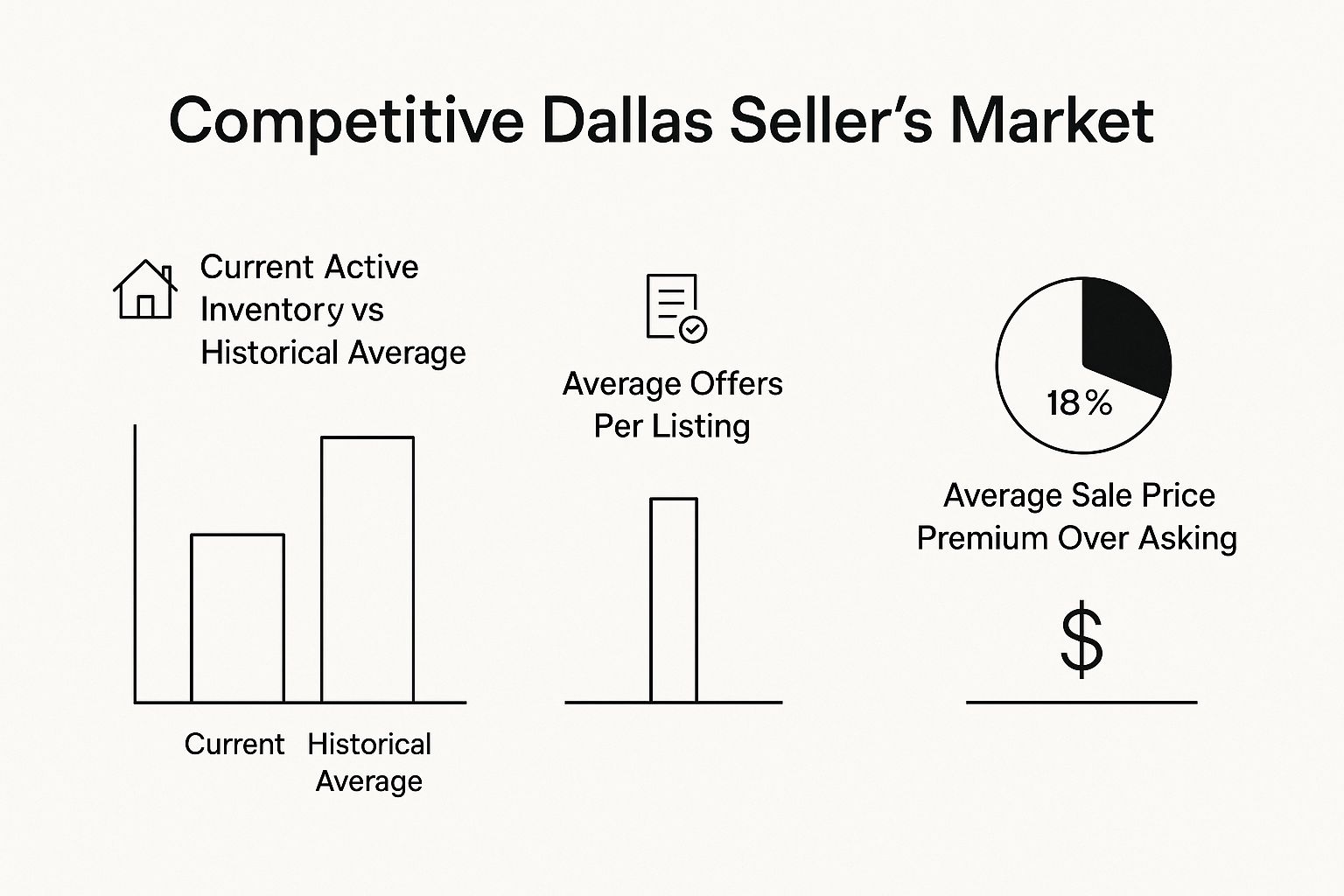
The data really highlights how low inventory directly fuels more offers per listing and pushes sale prices way above the original asking price. For a deeper dive into the dynamics at play, you can learn more about what is a sellers market and how it should shape your strategy. Recognizing these indicators is crucial for anyone trying to navigate the Dallas market when it’s this hot.
Strategic Comparison For Dallas Homebuyers and Sellers
Knowing whether you’re walking into a buyer’s or a seller’s market in Dallas isn’t just trivia—it’s the single most important factor shaping your entire real estate strategy. The playbook that lands you a great deal in one market could leave you on the sidelines in another. Everything from your negotiation tactics to your timeline has to adapt to whoever holds the cards.

These market shifts are also tied to bigger demographic trends within the DFW metroplex. Different generations of buyers and sellers have distinct motivations and properties they are interested in, from downsizers to first-time buyers. This generational handoff constantly changes the mix of available properties and what motivates each side of the deal.
Negotiation Power: A Tale of Two Markets
In a Dallas buyer’s market, the negotiating power rests firmly with the buyer. It’s simple supply and demand. With plenty of homes to choose from, you can confidently submit an offer below the asking price and include contingencies for inspections, financing, and appraisals. Asking for repairs or credits toward closing costs is standard practice, and sellers are usually willing to play ball to get their home sold.
But when the market heats up, the roles reverse completely. In a seller’s market, particularly in hot-ticket neighborhoods like Preston Hollow or Highland Park, it’s the seller who calls the shots. Multiple offers are the norm, often driving the final price far above list. Here, sellers can afford to be picky—they’ll favor clean offers with few to no contingencies, fast closing dates, and they’re far less likely to agree to repair requests. Why would they, when another buyer is ready to step in?
A buyer’s leverage is directly tied to inventory. When listings are plentiful, they can negotiate on price and terms. When listings are scarce, the best negotiation tactic is often a strong, clean offer with minimal demands.
Pricing Strategy: The Art of Attraction
Setting the right price is always crucial, but how you get there depends entirely on the market. In a buyer’s market, sellers need to price their homes competitively right out of the gate. Overprice it even slightly, and you risk the property sitting for weeks, becoming stale and attracting only lowball offers. Your goal is to be the best value on the block to capture the attention of a smaller buyer pool.
In a seller’s market, the strategy often flips. Pricing a home right at or even just a hair below its fair market value can be a brilliant move. It’s designed to create a frenzy of interest, spark a bidding war, and let the market’s own momentum push the final sale price well beyond what you might have initially asked for. When you’re trying to stand out in any market, a little prep work goes a long way. Some of these real estate staging tips can make a huge impact on your final sale price.
Aligning Your Strategy with Your Real Estate Goals
So, how do you play the hand you’re dealt? Whether Dallas is favoring buyers or sellers will completely change your game plan. A cookie-cutter approach just won’t cut it; you have to tailor your strategy to the market’s pulse and your own personal endgame. It doesn’t matter if you’re an investor scouting properties in West Dallas or a professional moving for a new job in the Telecom Corridor—the right plan is what bridges the gap between market reality and your goals.
The Dallas housing market has been on a rollercoaster. After a period of explosive growth, local home sales have cooled off since 2021, mostly due to higher mortgage rates and prices that squeezed affordability. This shift has given buyers more power in many DFW submarkets, a trend every Dallasite should be watching.
For the Dallas Investor
If you’re looking to build your real estate portfolio, a buyer’s market in Dallas is a dream come true. When inventory is high and competition is low, you hold the cards. This is your chance to be both patient and bold. You can confidently put in offers well below asking on homes that have been sitting for a while, especially in up-and-coming neighborhoods like the Cedars or Bishop Arts.
In this kind of market, you can also push for significant seller concessions, like asking for credits to cover major repairs found during an inspection. Doing this frees up your cash for renovations that can seriously boost your return on investment down the road.
For the Corporate Transferee
On the other hand, if you’re a professional relocating for a job near a major hub like Las Colinas or Richardson, your situation is totally different, particularly in a seller’s market. Your main objective is to find the right home on a tight timeline, which calls for a fast, flexible, and very compelling strategy. A strong offer and the ability to move quickly are your best friends.
When things are competitive, you need to be ready to pounce.
- Be Prepared: Get your pre-approval letter and proof of funds in hand before you even start looking. You need to be able to submit an offer the moment you find the right place.
- Offer Competitively: Don’t start with a lowball offer. Your first bid should be strong—at or even above the asking price—to make sure sellers take you seriously from the get-go.
- Flexibility is Key: Little things can make a big difference. Offering a flexible closing date or a short-term lease-back to the sellers can make your offer shine, even if it’s not the highest one on the table.
The core difference in strategy boils down to urgency versus patience. An investor in a buyer’s market has the luxury of waiting for the perfect deal. A transferee in a seller’s market must act decisively to lock down a home and make their move happen smoothly.
At the end of the day, success means matching your actions to the market’s rhythm. To make your property stand out and hit your selling goals, especially when the market is tough, think about creative marketing tools. For example, you can leverage virtual staging AI to help buyers envision the full potential of your space. Knowing whether you’re in a buyers or sellers market helps you set realistic expectations and build a plan that gives you the best shot at winning.
Answering Your Dallas Market Questions
Navigating the Dallas real estate scene always brings up questions, especially when things feel like they’re changing on a dime. I’m going to tackle some of the most common questions I hear, giving you straight answers to help you figure out the current buyers or sellers market and what it means for you.
How Do Interest Rate Changes Directly Impact The Dallas Market?
Think of interest rates as the gas pedal for the Dallas real estate market. They have a huge, direct impact on what buyers can afford and how much demand is out there. When the Federal Reserve hikes rates, mortgages get more expensive. It’s a simple fact.
This can push some buyers to the sidelines, which cools off the bidding wars and competition we see in hot neighborhoods. As a result, homes start to sit a bit longer, and the market can slowly tilt in favor of buyers. On the flip side, when rates drop, buyers suddenly have more purchasing power. That usually unleashes a new wave of competition, driving up demand for homes from Plano to Irving and swinging the advantage back to sellers. A single percentage point change can make a massive difference in a monthly payment, and that ripple effect is felt across the entire DFW housing landscape.
The relationship is simple: higher interest rates tend to squeeze buyer demand, giving them more leverage. Lower rates typically boost demand, putting sellers back in the driver’s seat.
Which DFW Suburbs Are Currently Leaning Towards Buyers?
While we talk about the “Dallas market” as a whole, the truth is that different suburbs often march to the beat of their own drum. Right now, a few areas are definitely starting to feel more buyer-friendly. You’ll often see this in suburbs that saw explosive price growth over the past couple of years and are now leveling off or undergoing a slight correction.
The key is to watch for a rising Days on Market (DOM) and a growing supply of homes for sale. For instance, neighborhoods that were recently hotspots for new construction might have a temporary surplus of homes, which gives buyers more choices and, crucially, more room to negotiate. You have to look at the data for your specific neighborhood of interest—relying on broad DFW trends alone can be misleading.
What Is The Best Method For Tracking Real-Time Market Shifts In Dallas?
If you want to stay ahead of the curve in a market as dynamic as Dallas, you need access to fresh, local data. National news gives you a bird’s-eye view, but the most effective way to see what’s happening on the ground is to partner with a real estate professional plugged directly into the Multiple Listing Service (MLS). The MLS offers the most current information you can get on:
- New Listings: How many new homes are hitting the market week by week.
- Pending Sales: How fast homes are actually going under contract.
- Price Reductions: A great indicator of where sellers are becoming more flexible.
- Final Sale Prices: The real story of what homes are selling for versus their list price.
This is the kind of street-level data that is far more powerful than any high-level monthly report. It lets you see the market shifting as it happens, giving you a real advantage whether you’re getting ready to buy or sell.
Knowing whether you’re walking into a buyer’s or seller’s market is the first step to a smart real estate move in Dallas. For guidance built on deep local knowledge of your specific neighborhood and goals, I’m here to help. I’m Dustin Pitts REALTOR Dallas Real Estate Agent, and we can build a winning strategy together. Let’s connect at https://dustinpitts.com.