Thinking about moving to Dallas? You’re probably wondering what it’ll cost to actually live here.Let’s get right to it: Dallas is a little more expensive than the rest of the country and definitely a step up in price from other parts of Texas. The main culprits? Housing and utilities. But, when you stack it up against other major U.S. cities, Dallas still offers a pretty great bang for your buck.

A Snapshot of Dallas Living Costs
Before we get into the nitty-gritty of your monthly budget, it helps to see the big picture. How does Dallas compare to the state and national averages? Knowing this gives you a quick feel for where your money will go and which categories might need a closer look.
The cost of living in Dallas runs about 7% higher than the Texas average and just 2% above the national average. This tells you there’s a bit of a “big city” premium here. While you might save on things like getting around town, other costs will stretch your budget a bit more. You can always explore more about these cost breakdowns to get the full story.
Key Budget Categories at a Glance
For anyone building a budget, three categories almost always take the biggest slice of the pie: housing, utilities, and transportation. These are the heavy hitters you’ll need to plan for first.
This chart gives you a clear look at the average monthly costs for these core expenses right here in Dallas.
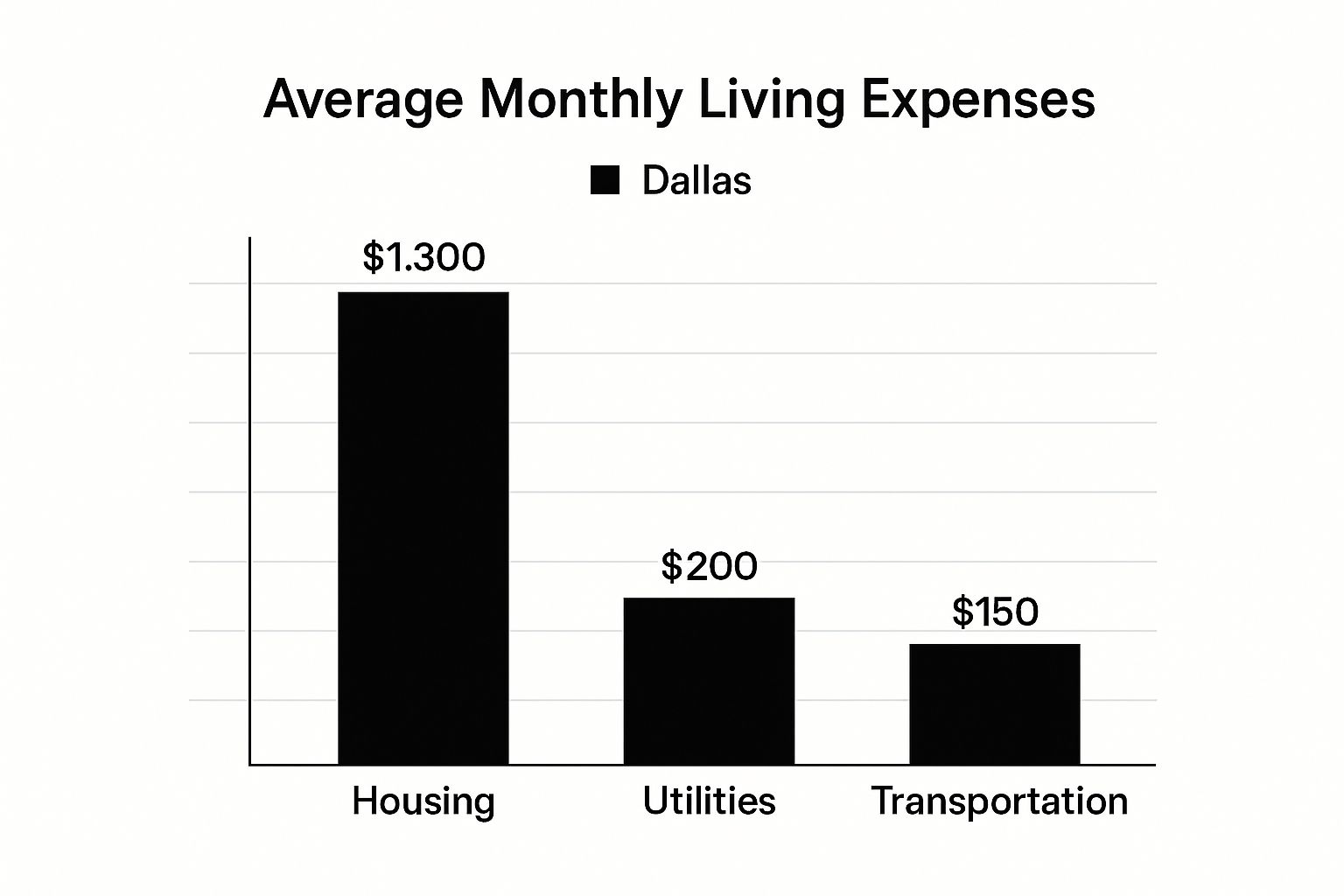
As you can see, housing is the undisputed heavyweight champion of the Dallas budget. That’s a crucial piece of information to have in your back pocket as you plan your move.
To put these numbers in perspective, here’s a simple table showing how Dallas stacks up against Texas and the U.S. as a whole.
Dallas Cost of Living Compared to State and National Averages
| Expense Category | Dallas vs. Texas Average | Dallas vs. National Average |
|---|---|---|
| Overall | 7% higher | 2% higher |
| Housing | 13% higher | 3% higher |
| Utilities | 10% higher | 16% higher |
| Transportation | 5% higher | 9% lower |
| Groceries | 2% higher | 3% lower |
| Healthcare | 3% lower | 4% lower |
This comparison really highlights the give-and-take of Dallas living—higher housing costs are balanced by more affordable transportation and healthcare.
What Drives the Cost?
So, what’s behind these higher numbers? It really comes down to a booming economy and explosive population growth. This creates intense demand for housing, which naturally pushes prices up. While that might make Dallas pricier than its Texas neighbors, it’s also a sign of a healthy city teeming with opportunities for new residents.
The financial story of Dallas is one of balance. Higher-than-average costs in key areas are often offset by a robust job market and lower expenses in other categories, creating a unique economic dynamic for those who call the city home.
When you break it all down, the cost of living in Dallas is a mixed bag, but a manageable one. Here’s what you need to know:
- Housing: This is your biggest expense, coming in at about 13% above the state average.
- Utilities: Get ready for this one. Utilities are a hefty 16% higher than the U.S. average, mostly thanks to our hot Texas summers and the A/C needed to survive them.
- Transportation: Here’s some good news! Getting around is a bright spot, with costs typically running 9% lower than the national average.
This profile paints a picture of a major city with the costs to match, but one that still holds a competitive edge over pricier coastal hubs like New York or Los Angeles.
Navigating the Dallas Housing Market
When you’re trying to wrap your head around the cost of living in Dallas, housing is the biggest piece of the puzzle. It’s the expense that will have the most significant impact on your budget, whether you’re looking to rent a trendy loft or buy a home with some room to spread out.
The city’s housing scene is incredibly diverse, and prices can swing wildly from one neighborhood to the next. An apartment in a high-demand, walkable area like Uptown will naturally cost more than a similar-sized place in a quieter, more residential neighborhood.
A Look at Rental Prices
To get a real-world feel for the rental market, it helps to start with the city-wide averages. Just remember, these are your baseline—location is the single biggest factor that will move the price tag up or down.
- Studio Apartments: For a studio, expect the average monthly rent to be around $1,200. You’ll find most of these in the dense, urban core neighborhoods.
- One-Bedroom Apartments: The sweet spot for many single professionals, the city-wide average for a one-bedroom is about $1,450.
- Two-Bedroom Apartments: Need more space? The average rent for a two-bedroom apartment climbs to around $1,900.
Think of these numbers as a starting point. If you have your heart set on the vibrant Bishop Arts District or the sleek Victory Park, you’ll likely see prices above these averages. On the flip side, exploring neighborhoods a bit further from downtown can uncover some more budget-friendly gems.
The Dallas Homebuyer’s Market
For anyone looking to put down roots and buy a home, the Dallas market is a dynamic mix of opportunity and competition. Right now, the median home price in Dallas is hovering around $415,000. That number is a direct reflection of the city’s powerful job growth and ever-increasing population.
Understanding the full financial picture of homeownership in Dallas goes beyond the sticker price. Property taxes and other associated fees play a significant role in your total monthly housing payment.
As you get ready to buy, it’s critical to look past the down payment and mortgage. There are always hidden costs of buying a home, from closing fees to initial repairs, that can catch you by surprise if you aren’t prepared.
Property Taxes and Market Pulse
A key factor in Dallas Texas living expenses for homeowners is property tax. Texas doesn’t have a state income tax, which means local governments lean heavily on property taxes to fund schools, roads, and public services.
The effective tax rate in Dallas County is on the higher side, typically landing somewhere between 2% and 3% of your home’s assessed value. For a $400,000 home, that translates to an annual tax bill between $8,000 and $12,000. That’s a hefty sum that adds a significant amount to your monthly housing budget.
The market remains competitive, but don’t let that discourage you. With careful planning and a solid grasp of all the costs involved, finding your perfect place in Dallas is absolutely an achievable goal.
The Salary You Need for a Comfortable Dallas Lifestyle
Figuring out the numbers for rent and groceries is one thing. But let’s get to the real question everyone asks: what kind of salary do you actually need to live comfortably in Dallas?
And “comfortable” doesn’t just mean scraping by. We’re talking about a lifestyle where you can pay your bills without stress, save for the future, and still have money left over to enjoy everything this city has to offer.
A great way to think about this is the 50/30/20 budget rule. It’s a pretty simple framework: 50% of your take-home pay goes to essentials like housing, 30% is for fun stuff like dining out or hobbies, and the last 20% gets socked away for savings or paying down debt. This approach ensures you’re building a life, not just covering expenses.
Having this target salary in mind is incredibly useful when you’re looking at job offers or planning your move. It gives you a solid benchmark for the Dallas Texas living expenses you should prepare for.
The New Reality of Dallas Income Requirements
If you think things have gotten more expensive lately, you’re not wrong. The goalposts for what it takes to live comfortably in Dallas have moved—a lot.
A recent analysis revealed that a single adult now needs to bring in about $95,930 a year after taxes to live comfortably. That’s a staggering jump of nearly 48% from just a couple of years ago. This spike shows just how much pressure has been put on everything from housing to everyday goods, making a solid income more important than ever.
The stark reality is that the median household income in Dallas falls well below this comfort threshold. This gap underscores the growing affordability challenge and the importance of high-earning potential for new residents looking to enjoy all the city has to offer.
This isn’t just a number on a spreadsheet; it’s a real-world shift that directly impacts your quality of life. The bottom line is, you need a higher salary today to afford the same level of comfort that was possible just a short while ago.
What That Salary Actually Buys You
So, what does a nearly $96,000 salary really get you in Dallas? Once you’ve handled all the must-pays, it leaves enough room for the fun parts of living in a dynamic city.
We’re talking about hitting up Dallas’s famous restaurant scene, catching a Cowboys or Mavericks game, and consistently building up your savings for long-term goals. It’s about having financial breathing room.
This kind of income also gives you more leverage in a very competitive housing market. It opens up possibilities in more sought-after neighborhoods and gives you a wider range of properties to choose from. If you’re curious what that looks like on the ground, check out our guide on what $500k buys you in Dallas to get a clearer picture.
Ultimately, that’s what a “comfortable” lifestyle is all about: the freedom to choose.
How Dallas Stacks Up Against Other Texas Cities
To get a real sense of Dallas Texas living expenses, it’s helpful to see how the city measures up against its in-state rivals. Texas has a reputation for being affordable, but when you look at its major metro areas, you’ll find they aren’t all created equal. Dallas often plays in a different league when it comes to cost.
This comparison is really important for anyone trying to decide between Texas’s urban powerhouses. Each city has its own economic pulse, and knowing where Dallas fits on that spectrum is key to making a smart financial decision about your next move.
Dallas Versus Austin and Houston
When you put Dallas side-by-side with the other Texas giants, its premium cost of living becomes crystal clear. For a long time, Houston has been seen as the most affordable of the “big three.” Meanwhile, Austin has historically been Dallas’s main competitor for the priciest city in Texas, a title fueled by its booming tech scene and intense housing demand.
But the tables have turned. Recent data shows Dallas has officially taken the top spot as the most expensive city in Texas. A comprehensive cost-of-living index confirmed this, ranking Dallas 24th in the entire United States—placing it well ahead of Austin (36th) and Houston (40th).
Dallas’s position as Texas’s most expensive city is a direct result of its powerful economic growth and sky-high demand. Everything from housing and transportation to utility costs contributes to an overall expense profile that surpasses other major urban centers in the state.
This isn’t just about a number on a list; it’s about the real-world economic forces at play. The city’s incredible job market and constant influx of new residents create a high-demand environment that naturally pushes up prices on everything, from apartment rent to a night out.
What Drives the Difference in Cost
So, what’s behind Dallas’s climb to the top of the cost ladder? It’s not one single thing, but rather a combination of factors tied to its rapid development as a major economic hub.
- Housing Demand: The relentless demand for housing across the Dallas-Fort Worth metroplex is a massive driver of costs.
- Infrastructure Pressures: As more people move in, the strain on infrastructure like roads and public services leads to higher expenses for everyone.
- Economic Momentum: A strong, diverse economy acts like a magnet, attracting more people. This, in turn, fuels competition for resources and services, nudging prices upward.
Getting a handle on these dynamics is crucial. For a more detailed breakdown of how Dallas’s costs stack up against other Lone Star cities, you’ll want to check out our complete guide on Dallas living costs compared to other Texas cities. It really highlights that while Dallas offers incredible opportunities, it comes with a price tag that sets it apart from the rest of Texas.
Budgeting for Daily Life in Dallas
While the big-ticket items like your rent or mortgage set the foundation for your budget, it’s the day-to-day, week-to-week costs that really paint the full picture of your Dallas Texas living expenses. Once you look past those major bills, you get a much clearer, real-world view of where your money will actually be going.
These are the recurring costs that genuinely shape your lifestyle—things like utilities, groceries, and going out. Getting a firm handle on what to expect for these daily essentials is the secret to building a budget that actually works for you here in Dallas.
Breaking Down Essential Utilities
For many people moving to Dallas, the first utility bill can be a bit of a shock. The costs for electricity, water, and internet can run higher here than in other parts of the country, and there are a couple of key reasons why.
First off, the Texas heat is no joke. Running your air conditioning for months on end isn’t a luxury; it’s a flat-out necessity, and that drives electricity usage way up. On top of that, the state’s deregulated energy market can mean more fluctuation in your monthly bill. On average, a good starting point for your budget would be:
- Electricity: Around $150-$200+ a month, and you’ll definitely see it spike in the summer.
- Water & Sewer: Typically falls between $50-$80 monthly.
- Internet: High-speed plans usually land in the $60-$90 range.
When you add it all up, your total monthly utility spending can easily hit the $260-$370 range. That’s a significant number you absolutely need to factor into your budget from day one.
Groceries and Dining Out
When it comes to food costs, Dallas is generally right in line with the national average. Your actual spending, though, will come down to your personal habits. A single person who cooks most of their meals at home can get by on about $400 a month for groceries.
But let’s be honest—Dallas has an incredible restaurant scene that is very hard to resist. A casual meal out might run you $20-$30, while a nice dinner at a trendy spot in Uptown or the Arts District can easily climb to $75 or more per person. Finding a good balance between cooking at home and enjoying the city’s food scene is the key to keeping your food budget in check. For a more granular look, our complete Dallas cost of living guide breaks it down even further.
Your daily and weekly spending habits are where a budget succeeds or fails. Accounting for utilities, food, and a bit of fun provides a realistic financial picture, preventing surprises down the road.
To truly get a grip on your day-to-day finances in Dallas, it’s worth exploring some practical budgeting strategies that can put you back in control. A solid plan is what empowers you to enjoy everything this city has to offer without the financial stress.
Mastering Transportation Costs in a Sprawling City

There’s no getting around it: Dallas is a classic car-centric city. Thanks to its sprawling layout, a personal vehicle isn’t just a nice-to-have for most folks—it’s pretty much a necessity. This makes transportation a major piece of your dallas texas living expenses puzzle, but it’s also an area where you might find some surprising savings.
Believe it or not, getting around town is one category where Dallas is actually kinder to your wallet than the rest of the country. Costs here run about 9% lower than the national average. Still, owning a car brings a whole bundle of expenses to budget for. You’ve got fluctuating gas prices, car insurance (which can swing wildly depending on your zip code and driving history), and the inevitable costs of parking downtown or at events.
While driving is the default for most Dallasites, completely ignoring public transit and rideshare options is a mistake that can really add up. A realistic transportation budget looks at all the ways you get around, not just your car payment.
For those looking to trim their vehicle expenses, picking up a few simple car repairs that can save you money can make a real difference in your monthly spending.
Options Beyond Driving
If you’d rather not battle traffic on the Central Expressway—and who could blame you?—the Dallas Area Rapid Transit (DART) system is a solid alternative. It just so happens to be one of the largest light rail systems in the entire country.
- DART Rail: A day pass gives you unlimited rides across all DART services and is remarkably affordable. It’s a fantastic choice for commuters who live and work near a station.
- Rideshare Services: You’ll find Uber and Lyft everywhere in the city. A quick trip across a neighborhood might run you $10-$15, but a longer haul from a northern suburb to downtown could easily hit $40 or more, especially during peak times.
For most people, the smartest strategy is finding a balance. Mixing your driving with public transit or the occasional rideshare is often the key to managing transportation costs effectively in Dallas.
Got Questions About Dallas Living Expenses?
Moving to a new city always brings up a ton of financial questions. To help you get a clear picture, we’ve put together some quick, straightforward answers about the cost of living in Dallas. Think of this as your final check-in to make sure your budget is on the right track.
We’ve rounded up the questions we hear most often from people planning a move. It’s all the key info from this guide, pulled together in one spot so you don’t have to go digging.
Is It Expensive to Live in Dallas Compared to Other Major US Cities?
Yes and no. While Dallas often takes the top spot for the highest cost of living in Texas, it’s a bargain compared to giants like New York City, Los Angeles, or San Francisco. The real game-changer is housing. You’ll find that real estate here is significantly more approachable than in those coastal hubs, which is a huge draw for professionals looking for big-city opportunities without the big-city price tag.
Even though Dallas living expenses are a notch above the Texas average, the city delivers incredible value when you stack it up against other major U.S. metro areas. You get the urban lifestyle without the extreme financial pressure.
This sweet spot makes Dallas a compelling choice for anyone who wants career growth and city amenities at a price that won’t break the bank.
What Is the Biggest Expense of Living in Dallas?
Hands down, housing is the single largest expense for anyone calling Dallas home, whether you’re renting or buying. Apartment and home prices consistently run higher than both state and national averages. This isn’t too surprising when you consider the city’s powerful job market and non-stop population growth, which keeps demand for real estate incredibly high.
Why Are Utilities So Expensive in Dallas?
This one catches a lot of newcomers off guard. Utility costs in Dallas are roughly 16% higher than the national average. The main culprit? That famous Texas heat. The long, intense summers mean your air conditioner will be working overtime, which sends electricity bills soaring. On top of that, Texas has a deregulated energy market, which can sometimes introduce more price swings for consumers.
Planning your move to Dallas? Having an expert in your corner is the best way to find a home that fits your budget and your life. Dustin Pitts REALTOR Dallas Real Estate Agent knows the Dallas market inside and out and specializes in guiding new residents to the perfect neighborhood. Start your Dallas home search today.