
Think of a title commitment as a dress rehearsal for your final title insurance policy. If you’re asking what is a title commitment, it’s a formal promise from a title company stating they will issue an insurance policy for your new Dallas property, but only after certain conditions are met. It serves as the ultimate pre-closing checklist, giving you a detailed look at the legal health and ownership history of the property you’re about to buy.

Your Essential Guide to the Dallas Title Commitment

When you’re under contract in a fast-moving market like Dallas, that title commitment is one of the single most important documents you’ll see. It’s not just another piece of administrative paperwork; it’s a comprehensive report card on the property’s title, flagging any potential red flags that could threaten your ownership rights later on.
This guide is here to break it all down for you as a Dallas property buyer. We’ll walk through how to decipher the different sections, explain why this is a non-negotiable step in any North Texas real estate deal, and highlight the critical actions you need to take as soon as it lands in your inbox.
In simple terms, a title commitment is the title company’s pledge to insure your property after specific requirements are satisfied. Its core purpose is to protect everyone involved—buyers, lenders, and even sellers—by uncovering and resolving any title issues before you get to the closing table.
Breaking Down the Document
The commitment itself is organized into a few key parts, most importantly Schedules A, B, and C. Each schedule has a specific job, from laying out the basic facts of the deal to listing out the requirements that have to be cleared and the exceptions that your final insurance policy won’t cover. We’ll dive deeper into what each of these schedules means for you a bit later.
Why It Matters in Dallas
Our goal is to pull back the curtain on this process and show you how the title commitment acts as your best defense, protecting what is likely your largest financial investment. It’s your chance to verify that the seller has the clean, undisputed right to sell you the property, free from any hidden liens, claims, or legal messes from the past. For those interested in the nuances of Texas property law, understanding related concepts like a Muniment of Title can offer even more context on how property ownership is formally recognized in the state.
How to Read Your Dallas Title Commitment

When a title commitment first lands in your inbox, it can look like a dense legal document—and it is. But think of it less like a legal text and more like a detailed blueprint for your Dallas property. Once you know how to read that blueprint, you’ll have a clear roadmap to a successful closing.
The document is broken down into a few key sections called schedules. Each one tells a different part of the property’s story. It’s not nearly as intimidating as it looks once you understand what each part is for. Let’s break it down.
Schedule A: The Cast of Characters
First up is Schedule A. This section is the simplest, serving as the “who, what, and where” of the whole deal. It’s all about confirming the basic facts are correct before you get into the nitty-gritty.
Here’s what you’ll find:
- The Parties Involved: This confirms the names of the current owner (the seller) and the proposed insured (that’s you, the buyer).
- The Property Details: You’ll see the official legal description of your Dallas property, which is far more specific than a simple street address.
- The Financials: This lists the total amount of title insurance coverage, a figure that almost always matches your property’s purchase price.
Your only job here is to triple-check every single detail. Is your name spelled correctly? Does the legal description match what’s in your sales contract? A tiny error on Schedule A can snowball into a major closing delay, so getting it 100% right is critical.
Schedule B: The Pre-Closing Checklist and Property Rules
This is where the real detective work begins. Schedule B is arguably the most important section for a buyer to review, and it’s usually split into two parts.
Schedule B-I is your “Pre-Closing To-Do List.” It lists out every single requirement the title company needs fulfilled before they’ll hand over your final insurance policy. Think of it as their checklist. This usually includes things like the seller paying off their existing mortgage, clearing up any unpaid property taxes, and making sure the new deed is filed correctly with Dallas County.
Schedule B-II lays out the “Permanent Rules of the Property.” These are called exceptions, and they’re crucial to understand because these are all the things your final title policy will not cover. Common examples in Dallas include utility easements giving Oncor access to power lines on your property, or the restrictive covenants from a homeowners association in a neighborhood like Preston Hollow. For a deeper dive with more examples, this guide on how to read a title report is a fantastic resource.
Schedule C: The Urgent Action Items
Finally, we have Schedule C. This is the section that flags any major problems that are currently clouding the title. These are the showstoppers—the issues that absolutely must be resolved by the seller before you can close.
The screenshot here gives a perfect example of what you might find on Schedule C, such as unpaid taxes or an “abstract of judgment” (a lien from a court case). It’s fairly common for something to pop up here, but don’t panic. It’s your agent’s and the title company’s job to work with the seller to get every single one of these items cleared well before you sit down at the closing table.
To help you keep it all straight, here’s a quick summary of what each schedule tells you.
Decoding Your Dallas Title Commitment Schedules
| Schedule | What It Reveals (The Analogy) | Key Information for Dallas Buyers |
|---|---|---|
| Schedule A | The “Who, What, Where” | Confirms the buyer, seller, legal property description, and policy amount. You just need to verify that all facts are correct. |
| Schedule B-I | The “To-Do List” Before Closing | Lists all requirements that must be met, like paying off the seller’s mortgage and property taxes before the policy is issued. |
| Schedule B-II | The “Permanent Property Rules” | Details all the exceptions that your title policy won’t cover, such as HOA rules, utility easements, and mineral rights. |
| Schedule C | The “Urgent Problem-Solving” List | Highlights active liens or judgments against the property that the seller absolutely must resolve before the sale can go through. |
Ultimately, these schedules work together to give you a complete picture of the property’s legal health. Reviewing them carefully is your best defense against future surprises.
Why This Document Is Crucial for Dallas Buyers
https://www.youtube.com/embed/3Tsn-A6_2aw
It’s one thing to know what a title commitment is, but it’s another to truly grasp why it’s so fundamental to protecting your investment here in Dallas. This isn’t just another piece of paper in the closing stack; it’s your one and only chance to dig in, ask hard questions, and fix ownership problems before you get the keys.
Think of it as your pre-flight check for a major purchase. If you just skim it or ignore the red flags, you could be inheriting a world of financial and legal trouble from the previous owner.
Your Exclusive Preview of the Property’s Legal Health
The title commitment is your window into the property’s entire history. Buying a property without one is like buying a car without ever looking at the vehicle history report—you’re flying blind and hoping for the best.
What kind of gremlins can be hiding in a property’s past? You’d be surprised.
- Surprise Heirs: Someone could pop up with a legitimate claim to the property that the seller never mentioned.
- Shady Signatures: A past deed might have been forged or signed improperly, which creates a critical break in the chain of ownership.
- Unpaid Contractors: A roofer or plumber who never got paid for a past job can slap a legal lien on the property to force payment—from you.
At the end of the day, the title commitment is far more than just bureaucratic paperwork. It’s your opportunity to confirm you’re getting a clean, clear, and undisputed title to your new Dallas property.
Dallas-Specific Issues to Watch For
This document is especially critical in a market like North Texas, where unique property issues are more common than you might think. A careful review can unearth local quirks that might affect how you can use your property.
A classic Texas issue is mineral rights reservations, where a previous owner held onto the rights to any oil or gas beneath your land. In established Dallas neighborhoods like Lakewood or the M Streets, you might also find specific utility easements that give companies the right to access equipment in your backyard.
This isn’t just a “nice-to-have” step; it’s a near-universal standard for a reason. Over 90% of real estate purchases in major U.S. markets use title insurance. On average, title commitments reveal 1 to 2 significant defects for every 100 properties—issues that absolutely have to be cleared up before closing. This process is designed to prevent you from ever having to fight a costly legal battle over who really owns your property. For a deeper dive into the legal necessity of this document, you can find more information at UpCounsel.com.
Title Commitment Versus the Final Insurance Policy
It’s a common mix-up for Dallas buyers, but the title commitment and the final title insurance policy are not the same thing. They play two very distinct roles in your property purchase, and knowing the difference gives you a huge advantage during the closing process.
Think of it like building a structure.
The title commitment is the architect’s blueprint. It’s a temporary document you get before closing that lays out all the conditions, requirements, and potential snags that need to be cleared before your ownership is officially “built” and certified.
The Blueprint Versus the Certificate of Occupancy
Let’s stick with that construction analogy. The title commitment is that detailed blueprint you review before the foundation is even poured. It shows you what needs to be done to get the job finished (the requirements in Schedule B-I) and points out things you’ll have to live with permanently, like an existing utility easement cutting across your new backyard (the exceptions in Schedule B-II). This is your critical window to inspect the plans and object to anything that doesn’t look right before it’s set in stone.
The final title insurance policy, on the other hand, is the official Certificate of Occupancy. You receive this legally binding document after you’ve closed on the property. It’s your permanent protection, defending your ownership rights against any covered title problems that could pop up years down the road. You can learn more about what that entails in our guide on what is title insurance.
A title commitment is the title company’s promise to insure your property, but only if certain conditions are met before closing. The title insurance policy is the fulfillment of that promise, giving you lasting protection once the keys are in your hand.
A Temporary Report Card vs. Lasting Protection
Put simply, the commitment is a temporary “report card” on the health of the property’s title. It opens a crucial window for you and your team to resolve any issues. Once you close, it expires.
The policy is the durable insurance contract that kicks in at closing. It’s what safeguards your investment in your Dallas property against past title events that could threaten your ownership rights in the future.
Getting this distinction right is key. The commitment is for review and action before you sign the final papers. The policy is for your peace of mind and protection after the deal is done.
Title Commitment vs. Title Policy at a Glance
To make it even clearer, here’s a straightforward comparison of the two documents you’ll encounter on your path to owning a property in Dallas.
| Attribute | Title Commitment | Title Insurance Policy |
|---|---|---|
| Purpose | To disclose title issues and state the conditions required to issue a policy. | To protect the property owner against financial loss from covered title defects. |
| Timing | Issued before closing, during the contract period. | Issued after closing, once all conditions are met and the deed is recorded. |
| Lifespan | Temporary; it expires once the final policy is issued at closing. | Permanent; it lasts for as long as you or your heirs own the property. |
| Your Role | To actively review, question, and raise objections to any identified issues. | To hold as proof of ownership protection and make a claim if needed. |
Understanding this flow—from the temporary promise to the permanent protection—demystifies a huge part of the real estate transaction and empowers you to close with confidence.
Your Action Plan After Receiving the Commitment
When the title commitment lands in your inbox, the clock starts ticking. This is a crucial, time-sensitive part of your property-buying journey. In a typical Dallas real estate contract, you’ll usually have a tight window—often just 20 days—to go through this document with a fine-tooth comb and flag any issues. Moving quickly isn’t just a good idea; it’s essential to protect your investment.
Don’t make the mistake of just giving it a quick skim. Your very first step should be to verify every single detail on Schedule A. Check the spelling of your name, the purchase price, and the legal description of the property. You’d be surprised how often a simple typo can throw a wrench in the works and cause major closing delays.
Collaborating With Your Dallas Team
This isn’t something you have to tackle alone. Now’s the time to loop in your real estate agent. You two will need to sit down and dissect the requirements laid out in Schedule B-I. These are the tasks the seller must complete, like paying off their existing mortgage or settling up with Dallas County on any outstanding property taxes.
At the same time, you need to get a firm grasp on the permanent exceptions listed in Schedule B-II. Think of these as the permanent “rules of the land” that you’ll have to live by once you’re the owner. Things like utility easements or HOA covenants fall into this category, and they won’t be covered by your final insurance policy.
If Schedule C pops up with active problems—say, a mechanic’s lien from a contractor who did a kitchen remodel—that’s an immediate red flag. Your agent and the title company will need to get on the phone with the seller right away to figure out a plan to get these issues cleared before you can even think about closing.
This diagram helps put it all into perspective, showing where the title commitment fits into the grand scheme of your closing journey.
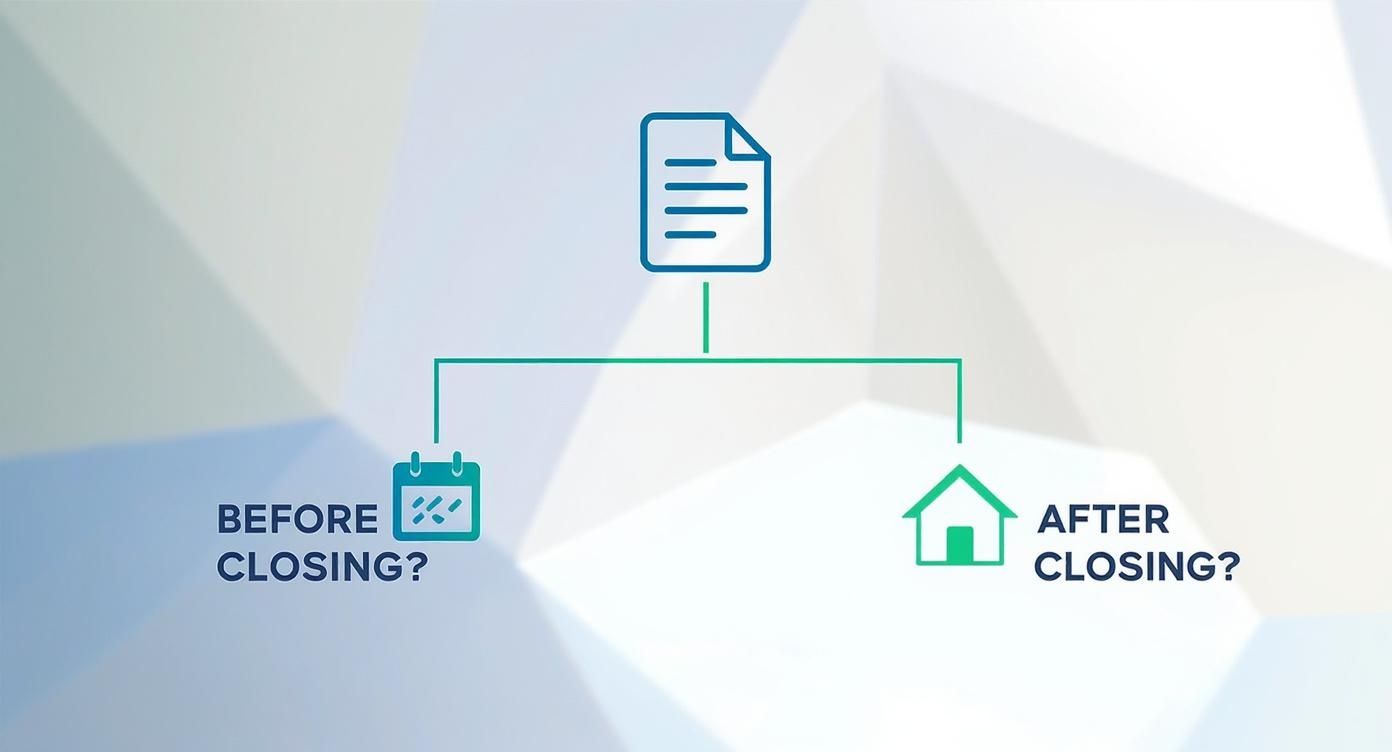
The bottom line is simple: the title commitment is your chance to fix problems before closing. The final policy is your safety net after closing.
Key Questions to Ask Your Agent
The best way to protect yourself is to ask smart questions. Being proactive now saves you from massive headaches later. A thorough review is a non-negotiable part of the process, and our real estate due diligence checklist is a great resource for guiding your overall property investigation.
Here are the critical questions to go over with your Dallas agent and the escrow officer as soon as you have the commitment in hand:
- Requirements Check: Are there any requirements in Schedule B-I that look out of the ordinary or might be tough for the seller to handle before our closing date?
- Exceptions Review: Could you walk me through these exceptions in Schedule B-II? I need to understand how a specific easement or restriction will actually affect how I can use the property.
- Schedule C Concerns: What’s the game plan for resolving the issues on Schedule C? And more importantly, what’s the timeline for getting them officially cleared?
- Objection Deadline: Can you confirm the exact date we need to submit any formal objections? I want to make sure we don’t miss that deadline.
Your review of the title commitment is one of the most important protective measures in the property buying process. It is your right and responsibility to ensure the property title is clear before you invest.
Following a structured plan like this means you’ll know exactly what you’re looking at and how to respond, paving the way for a smooth and secure closing on your new Dallas property.
It’s easy to see the title commitment as just another piece of paper in a mountain of closing documents. But have you ever stopped to think about why it even exists? It’s not just a modern formality; it’s a crucial piece of real estate history that brought order to what was once a chaotic, fraud-ridden mess of property records.
Think back to the late 19th century. As cities like Dallas started to boom, buying and selling land was a risky business. There was no standardized way to prove who truly owned a property, leading to endless disputes. The entire system desperately needed a way to verify a clean “chain of title.”
This is where the concept of title insurance—and its preliminary report, the title commitment—was born. The very first title insurance company popped up in 1876, creating early versions of the commitment to give buyers and lenders the confidence they needed to invest. You can get a great overview of how these documents evolved from the experts at MyLandTrust.com.
The title commitment is not just another document in the closing stack; it’s an evolved tool specifically designed to protect Dallas buyers from the property ownership risks of the past.
Eventually, the American Land Title Association (ALTA) was formed, creating the standardized forms we use across Texas today. This was a game-changer for modernizing real estate transactions. So, when you’re reviewing your title commitment, remember it’s not just red tape. It’s a shield, refined for over a century, to make sure the Dallas property you’re buying is truly yours.
Your Top Title Commitment Questions Answered
When you’re buying a property in Dallas, the paperwork can feel overwhelming. The title commitment, in particular, often raises a few key questions. Let’s break down the common ones so you can move forward with total clarity.
How Long Do I Have to Review It?
Time is of the essence here. The standard Texas residential contract gives you a specific window to review the title commitment and flag any concerns. While this is negotiable, it’s typically around 20 days from the moment you receive it.
This isn’t a soft deadline. You absolutely have to work with your Dallas real estate agent to comb through the document and submit any formal objections before time runs out. Miss that window, and you’ve legally accepted the property’s title, warts and all.
What Happens If a Major Issue Is Found?
It can be jarring to see a surprise pop up on the title commitment, like an unpaid contractor’s lien or a lingering legal judgment against the seller. But don’t panic—this discovery is exactly what the process is designed for.
If you find a serious problem, your agent will immediately file a formal objection with the title company. The purchase contract usually obligates the seller to fix, or “cure,” the defect within a specified period.
This is where the title commitment truly becomes your safety net. If the seller can’t resolve the issue, the contract often gives you the right to walk away from the deal and get your earnest money back. It’s one of the most important protections you have as a Dallas property buyer.
Who Chooses the Title Company in Dallas?
This is a great question, and the answer comes down to negotiation. In Texas, the party who pays for the owner’s title insurance policy typically gets to choose the title company.
In most Dallas-area deals, it’s customary for the seller to cover this cost, so they often make the choice. However, like most things in a real estate offer, this is negotiable. Your agent can help you figure out the best strategy for your specific purchase.
At Dustin Pitts REALTOR Dallas Real Estate Agent, we make sure our clients understand every line of every document. A smooth, secure closing starts with being informed, and we’re here to guide you through the title commitment and beyond. If you’re ready to find your Dallas property with an expert in your corner, visit us at https://dustinpitts.com.