Thinking about making a move to Dallas? You’re not alone. This guide is your complete look at what to expect when you get here, from our booming job market and incredibly diverse neighborhoods to the nitty-gritty logistics of the move itself. The big secret? Dallas gives you all the opportunities of a massive city without the painful price tag you’d find on the coasts.

Why Is Everyone Moving to Dallas?
Dallas has exploded into a top destination for people chasing career growth and a more dynamic lifestyle. It’s not just about the famous skyline or the legendary BBQ, though we have plenty of both. The city’s real magnetic pull comes from a powerful mix of economic muscle, cultural energy, and a genuinely welcoming, can-do spirit. The numbers don’t lie.
The Dallas-Fort Worth (DFW) metroplex is one of the fastest-growing urban areas in the entire country. This constant wave of new residents has swelled the DFW metro population to an estimated 6,732,000, landing it the spot as the fourth most populous metro in the United States.
To give you a quick snapshot of the city, here are some key facts every newcomer should know.
Dallas at a Glance: Quick Facts for Newcomers
This table breaks down some of the most important stats about Dallas, giving you a clear picture of what to expect when you relocate.
| Metric | Statistic | Why It Matters for Relocation |
|---|---|---|
| Median Home Price | ~$410,000 | Offers a more accessible path to homeownership compared to many other major U.S. cities. |
| Average Rent (1-BR) | ~$1,500/month | Your housing budget stretches further, leaving more room for savings and lifestyle expenses. |
| Key Industries | Tech, Finance, Healthcare, Logistics | A diverse and robust job market means more career opportunities and stability in Dallas. |
| Fortune 500 HQs | 24 in DFW | Indicates a strong, business-friendly economy with high-paying jobs in the Dallas area. |
| Average Commute | ~28 minutes | While traffic is a reality, it’s generally more manageable than in coastal megacities. |
Understanding these basics is the first step, but the real story of Dallas is in the opportunities and lifestyle it offers.
A Hub of Opportunity and Lifestyle
So, what’s really fueling this massive move to Dallas? It comes down to a few key advantages that make this city stand out. Dallas has worked hard to create an environment that’s perfect for both professional and personal life.
- A Powerhouse Job Market: Dallas is home to a staggering number of Fortune 500 companies and has thriving sectors in tech, finance, and healthcare. This creates a constant flow of high-quality career paths.
- Real-World Affordability: When you stack it up against other major U.S. cities, Dallas offers a much more manageable cost of living. Your paycheck simply goes further here, especially when it comes to housing and daily costs.
- Neighborhoods for Every Vibe: From the walkable, high-energy streets of Uptown to the historic, tree-lined charm of the M Streets, Dallas has a neighborhood that will feel like home. This guide will dive deep into these areas to help you find your perfect spot.
Dallas strikes a unique balance: it has all the ambition and amenities of a world-class city, but it’s fused with a distinctly Texan sense of community and space. It’s a place where you can build a serious career and actually enjoy the life you’re building.
This blend of economic power and amazing quality of life is a theme you’ll see over and over. As you start planning your move, it’s crucial to get a feel for the day-to-day realities. For a deeper dive, be sure to check out our guide on living in Dallas for young professionals. This complete Dallas relocation guide will arm you with the tools and insights you need for a seamless move.
Decoding the Dallas Cost of Living
Let’s talk about one of the biggest reasons people are flocking to Dallas: the city is surprisingly practical, financially speaking. It’s a rare sweet spot. You get the energy and career opportunities of a massive American city, but with a cost of living that hasn’t shot into the stratosphere. Your paycheck just goes further here, especially compared to coastal giants like L.A. or New York.
This isn’t just a feeling; the numbers back it up. When you zoom out, the overall cost of living in Dallas is only about 2% higher than the U.S. average. For a city of this size and economic muscle, that’s an incredibly slim margin. If you’re moving from a more expensive market, you’ll feel that difference almost immediately. It’s the kind of financial breathing room that can boost savings, investments, or simply quality of life.
But city-wide stats only tell part of the story. The real picture of what it costs to live in Dallas comes into focus when you start digging into the individual expenses that will make up your monthly budget.
Monthly Expense Comparison Dallas vs National Average
To really plan a successful move, you need to understand where your money will be going each month. Think of your budget as a puzzle; each expense is a piece you need to place. This table breaks down the key pieces, showing how Dallas stacks up against the national average.
| Expense Category | Average Monthly Cost in Dallas | U.S. National Average | Notes for New Residents in Dallas |
|---|---|---|---|
| Housing (1-BR Rent) | ~$1,465 | ~$1,379 | Rent is competitive for a major city, with newer Dallas buildings often including premium amenities. |
| Utilities (Basic) | ~$175 | ~$170 | Summer A/C usage can cause spikes; consider this when choosing a Texas electricity plan. |
| Transportation | ~$450 | ~$520 | A car is nearly essential in Dallas, but costs are offset by lower gas prices and no state vehicle inspections. |
| Groceries | ~$350 | ~$380 | Competitive grocery chains like H-E-B and Tom Thumb help keep food costs in Dallas below the national average. |
| Healthcare | ~$480 | ~$500 | Dallas has world-class medical facilities, with costs slightly below the U.S. average. |
As you can see, most of the big-ticket items in a Dallas budget hover right around, or even dip below, the national average. This financial predictability gives you a solid foundation to build on as you get settled in the city.
The Housing Equation Renting vs Buying
Housing is almost always the biggest line item in a budget, and Dallas offers realistic paths for both renters and aspiring homeowners. The rental market is incredibly active and diverse. The average rent for a one-bedroom apartment lands around $1,465, though this can swing pretty dramatically depending on where you look. A place in a high-demand area like Uptown will definitely command a premium.
For those wanting to buy, the Dallas housing market is a compelling alternative to the sky-high prices on the coasts. While values have certainly climbed, the median home price of roughly $410,000 keeps the dream of homeownership within reach for many.
The key takeaway for anyone considering a move is that homeownership is a realistic goal in Dallas. While other major cities push this milestone out of reach for many, Dallas provides a clearer, more accessible path to putting down roots.
This accessibility is a huge part of the Dallas lifestyle. It means you can build equity and invest in your future without having to give up the perks of living in a major metro area.
How Neighborhoods Affect Your Bottom Line
Finally, it’s critical to understand that your real cost of living will be shaped by the specific Dallas neighborhood you choose. The city isn’t one-size-fits-all; it’s a patchwork of distinct communities, each with its own vibe and price tag.
- Uptown and Downtown: If you want a high-energy, walkable lifestyle, this is your spot. Just know it comes with the highest rental and property costs in Dallas.
- Bishop Arts District: This artsy, creative hub strikes a great balance, blending historic charm with trendy shops and restaurants at a more moderate price point.
- Old East Dallas and Lakewood: Here you’ll find a more classic residential feel, with beautiful tree-lined streets and great parks, often at a more budget-friendly level.
Your neighborhood choice is much more than a lifestyle decision—it’s a major financial one. As this Dallas relocation guide continues, we’ll dive deep into these areas to help you find that perfect spot where atmosphere and affordability meet.
Finding Your Place in Dallas Neighborhoods
Picking a neighborhood in Dallas is a lot like choosing a personality for your new life here. This is probably the single biggest decision you’ll make when you move. It sets the tone for your daily life, your social circle, and frankly, how much you’ll love living here. Dallas isn’t just one big city; it’s a patchwork of totally unique districts, each with its own beat.
So, how do you find the right fit? You have to look beyond the numbers and really get a feel for the vibe of each place. Are you after that high-energy, walk-everywhere urban lifestyle? Or maybe a creative hub packed with indie shops and art? Or would you prefer a quiet, tree-lined street near a park? This part of our Dallas relocation guide is all about helping you figure that out.
For the Social and Career-Focused: The Urban Core
If your daydreams involve strolling to a coffee shop, hitting up lively happy hours, and being right in the middle of everything, Dallas’s urban core is calling your name. These neighborhoods are the city’s heartbeat, built for convenience and a non-stop social scene.
- Uptown: This is the spot, without a doubt, for professionals who want that live-work-play setup. You’ve got high-rise apartments, fantastic restaurants, and the Katy Trail right there for your morning jog. It’s the picture of modern Dallas living. Yes, rents are higher here, but what you get in return is an energy and convenience that’s hard to beat.
- Downtown: The central business district has really come into its own as a place to live, not just work. It’s perfect if you want a commute that’s practically zero and love being surrounded by the city’s biggest cultural attractions, from Klyde Warren Park to the Arts District. It has a true big-city feel, with a great mix of historic lofts and shiny new towers.
This city-center boom is no accident. Dallas is growing fast, with a population now around 1,317,210 residents, fueled by people moving here from all over. The median age in the DFW metro has dropped to 35.1 years, which is noticeably younger than other big cities. It’s this flood of young professionals that’s driving the demand for cool, modern housing in the heart of the city.
For the Creative and Community-Minded: The Arts Hubs
If you value authentic character more than a corporate shine, Dallas has some amazing neighborhoods that champion local art, independent businesses, and a real sense of community. These spots feel more grounded and eclectic.
Dallas’s artistic neighborhoods are more than just places to live; they are living galleries. They offer a lifestyle where creativity is woven into the fabric of the community, from murals on the walls to the independent spirit of the local businesses.
Bishop Arts District over in Oak Cliff is the perfect example. It’s a super charming, walkable area famous for its one-of-a-kind boutiques, art galleries, and some of the best food you’ll find anywhere in Dallas. The housing here is a cool mix of beautifully restored historic homes and new apartments, which creates a really welcoming and diverse vibe.
Then there’s Deep Ellum, the legendary entertainment hub of Dallas. It’s known for its live music venues, incredible street art, and a gritty, creative energy. It’s definitely got an edgier, more alternative feel compared to the polish of Uptown.
For Lovers of Green Space and Established Charm
For those who want to be close to the city but crave a quieter, more residential setting with plenty of natural beauty, Dallas delivers. These areas offer a perfect escape from the daily grind without making you feel disconnected.
Lakewood is a prime example, sitting right next to the gorgeous White Rock Lake. People absolutely love this neighborhood for its mature trees, stunning historic Tudor-style homes, and a strong, tight-knit community feel. It’s the perfect spot if your weekends involve kayaking, sailing, or just biking the trail around the lake. The vibe is established, peaceful, and always in high demand.
Likewise, other parts of East Dallas offer that great blend of old-school charm and modern updates. Neighborhoods like the M Streets are famous for their unique architecture and beautiful, tree-lined streets. If you’re leaning toward this side of town, our 75206 home buying guide is a great resource to understand what makes the area so special.
Ultimately, finding your place in Dallas is all about matching your priorities—whether that’s walkability, community, or quiet—to the unique character of the neighborhood you’ll soon call home.
When you start your search for a new home in Dallas, it’s easy to get laser-focused on the city itself. But stopping at the Dallas city limits is like only looking at one piece of a massive, intricate puzzle. The Dallas-Fort Worth area isn’t just two cities—it’s a sprawling, interconnected Metroplex, a web of dozens of suburbs and cities, each with its own vibe and distinct advantages.
For many folks moving here, the real magic happens just outside the city proper. This part of our Dallas relocation guide is for anyone who might be working in Dallas but is craving a different pace of life when they clock out. These surrounding cities offer a fantastic mix of affordability, unique community atmospheres, and more elbow room, all while keeping you plugged into the energy of the urban core.
Why Look Beyond Dallas Proper?
Choosing to live in a DFW suburb isn’t a compromise; it’s a strategic move to get exactly what you want. Long gone are the days when these were just sleepy bedroom communities. Many have exploded into their own economic powerhouses, complete with massive corporate headquarters, buzzing downtown squares, and amenities that rival any big city.
Here are a few compelling reasons to broaden your search into the greater Metroplex:
- More Home for Your Money: Generally speaking, your budget will stretch a lot further. Think more square footage, bigger backyards, and a wider variety of home styles, from brand-new builds to charming, established houses.
- Distinct Community Flavors: Every suburb has its own personality. You’ve got the polished, corporate energy of Plano, the sports-crazed buzz of Frisco, and the down-to-earth entertainment hub of Arlington.
- Thriving Local Job Markets: You might not even have to commute into Dallas. Many of these suburbs are major job centers themselves, which could mean a much shorter, or even non-existent, trip to the office.
The Metroplex really operates as one giant ecosystem. Living in a suburb doesn’t cut you off from Dallas; it just gives you a different entry point into the same dynamic region, often with some serious lifestyle perks attached.
This symbiotic dance between Dallas and its neighbors is the secret sauce to the area’s incredible growth. You get all the benefits of a world-class city while enjoying the specific feel of your chosen hometown.
A Snapshot of Key DFW Suburbs
To help you get your bearings, let’s take a quick tour of some of the most popular cities that make up the DFW Metroplex. Each one serves up a different slice of Texas life.
Plano and Frisco: The Northern Powerhouses
Often spoken of in the same breath, Plano and Frisco are the economic titans sitting just north of Dallas. They’ve become magnets for major corporate relocations, attracting giants like Toyota and the Dallas Cowboys’ headquarters.
- Plano: Think established, safe, and sophisticated. Plano is known for its mature, leafy neighborhoods. It masterfully blends quiet residential life with high-energy commercial hubs like the Legacy West development.
- Frisco: If Plano is established, Frisco is all about the new. As one of the fastest-growing cities in the country for years, it embodies modern living. It’s a hotspot for sports (they call it “Sports City, USA” for a reason), entertainment, and new construction.
Irving: The Central Connector
Perfectly positioned between Dallas and Fort Worth, Irving is the definition of convenience. It’s home to the impressive Las Colinas development, a master-planned community featuring scenic canals, towering office buildings, and sleek apartments. Its central location and direct access to DFW International Airport make it a no-brainer for frequent flyers and professionals who need to be everywhere at once.
Arlington: The Entertainment Capital
Right in the middle of Dallas and Fort Worth, Arlington has carved out its niche as the region’s entertainment core. It’s where you’ll find AT&T Stadium (home of the Dallas Cowboys), Globe Life Field (where the Texas Rangers play), and the iconic Six Flags Over Texas theme park. The vibe here is a bit more blue-collar and down-to-earth, with plenty of affordable housing options.
This suburban boom is what defines the entire DFW region today. Just look at Princeton, Texas, recently crowned the fastest-growing city in the U.S. with a mind-blowing 30.6% growth rate. What’s driving it? Affordability. Its typical home price of around $325,000 is a world away from nearby Frisco’s $685,000, making it a magnet for newcomers. You can dive deeper into how affordability is reshaping the Metroplex with these recent Texas population studies.
Navigating The Dallas Job Market
For most people, the decision to pack up and move hinges on one critical question: what’s the job situation like? When it comes to Dallas, the answer is a big reason so many people are flocking here. This city is a genuine economic powerhouse where career ambition meets real-world opportunity.
What makes the economy here so robust? It’s not a one-trick pony. Dallas isn’t propped up by a single industry; its strength lies in a deep and diverse mix of established sectors. This creates a resilient job market that can ride out economic waves while consistently creating new roles for professionals.
The Pillars Of The Dallas Economy
Dallas has firmly cemented its reputation as a major business hub, drawing in top-tier talent and corporate investment from across the country and the world. This vibrant economy is built on the back of several key industries, offering a staggering variety of career paths for anyone new to town.
- Technology and Innovation: Long before it became a trendy buzzword, Dallas was a tech town. Industry giants like Texas Instruments have been here for ages, now surrounded by a booming ecosystem of software firms, data centers, and telecom companies.
- Finance and Professional Services: As a major financial center, Dallas is home to massive operations for companies like JPMorgan Chase and Bank of America. It’s a true magnet for jobs in banking, investment management, and high-level corporate consulting.
- Healthcare: The healthcare sector is a colossal employer in the region, anchored by world-class systems like Texas Health Resources and Baylor Scott & White Health. This translates to constant demand for both clinical and administrative professionals.
- Logistics and Transportation: Its central U.S. location and the powerhouse that is DFW International Airport make Dallas a critical logistics hub. With companies like Southwest Airlines headquartered here, opportunities in transportation and supply chain management are everywhere.
Dallas is far more than just a place to find a job; it’s a place to build a career. The city is home to 24 Fortune 500 company headquarters, a testament to its business-friendly climate and deep talent pool.
This incredible concentration of major corporations means there’s a steady stream of high-quality, high-paying jobs. But the opportunities don’t stop with the big players. Dallas also has a rapidly growing startup scene, especially in tech and creative fields, which offers an exciting path for those with a more entrepreneurial spirit.
Actionable Advice For Your Dallas Job Search
Trying to find a job while planning a move can feel overwhelming, but a smart, strategic approach will set you up for success. As you kick off your search in Dallas, knowing how to effectively use LinkedIn for your job search is a huge advantage for connecting with local recruiters and getting on companies’ radar.
Beyond just clicking “apply” online, getting plugged into the local professional scene is key. Dallas has a genuinely welcoming business community with countless networking groups. Organizations like the Dallas Regional Chamber and various young professionals networks hold regular events that are perfect for making real connections.
For a deeper dive into the major industries and employers, be sure to check out this Dallas job market overview and comprehensive guide. Taking these steps will help you confidently step into one of the most dynamic and promising economic landscapes in the country.
Your Practical Dallas Moving Checklist
So, you’ve made the call—Dallas is your next home. Now for the part that can feel like a mountain to climb: the actual move. A smooth relocation really just boils down to great organization. Think of it as breaking one huge project down into smaller, bite-sized tasks. This checklist is your game plan for a seamless transition to Big D.
Before you even think about boxes and tape, there’s a foundational sequence that sets you up for success: nail down your budget, research the Dallas neighborhoods that fit your vibe, and only then start looking at properties. Following this order from the get-go keeps your search realistic and laser-focused.
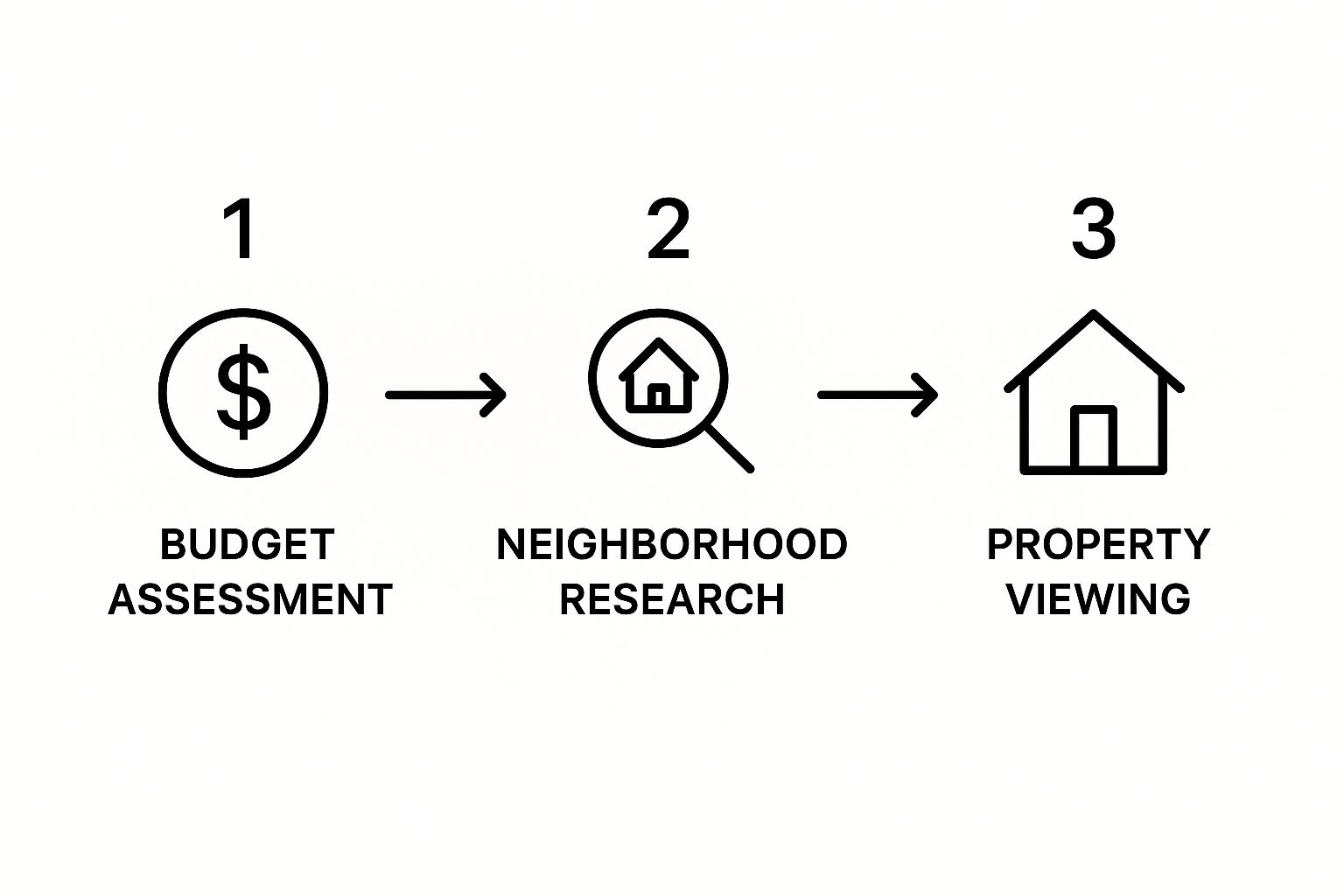
This flow really drives home the point that a successful move starts with solid planning long before a single box gets packed. When you tackle the money and the location first, the house-hunting part becomes so much more efficient.
Your Timeline For A Seamless Move
A chronological game plan is the secret to avoiding that last-minute scramble. By spreading out the to-do list over a couple of months, you can handle everything from hiring movers to switching on the lights without the stress.
8 Weeks Before Your Move:
- Create a Relocation Budget: Don’t forget anything! This includes movers, travel, security deposits, and those first-week setup costs for your move to Dallas.
- Research & Vet Moving Companies: Get at least three quotes from movers with solid reputations. You’ll want to check their USDOT number and read recent reviews to make sure they’re the real deal.
- Declutter and Downsize: It’s time to go through everything you own. Sell, donate, or toss what you don’t need. It’ll cut down your moving costs and give you a fresh start.
4-6 Weeks Before Your Move:
- Order Packing Supplies: Stock up on boxes, tape, packing paper, and a good set of markers.
- Begin Packing Non-Essential Items: Start with the stuff you won’t miss for a few weeks. Think books, seasonal clothes, and decorative pieces.
- Notify Key Parties: Give your current landlord your notice or get your home ready to list for sale.
The most critical step here is locking in your logistics. Once you’ve picked a moving company and have that date set in stone, everything else can fall into place around it.
For an even deeper dive to make sure you don’t miss a single detail, this ultimate residential moving checklist is a fantastic resource.
Settling In Your First Week In Dallas
The moving truck is gone, and you’re standing in a sea of boxes. A whole new set of tasks just began. These are the immediate steps to make your new place feel like a home and start becoming an official Texan.
First 24-48 Hours:
- Conduct a Walkthrough: Check for any dings or damage from the move and make sure all your utilities are on and working.
- Unpack the Essentials: Hit the kitchen, bathroom, and bedroom first. This will make your space livable right away.
- Set Up Internet Service: If you didn’t do this ahead of time, get that installation scheduled immediately. You’ll need it to manage all your other tasks.
Your First Week and Beyond:
Now it’s time to handle the official business of becoming a Texan. You’ve got a limited window for these, so don’t put them off.
- Texas Driver’s License: Newcomers have 90 days to get a Texas driver’s license.
- Vehicle Registration: You’ve got 30 days to register your vehicle in Texas. You’ll need to pass a state inspection first.
- Update Your Address: Make it official with the USPS, your banks, credit card companies, and any subscription services.
- Register to Vote: This is an easy one—you can do it right when you update your driver’s license at the DPS office.
Got Questions About Moving to Dallas? We’ve Got Answers.
Even with the best-laid plans, a move to a new city is always full of unknowns. Here are some of the most common questions we get from newcomers about what it’s really like to live in Dallas day-to-day.
How Bad Is the Traffic, Really?
Let’s not sugarcoat it: Dallas is a huge metro area, and traffic is part of the deal. But if you’re picturing a non-stop LA-style gridlock, you can breathe a little easier. Commutes are generally more manageable, with the average one-way trip clocking in around 28 minutes.
The city’s highway system is a massive “hub and spoke” network, with big loops like I-635 (LBJ Freeway) and the President George Bush Turnpike connecting everything. This setup helps spread things out, but you’ll definitely hit serious congestion during rush hour on major arteries like US-75 or the Dallas North Tollway. The real trick is learning the rush hour patterns and figuring out your go-to alternate routes.
Can You Get by With Public Transportation?
While Dallas is definitely a car-centric city, you might be surprised by its public transit system. Dallas Area Rapid Transit, or DART, runs a pretty extensive network of light rail trains and buses.
- DART Light Rail: This is the heart of the system. The rail lines are clean, reliable, and a fantastic way to commute if you live and work near a station. They connect Downtown Dallas to tons of suburbs, major job centers like Las Colinas, and even both DFW and Love Field airports.
- Buses and the TRE: Where the rail doesn’t go, the bus network often does. Plus, for anyone splitting time between the big cities of the Metroplex, the Trinity Railway Express (TRE) is a commuter train that provides a crucial link between Dallas and Fort Worth.
To be clear, you’ll still want a car to truly explore everything the massive DFW Metroplex has to offer. But if you land in a super-walkable neighborhood like Uptown or parts of Downtown, you could certainly manage without one.
What’s the Deal With Property Taxes?
This is a big one for anyone thinking about buying a home in Dallas. The good news? Texas has no state income tax, which is a massive financial win. The trade-off is that the state leans heavily on property taxes, and yes, they are higher than in many other parts of the country.
In Dallas County, the effective property tax rate tends to be around 1.9% of a home’s assessed value. That rate isn’t just one tax; it’s a combination of city, county, school district, and other local taxes all rolled into one. While that percentage can feel like a shock at first, it’s often offset by home prices in Dallas that are much more reasonable than what you’d find on the coasts, balancing out the overall cost of ownership.
What’s the Best Way to Meet People and Get Connected?
Dallas is an incredibly friendly and welcoming place, built on relationships and a genuine sense of community. The absolute fastest way to feel at home is to jump into groups that align with your interests, whether professional or personal.
Look for professional organizations in your field, join a local sports league, find a volunteer opportunity you’re passionate about, or even just show up to your new neighborhood association meeting. It’s the best way to start building your circle and making this big city feel like home.
Finding your way in the Dallas real estate market takes a strategic approach and boots-on-the-ground expertise. At Dustin Pitts REALTOR Dallas Real Estate Agent, our specialty is making your move as seamless as possible, from pinpointing the right neighborhood to handing you the keys to your new home. See how our dedicated team can help you by visiting us at https://dustinpitts.com.