
So, is Dallas a good place to live? For many people I talk to, the answer is a big, unequivocal yes. The real magic of Dallas lies in its powerful one-two punch: a booming job market paired with a cost of living that’s still sane compared to other major U.S. cities. That combination alone makes it a top contender for anyone looking to get ahead without breaking the bank.

The Definitive Answer on Living in Dallas
Dallas has this unique feel—it’s ambitious and driven, but it doesn’t have that inaccessible, big-city wall that you find elsewhere. It’s a place where you can chase a serious career, powered by a massive economic engine full of major corporations, yet still afford a comfortable lifestyle and even a home. It’s no surprise that people are flocking here, not just for the jobs, but for the life those jobs can actually support.
Think of this as your quick-start guide to life in the Big D. We’ll get into the nitty-gritty of neighborhoods, costs, and culture later, but this is the high-level snapshot.
The image below gives you a clean visual breakdown of what makes Dallas such an attractive place to land.
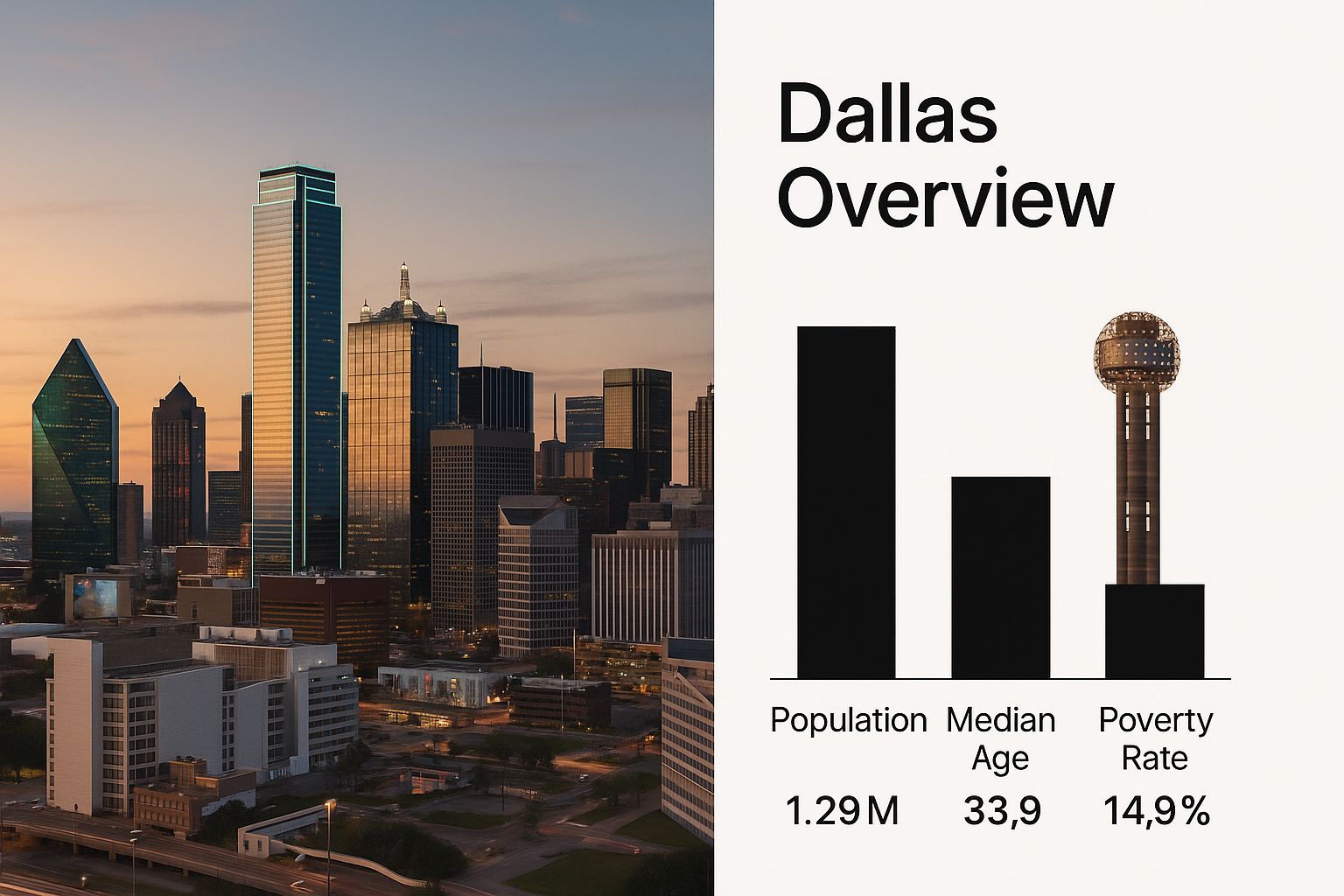
As you can see, Dallas strikes a great balance between economic horsepower and genuine livability, creating a pretty compelling package for anyone thinking about a move.
A Quality of Life Backed by Data
The buzz around Dallas isn’t just talk; it’s backed by solid numbers that paint a clear picture of a well-rounded city. When you look at the key metrics that shape daily life, Dallas scores exceptionally well.
Dallas boasts a very high Quality of Life Index of 192.97. This isn’t just an arbitrary number—it reflects a strong blend of economic opportunity, great climate, and affordability, placing it among the top-tier cities for overall well-being.
Diving deeper, a few key indexes really explain why the city is such a magnet. The Purchasing Power Index is a sky-high 173.43, which means your salary stretches a lot further here. On top of that, real estate is surprisingly within reach, with a very low Property Price to Income Ratio of just 3.08.
Here’s a quick table to summarize the hard data on what it’s like to live here, based on recent metrics.
Dallas Quality of Life at a Glance
A summary of key metrics that define the living experience in Dallas, based on recent data from Numbeo.
| Metric | Score/Index | Interpretation |
|---|---|---|
| Quality of Life Index | 192.97 (Very High) | Overall well-being is excellent, combining economic and lifestyle factors. |
| Purchasing Power Index | 173.43 (Very High) | The average salary buys more goods and services here than in many other cities. |
| Health Care Index | 66.09 (High) | Residents have access to quality healthcare services and infrastructure. |
| Traffic Commute Time Index | 34.70 (Low) | Commutes are more manageable compared to other major metropolitan areas. |
| Property Price to Income Ratio | 3.08 (Very Low) | Housing is significantly more affordable relative to the average income. |
These figures tell a compelling story. It’s a city that’s not just growing, but growing in a way that feels sustainable and manageable for the people who call it home.
Exploring the Dallas Job Market and Economy
When people ask, “is Dallas a good place to live?” what they’re often really asking about is opportunity. Let’s be honest, a great city needs great jobs. On that front, the Dallas-Fort Worth economy isn’t just growing; it’s a high-powered engine pulling in ambitious professionals from all over the country. This is a city built on business, creating a landscape that’s absolutely ripe with potential.
Think of the Dallas economy less like a one-trick pony and more like a diverse, robust ecosystem. It isn’t hanging its hat on a single industry. Instead, it thrives on a powerful mix of sectors, which means a dip in one area doesn’t send the whole job market into a tailspin. For anyone looking to build a lasting career, that stability is a massive draw.
The sheer number of Fortune 500 headquarters here acts as a powerful anchor for the entire professional scene. Companies like AT&T, American Airlines, and Texas Instruments aren’t just big names on office buildings; they’re epicenters of innovation that create a huge ripple effect, spinning off jobs across countless supporting industries.
Key Industries Driving Dallas Growth
The city’s economic muscle is seriously multifaceted. While its business-friendly reputation gets a lot of attention, a few specific industries really form the backbone of its job market. This diverse foundation provides a solid buffer against economic swings and opens up a ton of different career paths.
Some of the most dominant sectors you’ll find here are:
- Finance and Professional Services: Dallas is a bona fide financial hub, packed with major banks, investment firms, and corporate legal teams.
- Technology and Innovation: The “Silicon Prairie” isn’t just a catchy nickname. It’s real, with a tech scene that’s rapidly expanding into everything from telecom to cutting-edge software development.
- Logistics and Trade: Thanks to its central U.S. location and the powerhouse that is DFW International Airport, Dallas has become an absolutely critical hub for transportation, distribution, and global logistics companies.
This industrial variety means you’re not just moving to a city with jobs. You’re moving to a city with a dynamic, resilient, and forward-thinking economy. The incredible range of major employers creates a competitive environment that, more often than not, leads to better opportunities and career growth for skilled people.
The Real Impact on Your Career
So, what does all this economic buzz mean for you? It has a very real, tangible impact, making Dallas a top-tier destination for your professional life. A recent analysis in America’s Best Cities Report ranked Dallas 14th overall among large U.S. cities—a testament to its exceptional quality of life.
The city scored particularly high right where it counts for professionals. It placed 6th for its concentration of large companies and 4th for its airport connectivity, which is a game-changer for business travel. On top of that, the Dallas-Fort Worth area added a massive 59,000 jobs since March 2024, proving this is a labor market that isn’t just holding steady—it’s booming. You can explore more about these impressive city rankings and see exactly what they mean for residents.
What Living in Dallas Actually Costs

Let’s be honest, affordability is one of the biggest magnets drawing people to Dallas. It’s a powerhouse U.S. city with a booming economy, yet your paycheck stretches remarkably further here compared to coastal hubs like New York or LA. But what does that affordability actually feel like when the bills come due?
It’s time to move past vague cost-of-living indexes and get into the real numbers. Understanding the financial reality of living in Dallas is critical to deciding if it’s the right move for you. Think of your budget less like abstract math and more like pouring a solid foundation for your life here; get that right, and everything else falls into place much more easily.
Housing: The Cornerstone of Your Budget
Housing is almost always your biggest monthly expense, but Dallas offers a pretty diverse and accessible market. Whether you’re picturing yourself in a trendy, walkable apartment or buying a home with a real backyard, you’ll find more attainable options than in many peer cities.
If you’re renting, a spot in a sought-after neighborhood like Uptown or the Bishop Arts District will obviously cost more, but it’s not out of reach for many professionals. For buyers, the median home price in Dallas is where the difference really becomes clear, especially when you compare it to other major economic centers.
One of the most compelling aspects of Dallas’s affordability is its housing market. The median home price sits around $400,000, which opens up a realistic path to homeownership for a lot of people. That number feels even better when you stack it against the $700,000+ medians you’ll see in other large cities.
This accessibility means building equity isn’t just a dream; it’s a genuine possibility for many. If you’re curious how these numbers stack up against another major metro, it’s worth taking a look at a direct cost of living comparison between Dallas and Minneapolis to see the financial breakdown in black and white.
Everyday Expenses: From Groceries to Gas
Beyond your rent or mortgage, it’s the daily costs that shape your lifestyle. The good news is that these expenses are also quite reasonable in Dallas, helping you live comfortably without constantly worrying about your budget.
Here’s a snapshot of what some typical monthly costs might look like:
- Utilities: Your basics—electricity, heating, cooling, and water—for a standard apartment will generally run between $170 and $200 a month. Just remember, that summer A/C bill is a real thing here!
- Groceries: A monthly grocery run for one person usually lands somewhere between $350 and $450, depending on how you like to shop and eat.
- Transportation: Dallas is very much a car city. If you’re a daily commuter, you should probably plan for $300 to $500 a month to cover gas, insurance, and maintenance. Hopping on the DART public transit system can definitely help lower this cost.
- Entertainment: From catching a Cowboys game to a night out in Deep Ellum, a solid entertainment budget might be around $200 to $400. This should comfortably cover dinners, events, and other fun stuff.
These figures really highlight the Dallas value proposition. You get to live in a dynamic, exciting urban center, but the cost structure allows for a balanced life. It’s this powerful combination of a strong job market and manageable living expenses that leads so many people to say “yes” when asked if Dallas is a good place to live.
Finding Your Perfect Dallas Neighborhood
Picking a city is one thing; finding your little corner of it is what really makes it feel like home. Dallas isn’t just one big, uniform place—it’s a massive collection of distinct districts, each with its own vibe, rhythm, and way of life. The answer to “is Dallas a good place to live?” really comes down to which neighborhood clicks with you.
Think of it as a matching service. The real goal isn’t just to find an address, but to discover a community that fits your daily routine like a glove. Whether you see yourself in the middle of the high-energy urban action or on a quiet, tree-lined street, Dallas has a spot that’ll feel just right.
The Urban Core: Vibrant and Walkable
For anyone who loves the constant hum of city life, the central neighborhoods in Dallas offer an experience that’s hard to beat. These areas are built for people who want restaurants, parks, and nightlife just a few steps from their front door.
Uptown is the classic example. It’s a polished, high-octane district famous for its upscale apartments, trendy shops, and some of the best patio scenes in the city. Life here is social and fast-paced, with the McKinney Avenue Trolley connecting a seemingly endless chain of bars and restaurants. It’s a magnet for professionals who want a true live-work-play setup without ever needing to find their car keys.
A quick trip away, the Bishop Arts District offers a totally different flavor. This neighborhood trades Uptown’s gloss for a quirky, artistic soul. It’s a walkable grid of indie boutiques, art galleries, one-of-a-kind restaurants, and historic theaters. The housing is a mix of charming old bungalows and new modern apartments, attracting a creative and wonderfully eclectic crowd.
The heart of Dallas is where convenience and culture collide. It’s all about being immersed in the action, with a strong sense of community built around local businesses and shared spaces like Klyde Warren Park, which literally bridges the gap between Downtown and Uptown.
The Suburban Hubs: Space and Polish
For many people, the ideal Dallas lifestyle is found just outside the city center in its world-class suburbs. These areas provide more space, top-rated public amenities, and a more relaxed pace, all while keeping fantastic dining and shopping within easy reach.
- Plano: Frequently landing on “best places to live” lists nationwide, Plano strikes a perfect balance between suburban comfort and corporate might. It’s home to major company headquarters, which fuels a strong local job market. Here, you’ll find sprawling parks, excellent schools, and master-planned communities filled with pristine homes.
- Frisco: Known for its absolutely explosive growth, Frisco is a modern, dynamic suburb with a serious focus on sports and entertainment. It’s home to the Dallas Cowboys’ headquarters, “The Star,” and a whole host of other sports venues, so there’s always something going on. The housing stock is newer, and the entire infrastructure is built for modern living.
Choosing the right neighborhood is a massive step in your relocation journey. For a closer look, it’s worth exploring a detailed breakdown of the best neighborhoods in Dallas for young professionals, which offers even more specific insights. At the end of the day, whether you’re pulled in by the electric buzz of Uptown or the polished appeal of Plano, finding your perfect match is the key to truly loving your life in Dallas.
The Dallas Lifestyle and Cultural Scene
A city’s true character isn’t found on a balance sheet or in job reports. It’s in the moments between work and sleep—the texture of daily life. So, when people ask, “is Dallas a good place to live?” the real answer lies in its vibrant cultural fabric and the lifestyle it offers. Trust me, beyond the impressive economy, Dallas delivers a rich, layered experience that keeps things interesting.
Think of the city’s culture as a sprawling menu with something for every palate. The star of the show is the Dallas Arts District, the single largest urban arts district in the entire country. We’re talking 20 square blocks packed with world-class venues like the Dallas Museum of Art, the Nasher Sculpture Center, and the AT&T Performing Arts Center. This isn’t just a collection of buildings; it’s a cultural engine that puts global-level art, theater, and music right at your fingertips.
Of course, you can’t talk about Dallas life without mentioning the food. The culinary scene here is incredible, running the gamut from upscale steakhouses in Uptown to the kind of authentic Tex-Mex and barbecue joints in Bishop Arts or Deep Ellum that you’ll be telling your friends about for weeks. It’s a city where you can have a completely different food adventure every night, a true reflection of the diverse influences that make Dallas what it is.
Beyond Concrete: Green Spaces and Social Hubs
While Dallas is a thoroughly modern metropolis, it has a surprising appreciation for open space. The city strikes a fantastic balance between urban energy and natural escapes. These aren’t just patches of grass, either—they are genuine social centers that are central to the Dallas lifestyle.
- Klyde Warren Park: This 5.2-acre park is a true feat of engineering, built right over a recessed freeway. It’s a constant hub of activity, with everything from food trucks and free yoga classes to outdoor concerts. It has quickly become a central gathering spot for all of Dallas.
- White Rock Lake: For those craving a bigger dose of nature, this 1,015-acre lake is the city’s favorite outdoor playground. With over nine miles of trails, it’s perfect for a long run, a bike ride, or just a quiet afternoon away from the city buzz.
This blend of cosmopolitan culture and accessible outdoor recreation is what truly defines the city’s appeal. Your weekend can just as easily be spent kayaking on the lake as it can catching a world-premiere show downtown.
Sports and Nightlife: A City That Goes All In
You really can’t get a feel for the Dallas lifestyle without understanding its absolute obsession with professional sports. This city lives and breathes for its teams, especially the Dallas Cowboys. On game days, the entire metroplex buzzes with an electric energy that’s infectious, whether you’re at the massive AT&T Stadium or packed into a local sports bar.
And when the sun sets, the city’s nightlife scene truly comes alive. Each neighborhood has its own flavor. You’ve got the high-energy clubs of Uptown, the iconic live music venues of Deep Ellum (a must-visit), and the more laid-back, craft-cocktail bars in Lower Greenville. This vibrant, diverse social landscape is a huge reason why so many people find Dallas to be such a welcoming and engaging place to build a life.
The Pros and Cons of Calling Dallas Home
So, is Dallas a good place to live? To get a real answer, you have to look at the whole picture—the highlights and the hurdles. No city is perfect, and Dallas is a city of clear trade-offs. It offers undeniable perks that pull in thousands of new residents every year, but it also has its challenges that you’ll want to be ready for.
On the bright side, the advantages are powerful. You’ve got a booming job market that offers a massive range of career paths, and the cultural scene is packed with world-class arts and entertainment. It’s a dynamic mix that allows you to chase your professional ambitions while still having a rich social life.
But life here isn’t without its drawbacks. Let’s talk about the heat. The summer sun is intense, with temperatures frequently soaring past 100°F. Air conditioning isn’t a luxury; it’s an absolute necessity. Dallas is also a sprawling, car-centric city, which means traffic and long commutes are often part of the daily grind unless you manage to live and work in the same pocket of the Metroplex.
What Do The Locals Think?
Recent data gives us a clearer look at how current residents feel. A 2024 survey from the University of Texas at Dallas found that a strong majority—a full three out of four North Texas residents—were satisfied with where they live. That’s a pretty solid endorsement.
However, the same survey shed light on some real concerns. About 33% of residents felt that violent crime was on the rise, and nearly 30% reported not knowing their neighbors. This points to some of the growing pains and challenges with community connection in a fast-growing urban area.
Ultimately, deciding on Dallas means weighing its incredible economic strength and cultural vibrancy against the realities of its climate and infrastructure. It’s all about finding out if that balance works for your specific lifestyle and priorities.
For anyone thinking about making the move, it’s essential to weigh these factors for yourself. For a much deeper dive, check out our full guide covering the pros and cons of living in Dallas, Texas. It offers the balanced perspective you need to make a truly well-informed decision.
Common Questions About Moving to Dallas
When you’re thinking about moving to Dallas, the big picture is great, but it’s the day-to-day details that really matter. Here are some of the most common, practical questions we hear from people considering a move to the Big D.
What Is the Traffic Really Like?
Let’s be direct: Dallas is a car-dependent city, and the traffic can be intense. While official stats might say the commute times are better than in some other major cities, your real-world experience will depend entirely on where you live and work.
Major highways like I-35E, I-635, and US-75 get seriously congested during rush hour. If you can live close to your job or near a DART rail station, you can save yourself a lot of headaches. Outside of peak hours, though, getting around the Metroplex is usually pretty smooth.
Do You Need a Car to Live in Dallas?
For most people, the answer is a definite yes. Dallas and its suburbs are sprawling, and a car is your ticket to freedom. It’s essential for everything from grocery runs and errands to exploring all the different corners of the region.
While some pockets of the city, like Uptown and Downtown, are genuinely walkable, and the DART light rail connects many key spots, you’ll feel pretty limited without a vehicle. For true mobility and the convenience to access everything Dallas has to offer, a car is practically a necessity.
How Hot Do Dallas Summers Get?
There’s no sugarcoating it—Dallas summers are notoriously hot and humid. From about June through September, you can expect daily highs to consistently soar past 95°F (35°C), with plenty of days topping the 100°F (38°C) mark.
Air conditioning isn’t just a nice-to-have; it’s a fundamental part of life here, in your home, car, and every building you enter. Locals learn to adapt pretty quickly, planning outdoor activities like runs or patio dinners for the early mornings or late evenings to steer clear of that intense afternoon sun.
Navigating the Dallas real estate market requires local expertise. Whether you’re buying, selling, or relocating, the team at Dustin Pitts REALTOR Dallas Real Estate Agent provides the in-depth knowledge and personalized service needed to find your perfect place in the city. Find out how we can help at https://dustinpitts.com.