So, you’re thinking about moving to Dallas. Good choice. You’re not alone—this city has a magnetic pull, drawing in people from all over with its powerful job market and that unmistakable Texas charm. It’s a place where big-city dreams and a friendly, down-to-earth vibe somehow manage to coexist.

Your Relocation Blueprint For Moving To Dallas
The growth here is no joke. The Dallas-Fort Worth metroplex is one of the fastest-growing in the country, with projections showing the population hitting 6.73 million by 2025. That’s a 1.16% jump from the previous year, a number that speaks volumes about the opportunities people are finding here. If you’re a data person, you can explore more data on Dallas’s growth trends to see the expansion for yourself.
But before you start taping up boxes, let’s get a real, high-level view of what a move here actually looks like. This isn’t about selling you on a fantasy; it’s about giving you the straight scoop so you can decide if Dallas is truly the right move for you.
A Snapshot of Dallas Life
Let’s be honest: every great city has its trade-offs. For every shiny new skyscraper and career-making opportunity, you’ll find yourself sitting in traffic on I-35. For every perfect, sun-drenched patio brunch, there’s a sweltering August afternoon that will test your will to live. Getting a handle on this duality is the first real step to making a smart decision.
Moving to Dallas means embracing a city of contrasts. It’s where a buttoned-up corporate culture crashes into a laid-back, “y’all come on in” attitude. The kind of life you build here will come down to how you navigate these two worlds—from the job you land to the neighborhood you choose to call home.
To give you a head start on your research, we’ve boiled down the most critical factors that will define your life in Dallas. No fluff, no sales pitch—just the essential pros and cons to help you weigh your options.
Here’s a quick look at the key things you’ll want to consider before diving deeper into your potential move.
Dallas At A Glance: Key Relocation Factors
This table breaks down the core advantages and potential challenges you’ll face when relocating to Dallas. It’s a balanced overview designed to give you a clear, honest picture from the get-go.
| Key Factor | What You Need To Know |
|---|---|
| Job Market | A diverse economy with major hubs in tech, finance, and healthcare. Competition is strong but opportunities are plentiful. |
| Cost of Living | More affordable than coastal hubs, but housing costs in desirable neighborhoods can be high. No state income tax is a major plus. |
| Lifestyle & Culture | A mix of upscale dining, vibrant arts districts like Bishop Arts, and a legendary sports scene. It’s a city that works hard and plays hard. |
| Transportation | A car-centric city with an extensive highway system. Public transit (DART) exists but is not as comprehensive as in other major cities. |
| Climate | Summers are notoriously hot and humid. Spring and fall are pleasant, while winters are mild with occasional ice storms. |
Think of this as your starting point. These are the big-picture items that will shape your daily reality in Dallas, from your commute and budget to how you spend your weekends.
Decoding The Dallas Cost Of Living
Before you even think about taping up boxes, let’s talk numbers. It’s crucial to get a real feel for the financial side of life in Dallas. You’ve probably heard it’s more affordable than coastal giants like New York or San Francisco, and while that’s generally true, the devil is in the details. What your budget looks like in Dallas has less to do with national averages and everything to do with the specific lifestyle you want and the neighborhood you choose.
Think of your budget as the blueprint for your new life here. These numbers will shape where you can live, what you do for fun, and your overall comfort level. Dallas offers a pretty friendly financial landscape for most, but it’s definitely not a one-size-fits-all situation.
Breaking Down Your Dallas Budget
The biggest line item on anyone’s moving to Dallas guide is always housing. And in Dallas, those costs can swing wildly from one part of town to another. An apartment in the trendy, walkable streets of Uptown will have a completely different price tag than a house in a quieter, more residential pocket of North Dallas. This is key to understanding the market here: your budget directly opens up—or closes off—certain neighborhood options.
This image gives you a great visual snapshot of the different housing styles you’ll find across the city, helping you picture where you might fit in.
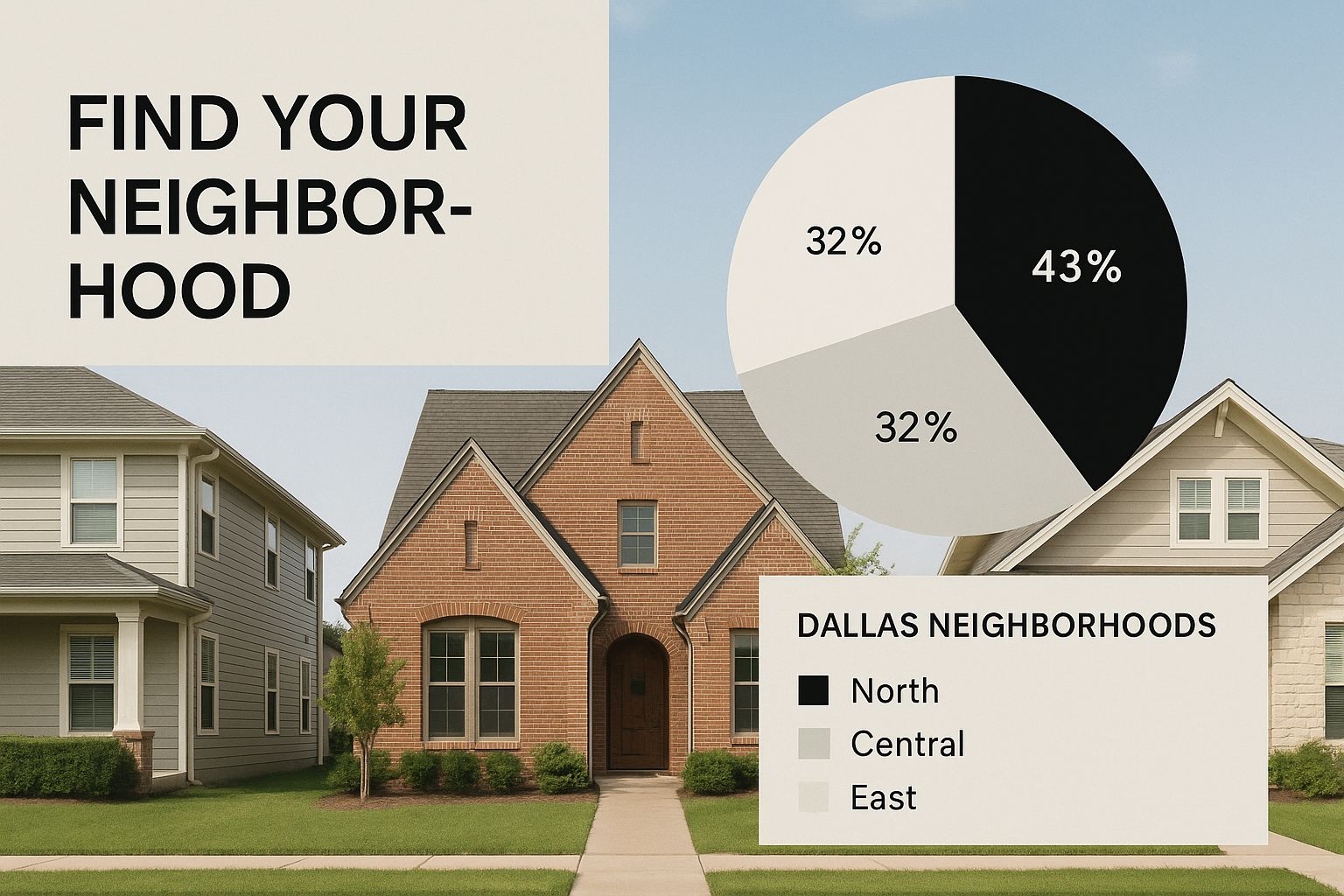
As you can see, Dallas isn’t just one big, uniform housing market. It’s a collection of unique communities, each with its own vibe, architecture, and price point. Of course, beyond your mortgage or rent check, there are other core expenses to factor in.
One of the biggest financial perks of living in Texas is the absence of a state income tax. This is a huge deal. It means more of every paycheck stays in your pocket, which can seriously offset other costs and boost your disposable income compared to living in many other states.
So, let’s get practical and look at where your money might go each month.
A Sample Monthly Budget In Dallas
To give you a clearer picture, I’ve put together a sample monthly budget for an individual living in Dallas. Think of this as a starting point—a framework you can adjust based on your own spending habits and priorities.
| Expense Category | Estimated Monthly Cost |
|---|---|
| Housing (1-Bedroom Apt) | $1,500 – $2,200 |
| Utilities (Elec, Water, Gas, Internet) | $200 – $300 |
| Groceries | $400 – $550 |
| Transportation (Car Payment, Gas, Ins.) | $500 – $700 |
| Health Insurance | $300 – $450 |
| Entertainment & Dining | $300 – $500 |
Just remember, these are estimates. Your utility bill will definitely jump during the notoriously hot Dallas summers when your air conditioning is working overtime. Likewise, your transportation costs will hinge on your commute and how much you use the city’s extensive (and often necessary) toll road system.
How Dallas Compares To Other Cities
Context is everything when you’re looking at living costs. While Dallas has certainly seen prices rise, it still holds its own against other major U.S. cities. For example, housing is much more within reach here than in Los Angeles, and your day-to-day expenses will likely be lower than in places like Chicago or Boston. This financial breathing room is one of the main reasons so many people are drawn to relocate here.
To really see how the numbers shake out for you, it’s worth digging into a detailed comparison of the cost of living in Dallas vs. major US cities. Seeing a direct comparison against where you live now is one of the best ways to plan your finances accurately.
Getting a handle on these financial details is a massive step in your relocation journey. It turns the fuzzy idea of “moving to Dallas” into a concrete, actionable plan. It gives you the confidence to move forward, knowing exactly what to expect from your new life here.
Navigating The Dallas Job Market And Economy
Let’s be honest, for many people, moving to Dallas is about more than just finding a nice place to live. It’s a strategic career move. The city’s economy is an absolute powerhouse, a dynamic engine that’s constantly churning out opportunities across some of the fastest-growing industries in the country. If you’re planning a move, understanding this landscape isn’t just helpful—it’s essential. Your professional life will be directly plugged into the city’s economic pulse.

The Dallas-Fort Worth metroplex isn’t just getting bigger; it’s getting smarter and more diverse. This economic variety is what makes the area so incredibly resilient. When one sector hits a rough patch, others are there to pick up the slack, creating a stable job market that consistently draws in top talent from all over the world.
Pillars Of The Dallas Economy
Dallas has rolled out the red carpet for businesses, and it’s paid off. The area has successfully attracted corporate headquarters and major hubs for some of the world’s biggest names. The foundation here is solid, built on several key industries that offer a staggering number of career paths.
These are the main drivers of job growth in the region:
- Finance and Financial Services: Dallas is a bona fide financial center, hosting industry giants like Charles Schwab and Fidelity Investments. It’s a hotspot for careers in everything from investment banking and wealth management to corporate finance.
- Technology and Innovation: People call it the “Silicon Prairie” for a reason. The tech scene here is booming, giving more established coastal hubs a run for their money. You’ve got legacy giants like Texas Instruments headquartered here, right alongside a thriving ecosystem of scrappy startups and software firms.
- Healthcare and Life Sciences: Home to world-renowned institutions like UT Southwestern Medical Center and Baylor Scott & White Health, Dallas is a leader in medical research, patient care, and biotech. There are opportunities here for healthcare professionals at every single level.
The economic opportunity in Dallas isn’t just some number on a spreadsheet; it’s something you can feel. You see it in the cranes dotting the skyline, the packed professional networking events, and the constant news of another major company relocating to the area.
Who Is Moving Here And Why
This vibrant job market has a direct and visible impact on the city’s vibe. Dallas has seen a huge influx of a younger, more dynamic crowd. The median age in the DFW metro area is about 35.1 years, which is noticeably younger than the national metro average of 38.5 years. That youthful energy is being fueled by ambitious professionals flocking here for both the career opportunities and the fantastic quality of life. For a deeper dive, check out these insights on the Dallas population boom.
This wave of new talent creates a competitive, but incredibly rewarding, professional scene. The networking culture in Dallas is surprisingly strong and easy to tap into. It doesn’t matter if you’re in tech, finance, or marketing; you’ll find your people at industry meetups, professional association events, and even casual happy hours in neighborhoods like Uptown or the Arts District. It’s this one-two punch of opportunity and community that makes Dallas such a compelling place to build or advance your career.
Finding Your Place In A Dallas Neighborhood
Choosing where to live in Dallas is easily one of the biggest decisions you’ll make during your move. It’s about so much more than a roof over your head; it’s about finding a lifestyle that clicks with yours. Dallas isn’t just one big, monolithic city—it’s a vibrant patchwork of distinct communities, each with its own unique feel and rhythm.
Think of it like this: Dallas neighborhoods are like different radio stations. Some are blasting high-energy pop, perfect for those who want to be in the middle of the action. Others are playing laid-back indie rock or even smooth classical. Your job is to find the frequency that feels like home. This part of the guide is all about helping you tune in.
You’re not alone in this search, either. The wider North Central Texas region has seen explosive growth, adding over 230,000 new residents in just one year. Dallas proper welcomed nearly 29,510 of those newcomers, proving it’s a major magnet for people on the move.
The Urban Core: Vibrant and Connected
If you crave the constant hum of city life, Dallas’s urban core offers an experience that’s both dynamic and incredibly convenient. These are the neighborhoods where “walkability” isn’t just a trendy term; it’s a genuine way of life.
Uptown
Uptown is the poster child for upscale urban living. The neighborhood is dominated by sleek high-rise apartments, luxury condos, and a social scene that never seems to sleep. Its streets are lined with some of the city’s top restaurants, chic boutiques, and bustling bars, all just a short walk away. Plus, the McKinney Avenue Trolley—a free, vintage streetcar system—adds a ton of charm and is a fun way to get around.
Deep Ellum
If Uptown is polished and sophisticated, Deep Ellum is its edgy, artistic cousin. With deep roots as a jazz and blues hub, it has transformed into the city’s undisputed capital of live music and entertainment. The streets here are a living gallery of vibrant murals, and the venues host everything from local indie bands to major national acts. Deep Ellum is for anyone who wants their nights filled with creativity, music, and an authentic, raw energy.
Bishop Arts District
Head across the Trinity River and you’ll find the Bishop Arts District, a fiercely independent and utterly charming neighborhood. It’s packed with over 60 locally-owned boutiques, restaurants, bars, and art galleries. The vibe is artsy, eclectic, and built around a strong sense of community. It’s the perfect spot for someone who values unique shops and local pride, all packed into a compact, walkable grid.
Choosing a neighborhood in Dallas is a lot like investing. You’re not just buying into a property; you’re buying into a lifestyle, a community, and a daily experience. The best return on your investment comes from finding a place that truly aligns with your personal and professional life.
The Suburban Retreat: Space and Polish
While the urban core pulses with energy, many people are drawn to the polished appeal and wide-open spaces of Dallas’s famous suburbs. These areas offer a totally different lifestyle, one that often puts comfort, top-tier amenities, and a more relaxed pace first. And make no mistake, these aren’t just sleepy bedroom communities; they are booming cities in their own right.
Plano
Just north of Dallas, Plano has built a stellar reputation for its major corporate presence, outstanding amenities, and an incredible quality of life. It’s home to several Fortune 500 headquarters, which means a blissfully short commute for many who live there. The city itself is a great mix of quiet, tree-lined residential streets and modern commercial hubs like Legacy West, which offers high-end shopping, dining, and entertainment in a stylish, walkable setting.
Frisco
Frisco isn’t just growing; it’s one of the fastest-growing cities in the entire country, and for good reason. It has successfully branded itself as “Sports City, USA,” and it’s home to the Dallas Cowboys’ headquarters, the PGA of America, and a whole roster of other pro sports teams and venues. This suburb perfectly blends a modern, ambitious spirit with master-planned residential communities, making it a huge draw for professionals looking for an active, amenity-rich lifestyle.
Finding your perfect spot in the massive Dallas-Fort Worth metroplex is really a journey of self-discovery. By taking the time to explore these distinct areas, you can move past a generic apartment search and find a community that doesn’t just meet your needs, but genuinely makes your life better.
Getting Around Dallas And Mastering Your Commute
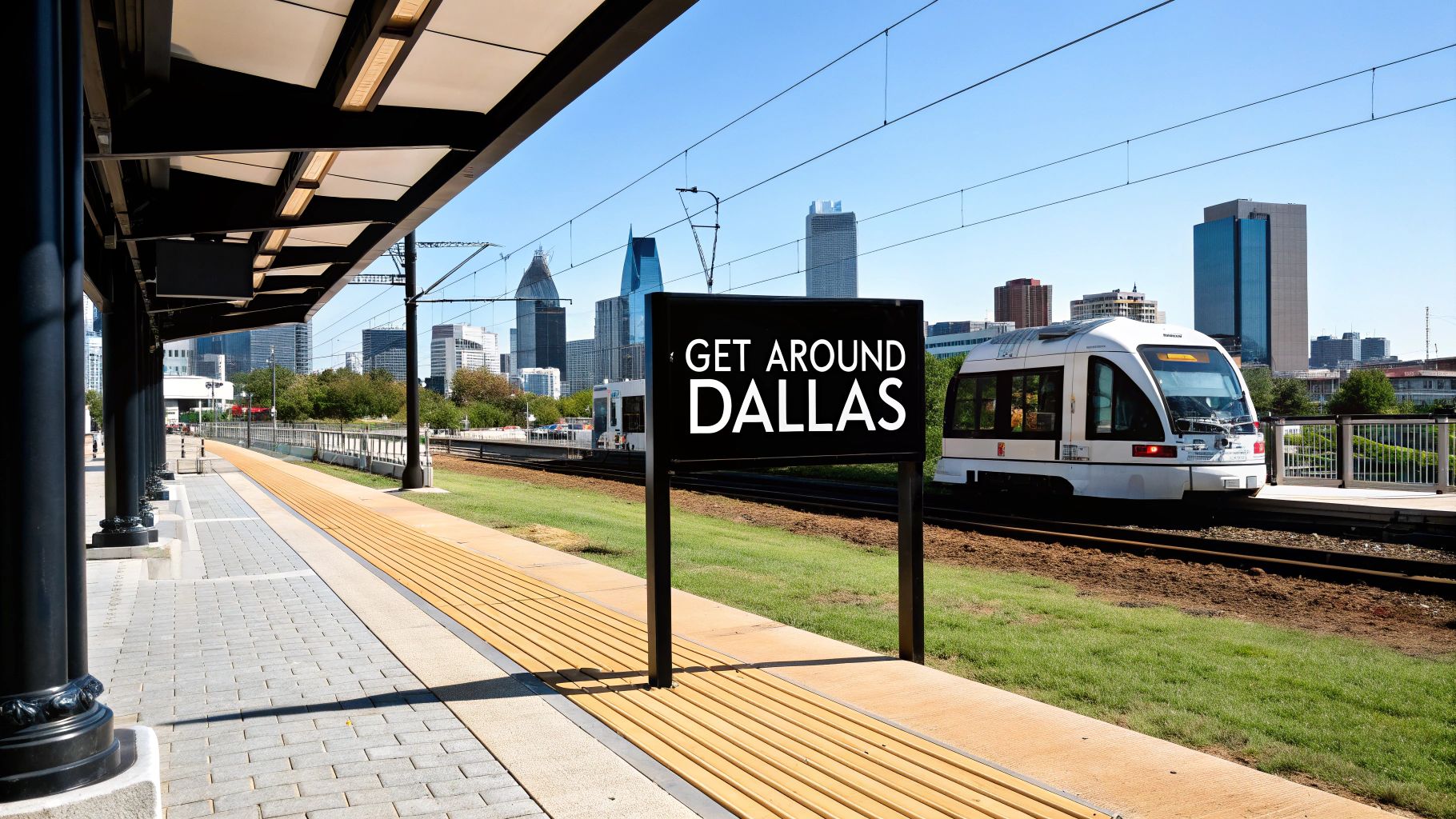
Let’s get straight to the point: Dallas is a car city. Understanding this simple fact is the first step to mastering your daily life here. The city’s sprawling layout means that for most residents, owning a vehicle isn’t just a convenience—it’s a near necessity for navigating work, errands, and social life.
The entire Dallas-Fort Worth metroplex is connected by a vast and complex web of highways. Think of these major arteries—like I-35E (the Stemmons Freeway), US-75 (the Central Expressway), and the I-635 loop (the LBJ Freeway)—as the circulatory system of the city. Getting a feel for their routes and typical rush-hour patterns is fundamental to planning your day.
Driving And Toll Roads
A key feature of Dallas driving is its extensive toll road system, managed by the North Texas Tollway Authority (NTTA). These well-maintained roads can be a lifesaver, offering a faster, less congested alternative to the main interstates, especially during peak traffic.
Getting a TollTag is a non-negotiable first step for any Dallas driver. It’s an electronic sticker for your windshield that automatically pays your tolls as you pass through, often at a discounted rate compared to paying by mail. This one small setup step will save you countless headaches and a surprising amount of time.
Navigating Dallas without a TollTag is like trying to stream a movie on a dial-up connection. It’s technically possible, but it’s slow, frustrating, and ultimately costs you more in the long run. Embracing the toll system is part of adapting to the flow of the city.
Using Public Transportation: DART
While most people drive, Dallas does offer a public transit option with the Dallas Area Rapid Transit (DART) system. It’s the longest light rail system in the United States, which sounds impressive, but its practical reach has limitations depending on where you live and work.
The DART system consists of:
- Light Rail: The rail lines (Red, Blue, Green, and Orange) connect many key areas, including Downtown, Uptown, Plano, and DFW Airport. It’s a great option if you happen to live and work along one of its corridors.
- Bus Network: An extensive bus network complements the rail lines, reaching deeper into neighborhoods that the trains don’t serve.
- Trinity Railway Express (TRE): This commuter rail line is your link between Dallas and Fort Worth, making it a viable option for anyone who needs to travel between the two downtowns.
DART is most effective for commutes to and from the central business district. If you plan to rely on it, you absolutely must map your potential home and work locations against the DART system map before making any decisions.
Your daily travel time will drastically influence your quality of life. For a deeper look at what to expect from different suburbs and areas, our detailed Dallas commute time guide breaks down the numbers to help you make an informed housing decision. Ultimately, whether by car or by train, planning your commute is just as important as choosing your neighborhood.
Your Action Plan For A Smooth Dallas Move
With the big decisions out of the way, it’s time to roll up our sleeves and tackle the logistics. A successful move is really just a well-executed plan. It’s about turning what feels like chaos into a series of simple, manageable steps. This final part of our moving to Dallas guide is your playbook for getting everything done—before, during, and after you land.
Think of yourself as the project manager of your own move. When you break the process down into smaller, bite-sized tasks, the whole thing feels much less intimidating. It also ensures nothing important gets missed. From hiring the right movers to officially becoming a Texan, we’ve got you covered.
Your Pre-Move Checklist
Honestly, the work you put in before the moving truck ever shows up is the most critical part. Nailing these key tasks early on will pave the way for a much smoother transition. A little organization now saves you from massive headaches later.
Here are your main goals before you say goodbye to your old place:
- Book Reputable Movers: Dallas has no shortage of moving companies. Do your homework, read reviews, and always get multiple quotes. You’ll want to book them at least 4-6 weeks ahead of time, especially if you’re moving during the busy summer months.
- Set Up Your Utilities: Call the providers for electricity, water, gas, and internet about two weeks before your move-in date. Trust me, you do not want to walk into your new Dallas home in August only to find the air conditioning isn’t working.
- Notify Important Parties: File a change of address with the USPS, and don’t forget to update your bank, credit card companies, and any subscription services you use.
A smooth move is a direct result of forward planning. The goal is to walk into your new Dallas home with the lights on, the internet ready, and one less thing to worry about. Think of it as preparing the stage before the main performance.
Settling In Like A Local
Once the last box is unpacked, there are just a few final steps to officially plant your roots in Dallas and start living like you belong here. These are the tasks that make your transition official and help you begin building your new life.
Your first few weeks in Dallas should be dedicated to tackling these essentials. They are key to feeling fully settled.
Becoming a Texan Checklist:
- Get Your Texas Driver’s License: You have 90 days after moving to Texas to get your new license. Just head to a Texas Department of Public Safety (DPS) office to get it sorted.
- Register Your Vehicle: You’ve got 30 days from the day you move to get your vehicle registered in Texas. This requires a state inspection first, so be sure to get that done beforehand to save yourself a trip.
- Register to Vote: Make sure you update your voter registration with your new Dallas address. This ensures you can have your say in local and state elections.
- Explore Your New Neighborhood: This is the fun part. Take some time to just walk around. Find your new go-to grocery store, that perfect coffee shop, and a reliable dry cleaner. It’s these small routines that truly make a new place start to feel like home.
Common Questions About Living In Dallas
Alright, you’re in the home stretch. Finalizing a move to a new city always comes with those last-minute, nagging questions. As you wrap up your moving to Dallas guide, you’re probably wondering what life really feels like on the ground.
Let’s clear up some of the most common questions newcomers have. Think of this as the final check-in before you pack the last box and hit the road. Getting a handle on big topics like the weather and the local culture now means no surprises later.
What Is The Weather Really Like?
Dallas weather is a story of four seasons, but let’s be honest: summer is the main character. We have a humid subtropical climate, which is a fancy way of saying the summers are famously hot and humid. Expect temperatures to frequently climb past 95°F (35°C). A powerful, efficient air conditioning system isn’t just a nice-to-have here; it’s absolutely essential for survival.
But it’s not all about the heat. The other seasons are genuinely delightful.
- Spring and Autumn: These are the golden seasons in Dallas. The temperatures are mild and comfortable, making it the perfect time to explore the city’s countless parks and outdoor patios.
- Winter: Our winters are pretty mild, with average highs in the 50s°F (10-15°C). While a big snowstorm is a rare event, we do get occasional cold fronts that bring freezing rain and ice. These can sometimes cause temporary city-wide shutdowns, so it’s something to be aware of.
What Is The Dallas Vibe?
The culture in Dallas is a fascinating mix of cosmopolitan ambition and true Texas friendliness. It’s a city that takes its professional sports seriously, with incredibly passionate fans rallying behind the Cowboys (NFL), Mavericks (NBA), and Stars (NHL). But there’s so much more to it. The Dallas Arts District—the largest in the entire nation—is a huge cultural anchor, home to world-class institutions like the Dallas Museum of Art and the AT&T Performing Arts Center.
Dallas really runs on a “work hard, play hard” mentality. You’ll find an incredibly sophisticated dining scene, high-end shopping at iconic centers like NorthPark Center, and a buzzing live music scene, especially in legendary neighborhoods like Deep Ellum.
When you need a break from the urban energy, locals flock to green spaces like Klyde Warren Park, White Rock Lake, and the Dallas Arboretum. These spots are central to the Dallas lifestyle, offering a much-needed escape for recreation and relaxation right in the city. This blend of big-city drive and accessible nature is a huge part of what makes Dallas so appealing.
Ready to make your move? Finding the right home is the most important step. Dustin Pitts REALTOR Dallas Real Estate Agent provides expert guidance and deep local knowledge to help you find the perfect property in Dallas. Whether you’re buying, selling, or relocating, we simplify the process so you can settle in with confidence. Discover how we can assist you at https://dustinpitts.com.