
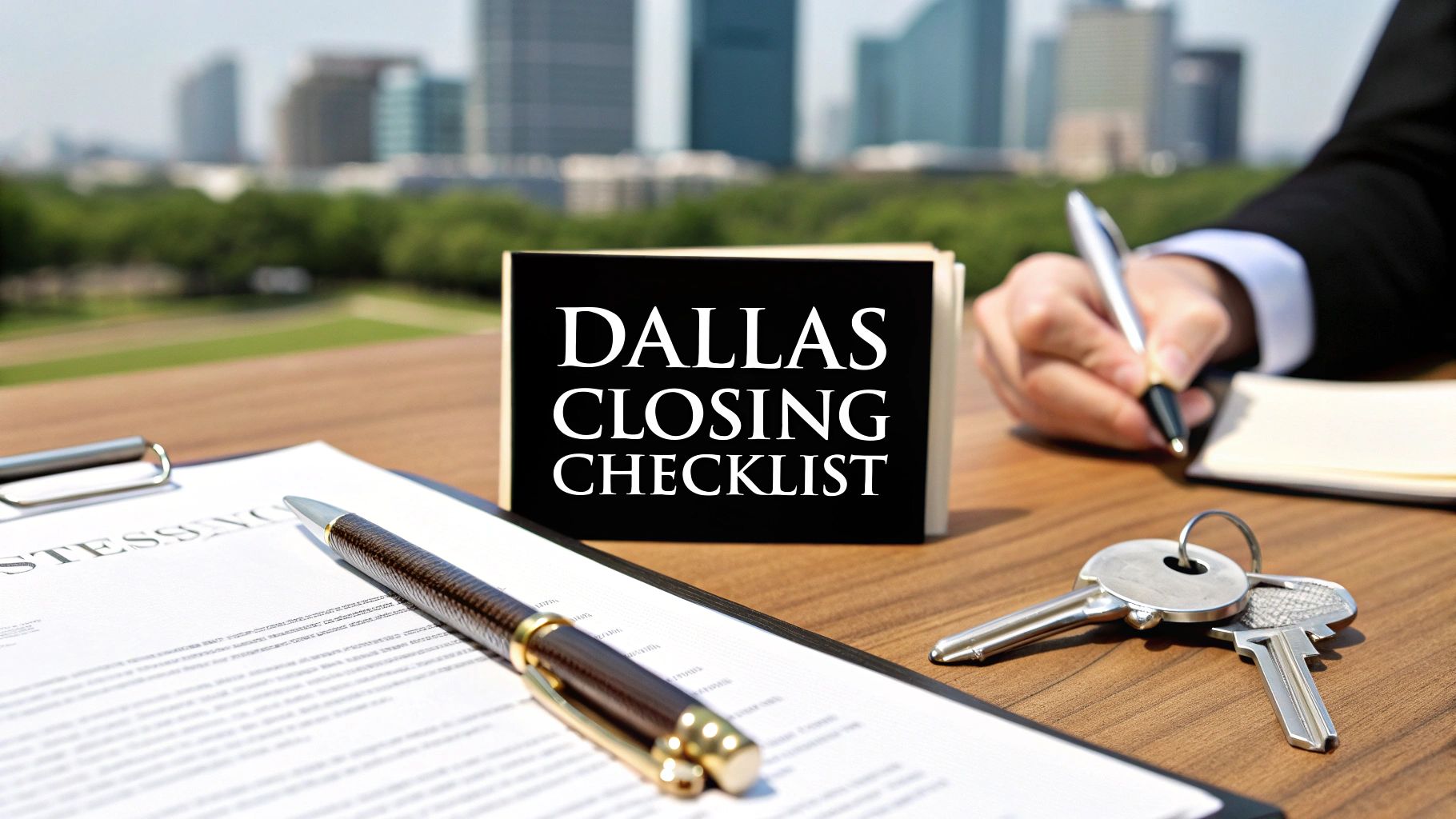
The Dallas real estate market is dynamic and competitive, from the bustling streets of Uptown to the serene lots of Preston Hollow. Whether you’re purchasing your first property, securing a luxury residence, or an investor expanding a portfolio, the journey from an accepted offer to holding the keys involves a complex series of critical steps. Mismanaging this period can lead to costly delays, lost opportunities, or even legal complications. This definitive Dallas-centric real estate transaction checklist is your roadmap to success, designed to navigate the specific nuances of the North Texas market.

It breaks down the entire process into manageable, actionable stages, ensuring you’re prepared for every milestone. From coordinating appraisals in neighborhoods like the Park Cities to understanding the intricacies of Texas contracts, this guide provides the clarity needed to proceed with confidence. For those just starting their property journey, a more general first-time house buying checklist can offer a foundational overview before diving into market-specific details.
This comprehensive guide, however, is tailored to the high-stakes environment of Dallas real estate. It serves as a blueprint to protect your investment and ensure a smooth, successful closing. Below, we’ll dive into the essential components and detailed action items that every Dallas buyer and seller must master to navigate the transaction process effectively. Let’s explore the critical checkpoints for your property transaction.
1. Mortgage Pre-approval and Financing Verification
The first and most critical step in any successful Dallas real estate transaction checklist is securing mortgage pre-approval. This isn’t a mere suggestion; in competitive Dallas neighborhoods like Lakewood or the M Streets, it’s an absolute necessity. Pre-approval involves a lender meticulously verifying your income, assets, and credit history to determine a precise loan amount you qualify for. It transforms you from a casual browser into a serious, empowered buyer.

Having this verification in hand provides a clear, realistic budget, preventing you from overextending financially. More importantly, it gives you the power to make a confident, compelling offer the moment you find the right property, whether it’s a sleek condo in Victory Park or an expansive home in Highland Park.
Why Pre-Approval is Non-Negotiable in Dallas
In a market where desirable properties receive multiple offers within days, a pre-approval letter signals to sellers that your offer is serious and your financing is secure. This significantly reduces the risk of the deal falling through, making your offer far more attractive than one without verified financing. For instance, a buyer in East Dallas recently beat out several other interested parties by presenting a strong pre-approval letter from a well-regarded local Dallas lender. This simple document demonstrated their readiness and capability, tipping the scales in their favor.
Actionable Tips for a Smooth Pre-Approval
To ensure your financing is a strength, not a hurdle, follow these key steps:
- Distinguish Pre-Approval from Pre-Qualification: A pre-qualification is a rough estimate based on self-reported information. A pre-approval is a conditional commitment based on verified documentation and carries much more weight.
- Engage Early: Begin the pre-approval process before you start viewing homes. This establishes your purchasing power and allows you to focus your search effectively. For a deeper dive into the initial stages, you can review this comprehensive home buying process checklist.
- Maintain Financial Stability: Once pre-approved, avoid any major financial changes. Do not open new credit lines, make large purchases on credit, or change jobs, as these actions can jeopardize your final loan approval.
- Work with Local Experts: Partner with a REALTOR® who can connect you with trusted Dallas-Fort Worth lenders. Local lenders understand the nuances of the DFW market, from appraisal values in Preston Hollow to deed restrictions in specific communities.
2. Professional Property Inspection
After your offer is accepted, the next vital element in your real estate transaction checklist is a professional property inspection. This is far more than a simple walkthrough; it is a meticulous, in-depth examination of the property’s core systems by a licensed Texas inspector. They assess everything from the foundation in a historic Bishop Arts District home to the intricate HVAC systems in a modern Uptown high-rise, identifying potential defects, safety hazards, and deferred maintenance.

This step provides the objective data needed to understand the true condition of your potential investment. It uncovers issues that are not visible during a typical showing, protecting you from unexpected, costly repairs down the line. A thorough inspection empowers you to proceed with confidence, renegotiate terms, or walk away if the problems are too significant.
Why a Professional Inspection is Essential in Dallas
In the dynamic Dallas market, where properties range from century-old estates in Swiss Avenue to new constructions in Frisco, an inspection is your primary tool for due diligence. For example, an inspector recently uncovered significant foundation movement in a desirable Preston Hollow property, a common issue in North Texas due to expansive clay soils. This discovery saved the buyer from over $50,000 in unforeseen foundation repair costs and allowed them to negotiate a more favorable price. This critical insight turns a potential financial disaster into a calculated business decision.
Actionable Tips for a Strategic Inspection
To leverage the inspection for maximum benefit, follow these key steps:
- Hire a Certified Inspector: Always engage an inspector licensed by the Texas Real Estate Commission (TREC) and preferably certified by organizations like ASHI or InterNACHI. Their expertise is crucial.
- Attend the Inspection: Being present allows you to see issues firsthand and ask the inspector questions. This provides invaluable context that a written report alone cannot convey.
- Schedule Specialized Inspections: Standard inspections don’t cover everything. If the property has a pool, septic system, or you suspect pest issues, schedule separate, specialized inspections.
- Facilitate Access: For a seamless inspection process, especially when managing property access for third parties, it’s beneficial to understand options like using secure outdoor key lock boxes.
- Negotiate Strategically: Use the inspection report to focus negotiations on significant structural, safety, or mechanical issues, not minor cosmetic flaws. This maintains goodwill while protecting your interests.
3. Mortgage Pre-approval and Financing Verification
The first and most critical step in any successful Dallas real estate transaction checklist is securing mortgage pre-approval. This isn’t a mere suggestion; in competitive Dallas neighborhoods like Lakewood or the M Streets, it’s an absolute necessity. Pre-approval involves a lender meticulously verifying your income, assets, and credit history to determine a precise loan amount you qualify for. It transforms you from a casual browser into a serious, empowered buyer.
Having this verification in hand provides a clear, realistic budget, preventing you from overextending financially. More importantly, it gives you the power to make a confident, compelling offer the moment you find the right property, whether it’s a sleek condo in Victory Park or an expansive home in Highland Park.
Why Pre-Approval is Non-Negotiable in Dallas
In a market where desirable properties receive multiple offers within days, a pre-approval letter signals to sellers that your offer is serious and your financing is secure. This significantly reduces the risk of the deal falling through, making your offer far more attractive than one without verified financing. For instance, a buyer in East Dallas recently beat out several other interested parties by presenting a strong pre-approval letter from a well-regarded local Dallas lender. This simple document demonstrated their readiness and capability, tipping the scales in their favor.
Actionable Tips for a Smooth Pre-Approval
To ensure your financing is a strength, not a hurdle, follow these key steps:
- Distinguish Pre-Approval from Pre-Qualification: A pre-qualification is a rough estimate based on self-reported information. A pre-approval is a conditional commitment based on verified documentation and carries much more weight.
- Engage Early: Begin the pre-approval process before you start viewing homes. This establishes your purchasing power and allows you to focus your search effectively. For a deeper dive into the initial stages, you can review this comprehensive home buying process checklist.
- Maintain Financial Stability: Once pre-approved, avoid any major financial changes. Do not open new credit lines, make large purchases on credit, or change jobs, as these actions can jeopardize your final loan approval.
- Work with Local Experts: Partner with a REALTOR® who can connect you with trusted Dallas-Fort Worth lenders. Local lenders understand the nuances of the DFW market, from appraisal values in Preston Hollow to deed restrictions in specific communities.
4. Property Appraisal Coordination
Once you are under contract, the next critical hurdle in the real estate transaction checklist is the property appraisal. This is an independent, professional valuation of the property’s fair market value conducted by a licensed appraiser. Mortgage lenders require an appraisal to ensure the loan amount they are providing does not exceed the property’s actual worth, protecting both their investment and yours. It is a safeguard against overpaying for a home in a dynamic market.
This step is essential whether you are buying a historic home in the Bishop Arts District or a new construction in Frisco. The appraiser analyzes the property’s condition, size, features, and recent sales of comparable properties (“comps”) in the immediate vicinity. The final appraisal report directly impacts the final approval of your mortgage loan.
Why the Appraisal is a Make-or-Break Moment in Dallas
In fast-moving Dallas neighborhoods like Uptown or Southlake, where property values can fluctuate rapidly, the appraisal serves as a crucial reality check. A contract price agreed upon by a buyer and seller might not align with an appraiser’s data-driven assessment. For example, if a property in Plano is under contract for $550,000 but the appraisal comes in at only $530,000, the lender will only finance a loan based on the lower value. This “appraisal gap” of $20,000 must be addressed for the deal to proceed. This scenario is common in bidding wars where offers exceed the list price, making the appraisal a pivotal moment that can require skillful negotiation to save the deal.
Actionable Tips for Navigating the Appraisal
To manage this process effectively and prevent it from derailing your transaction, proactive coordination is key:
- Schedule Immediately: Once the contract is executed, your lender should order the appraisal right away. The process can take one to two weeks, and any delays can jeopardize your closing timeline.
- Prepare an Information Packet: While you cannot directly influence the appraiser, your agent can provide them with a helpful packet. This can include a list of recent upgrades or improvements, the property survey, and a list of comparable sales that support the contract price.
- Understand Your Options for a Low Appraisal: If the appraisal comes in low, you have several options. You can try to renegotiate the sales price with the seller, pay the difference in cash, or, if you have an appraisal contingency in your contract, you can walk away from the deal and have your earnest money returned.
- Include an Appraisal Contingency: This clause in your purchase contract is a vital protection. It gives you the legal right to terminate the contract without penalty if the property does not appraise for at least the sales price. In a competitive market, your REALTOR® can help you structure this contingency to be both protective and attractive to the seller.
5. Legal Document Review and Contract Analysis
The executed contract marks the beginning, not the end, of the critical paperwork in a Dallas real estate transaction. A comprehensive legal document review is a vital part of any real estate transaction checklist, ensuring every term, contingency, and disclosure is understood and protects your interests. This step involves a meticulous examination of the purchase agreement, seller’s disclosures, HOA documents, and eventual closing papers by you, your REALTOR®, and potentially a real estate attorney.
While Texas doesn’t mandate attorney involvement like some states, engaging one for complex transactions, such as a multi-million dollar property in Preston Hollow or a commercial-to-residential conversion in the Design District, provides an essential layer of protection. This expert analysis ensures all legal requirements are met and that there are no hidden clauses that could create future liabilities.
Why Meticulous Review is Crucial in Dallas
The Texas Real Estate Commission (TREC) provides standardized contract forms, but these are often amended with addenda specific to the property or deal. For instance, a historic home in Swiss Avenue may have preservation-related addenda, while a downtown condo will have extensive HOA documents governing everything from renovations to pet policies. A thorough review ensures you understand these legally binding rules before you are committed. Ignoring this step can lead to costly surprises and legal disputes down the line. A careful review turns the complex legal jargon into a clear roadmap for your purchase.
Actionable Tips for Effective Document Analysis
To navigate the paperwork confidently, implement these strategic practices:
- Ask Probing Questions: Never hesitate to ask your agent or attorney to clarify any clause or term you don’t fully understand. Question the implications of every contingency, deadline, and seller concession.
- Document All Agreements: Ensure any verbal agreements made during negotiations, whether regarding repairs or included personal property, are explicitly documented in writing within the contract or an addendum. A handshake deal is not enforceable in Texas real estate.
- Review Before You Sign: Don’t wait until the closing table to read documents for the first time. Request copies of all paperwork, including title commitments and HOA resale certificates, as soon as they are available to allow ample time for review. For a detailed guide on the legal steps involved, you can learn more about how to buy a house in Texas.
- Retain Copies: Keep organized digital and physical copies of every single document you sign throughout the entire process. These records are crucial for your files and for reference in case of any post-closing questions or issues.
6. Insurance Verification and Coverage Setup
A crucial, non-negotiable step in any Dallas real estate transaction checklist is arranging and verifying your homeowner’s insurance. This is not simply a recommendation; lenders will not release funds for your mortgage without proof of an active and sufficient insurance policy. This process involves securing adequate coverage to protect your new investment from unforeseen events like fire, theft, or severe weather common in North Texas.
Securing your policy well before the closing date is essential. It ensures there are no last-minute delays in finalizing your loan and protects your financial interest from the moment you take possession. Whether you’re buying a historic home in the Bishop Arts District or a modern townhome in Uptown, having the right insurance is a foundational part of responsible homeownership.
Why Proactive Insurance Setup is Critical in Dallas
In North Texas, the risk of hail, high winds, and even tornadoes makes robust insurance coverage a necessity, not a luxury. Lenders require it, but more importantly, it protects what is likely your largest asset. Failing to have your policy, or “binder,” ready can derail your closing schedule, potentially costing you the property in a competitive market like Frisco or Plano. For instance, a buyer purchasing a property in a designated flood zone near White Rock Lake must also secure coverage through FEMA’s National Flood Insurance Program, a detail that can be easily missed without diligent preparation.
Actionable Tips for Securing the Right Coverage
To ensure your insurance setup is seamless and comprehensive, follow these essential steps:
- Shop for Quotes Early: Begin shopping for homeowner’s insurance as soon as your offer is accepted. This gives you ample time to compare rates and coverage options from various providers, like State Farm or Allstate, to find the best value.
- Understand Replacement Cost vs. Actual Cash Value: Opt for replacement cost coverage. This ensures your policy will pay to rebuild your home to its previous standard using current material and labor costs, rather than providing a depreciated “actual cash value” that may fall short.
- Assess Additional Coverage Needs: Standard policies often exclude flood or foundation damage. Given Dallas’s expansive clay soil, you might explore specific endorsements. Your REALTOR® can help identify risks specific to the neighborhood, whether it’s older plumbing in University Park or hail exposure in McKinney.
- Bundle Policies for Savings: Check with your auto insurance provider to see if you can bundle your homeowner’s policy for a significant discount.
- Provide Proof to Your Lender: Once you select a policy, ensure your insurance agent sends the proof of coverage (the insurance binder) directly to your lender and title company at least a week before your scheduled closing date.
7. Final Walk-through and Property Condition Verification
The final walk-through is a crucial, non-negotiable step in your Dallas real estate transaction checklist, typically occurring within 24 to 48 hours before closing. This is not a second home inspection; rather, it’s your final opportunity to verify that the property’s condition has remained unchanged since your offer was accepted. It confirms that all contractually agreed-upon repairs have been completed and that the home is being delivered in the state you expect, whether it’s a historic home in Kessler Park or a new build in Frisco.

This verification step protects you from last-minute surprises that could be costly and difficult to resolve after you take ownership. It ensures that the seller has vacated the property, removed their personal belongings, left all items that were supposed to convey, and that no new damage has occurred during the move-out process.
Why the Final Walk-through is a Critical Safeguard
In the fast-paced Dallas market, a lot can happen between contract and closing. The final walk-through acts as your last line of defense. Consider a scenario where a buyer in McKinney, during their final walk-through, discovered the sellers had removed the custom dining room chandelier that was explicitly listed as included in the sales contract. Because this was caught before closing, their agent was able to negotiate a credit from the seller to cover the replacement cost. Without this step, the buyer would have had little recourse after the papers were signed. This highlights the importance of this final check in preventing disputes and ensuring the terms of the agreement are met.
Actionable Tips for an Effective Walk-through
To make this final check as thorough as possible, approach it with a clear strategy. Don’t rush through this critical part of the home buying process.
- Bring Your Documentation: Have your original inspection report, the purchase contract, and any repair addendums with you. This allows you to systematically verify that all requested repairs have been completed to standard.
- Test Everything: Do not assume anything works. Turn on every light switch, run all faucets (hot and cold), flush toilets, test the HVAC system, and run major appliances like the dishwasher and oven for a few minutes.
- Focus on Contractual Obligations: Ensure that items specified to remain with the property, such as window treatments, appliances, and specific light fixtures, are still present. Conversely, confirm the seller has removed all their personal belongings and debris. You can find more details in this comprehensive home walk-through checklist.
- Document Any Issues: If you discover a problem, such as new water damage from a burst pipe or a broken window, immediately take photos or videos and notify your REALTOR®. Do not proceed to closing until the issue is addressed and a resolution is agreed upon with the seller.
8. Closing Cost Calculation and Fund Preparation
A crucial step in the final stages of the real estate transaction checklist is the meticulous calculation of closing costs and the preparation of funds. This isn’t just about the down payment; it encompasses a variety of fees required to finalize the transfer of property. These costs, which can range from loan origination fees to title insurance and property taxes, must be accounted for and ready for payment on closing day. For Dallas buyers, understanding these figures is essential for a smooth, stress-free closing, whether you’re purchasing a townhome in Uptown or a historic home in Oak Cliff.
The Consumer Financial Protection Bureau (CFPB) mandates the use of a standardized Closing Disclosure form, which you will receive at least three business days before your scheduled closing. This document provides a detailed breakdown of all your final loan terms and closing costs. In Dallas, these costs typically range from 2% to 5% of the home’s purchase price, meaning careful review and preparation are paramount to avoid last-minute financial surprises.
Why Meticulous Fund Preparation is Essential in Dallas
In any real estate transaction, financial clarity is key. In Dallas’s fast-paced environment, having your funds ready and understanding every line item on your Closing Disclosure demonstrates preparedness and ensures the transaction closes on schedule. A delay caused by unprepared funds or disputes over fees can jeopardize the entire deal. Title companies, such as First American or Texas-based Stewart Title, will not proceed with closing until all funds are verified and all figures are agreed upon, making this a non-negotiable final step.
Actionable Tips for a Flawless Closing Day
To ensure you arrive at the closing table fully prepared, focus on these critical actions:
- Scrutinize Your Closing Disclosure: Compare the figures on your final Closing Disclosure with those on the initial Loan Estimate you received after applying for your mortgage. Question your lender or REALTOR® about any significant discrepancies or fees you do not understand.
- Arrange Funds in Advance: Title companies require certified funds. Do not wait until the morning of closing to arrange a wire transfer or get a cashier’s check. Coordinate with your bank several days in advance to ensure the process is seamless.
- Negotiate Costs Early: Remember that who pays for certain closing costs can be a point of negotiation. When you initially make your offer on a Dallas property, you can request that the seller contribute to these costs, potentially saving you thousands of dollars.
- Prepare Your Documents: You will need to bring a valid, government-issued photo ID (like a driver’s license or passport) to the closing. Confirm with your title company if any other specific documents are required from you.
Real Estate Transaction Checklist Comparison
| Item | Implementation Complexity 🔄 | Resource Requirements ⚡ | Expected Outcomes 📊 | Ideal Use Cases 💡 | Key Advantages ⭐ |
|---|---|---|---|---|---|
| Property Title Search and Title Insurance | Moderate (legal research and record search) | Professional title company, moderate time & cost | Clear ownership verification, legal protection | Property purchase with mortgage, lien identification | Protects against ownership disputes, one-time premium coverage |
| Professional Property Inspection | Moderate (licensed inspector required) | Qualified inspector, 2-4 hours on site | Identification of structural/safety issues | Assessing home condition before purchase | Detects costly repairs, negotiation leverage |
| Mortgage Pre-approval and Financing Verification | Moderate to High (financial document review) | Lender involvement, extensive documentation | Written loan offer, clarified budget | Buyers needing loan certainty, competitive markets | Strengthens offer, speeds closing process |
| Property Appraisal Coordination | Moderate (licensed appraiser needed) | Certified appraiser, market data access | Independent property value estimation | Mortgage lending requirement, price negotiation | Objective valuation, loan-to-value protection |
| Legal Document Review and Contract Analysis | High (legal expertise required) | Real estate attorney or legal professional | Legal compliance, contract clarity | Complex transactions, protecting buyer interests | Prevents legal errors, enhances contract terms |
| Insurance Verification and Coverage Setup | Low to Moderate (insurance agents involved) | Insurance providers, annual premium payment | Secured property insurance coverage | Pre-closing insurance fulfillment | Financial risk protection, lender requirement |
| Final Walk-through and Property Condition Verification | Low (buyer and agent inspection) | Buyer time investment, reference documents | Confirmation of property condition before closing | Final step before ownership transfer | Ensures repairs done, reduces surprises |
| Closing Cost Calculation and Fund Preparation | Moderate (financial accounting and document review) | Lender, title company, buyer’s certified funds | Transparent closing costs and fund readiness | Prior to closing, budgeting final payment needs | Prevents surprise fees, ensures funds availability |
Your Partner in Dallas Real Estate Success
Navigating the intricate landscape of a Dallas real estate transaction is much like orchestrating a complex symphony. Each step, from the initial offer to the final signature at closing, is an essential instrument that must play its part perfectly and in sequence. This comprehensive real estate transaction checklist has provided you with the sheet music, detailing the critical components required for a harmonious and successful outcome, whether you are acquiring a sophisticated residence in Preston Hollow or selling a modern townhome in Knox-Henderson.
The true value of this checklist isn’t just in knowing the steps, it’s in understanding their profound interconnectedness. A meticulously performed property inspection, for example, directly influences your negotiation leverage and potential repair requests. Similarly, securing robust mortgage pre-approval early on doesn’t just demonstrate financial readiness; it strengthens your offer in a competitive market like Dallas, where timing and certainty are paramount. Mastering these elements transforms you from a passive participant into an empowered, strategic player in your own transaction.
From Checklist to Confident Closing
Think of this guide as your strategic blueprint. The core takeaway is that proactive management, not reactive problem-solving, is the secret to a seamless experience. Waiting for an issue to arise with title insurance or being surprised by appraisal results can introduce unnecessary stress and costly delays. By addressing each item on this checklist with foresight and diligence, you are effectively building a firewall around your investment.
Here are the pivotal insights to carry forward:
- Diligence is Non-Negotiable: Items like the property title search and professional inspection are your primary defense mechanisms. They uncover the hidden history and physical realities of a property, protecting you from future liabilities and unexpected expenses. Never treat these as mere formalities.
- Financials are Foundational: Your entire transaction rests on solid financial footing. From obtaining a strong pre-approval to meticulously preparing for closing costs, financial preparedness dictates the pace and viability of the deal.
- Documentation Demands Scrutiny: Contracts, disclosures, and insurance policies are legally binding documents that define your rights and obligations. A thorough review, ideally with professional guidance, ensures you understand every clause and contingency, leaving no room for costly misinterpretations.
Activating Your Dallas Real Estate Strategy
Your next step is to translate this knowledge into action. Begin by organizing these checklist items into a personalized timeline. If you are a buyer, your journey starts with securing financing and identifying a trusted inspector. If you’re a seller, your initial focus might be on gathering property documents and preparing for the appraisal.
This proactive approach is what separates a smooth closing from a turbulent one. For instance, anticipating the appraisal process in a rapidly appreciating neighborhood like the Bishop Arts District requires a different strategy than in a more established area like Highland Park. It involves preparing a brag sheet of recent upgrades and ensuring the appraiser has access to all relevant information to justify the contract price. This level of granular, market-specific preparation is where a checklist evolves into a winning game plan. By embracing this meticulous process, you not only safeguard your significant financial commitment but also pave the way for a confident and rewarding transition into your next chapter in Dallas.
Don’t just navigate the Dallas market, master it. For personalized, expert guidance that transforms this real estate transaction checklist into a seamless, successful reality, connect with Dustin Pitts REALTOR Dallas Real Estate Agent. His team’s deep local knowledge and commitment to client advocacy ensure every detail is managed with precision, from contract to closing.