
Let’s get straight to the point: For home sellers in Dallas, realtor fees are not part of your closing costs. It’s a common point of confusion, but the distinction is pretty simple when you break it down.

Think of your realtor’s commission as the fee for their professional services—marketing your Dallas home, finding a buyer, and negotiating the best possible deal. Closing costs, on the other hand, are the collection of administrative and legal fees needed to officially transfer the property to the new owner.
Separating Realtor Fees From Closing Costs
When you’re selling a property, like a stunning three-bedroom maisonette, it’s crucial to understand these two major expenses. They’ll show up as separate line items on your settlement statement, deducted from the final sale price.
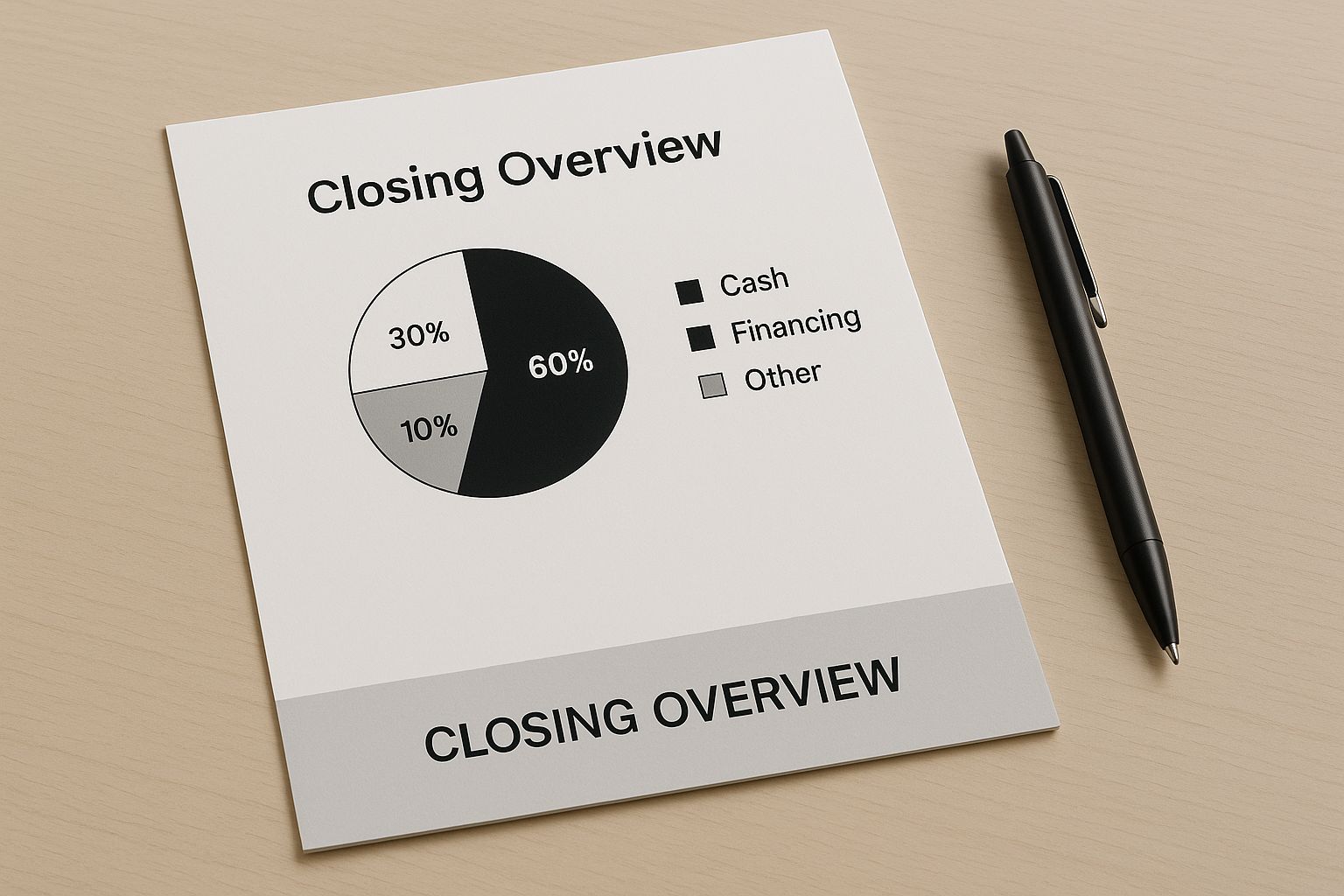
The documents you see at the closing table are where all these numbers become official. It’s the final step where both the commission you owe your agent and the various closing costs are paid out from the proceeds.
So, what’s the real difference? Realtor fees, or commissions, are your payment to the real estate agents who handled the transaction. This is almost always the biggest single cost for a seller, typically running between 5% to 6% of the home’s sale price in the Dallas market.
In contrast, closing costs are a bundle of smaller, third-party charges required to finalize the sale. These include things like:
- Title insurance and escrow fees
- County recording fees to update public records
- Prorated property taxes
- Attorney fees (if applicable)
These administrative charges are much lower, usually adding up to about 1% to 3% of the sale price in Dallas.
Realtor Fees vs Closing Costs A Dallas Snapshot
To make it crystal clear, let’s look at a side-by-side comparison of these two distinct expense categories in a typical Dallas home sale.
| Expense Category | Typical Payer (Dallas) | How It’s Calculated | Is It a Closing Cost? |
|---|---|---|---|
| Realtor Fees | Seller | Percentage of the final sale price (e.g., 5-6%) | No |
| Closing Costs | Both Buyer & Seller | Varies by service (flat fees, percentages, etc.) | Yes |
Understanding this fundamental separation from the start helps you accurately budget for your Dallas sale and gives you a much clearer picture of the net proceeds you’ll walk away with.
So, What Exactly Are Closing Costs in Dallas?
When you sell your home, the realtor commission is for the service of marketing and selling your property. That part is pretty straightforward. But then there are “closing costs,” and this is where things can get a little fuzzy for sellers in Dallas.
Think of closing costs as the administrative and legal fees required to officially pass the torch of ownership. They aren’t for finding a buyer or negotiating the deal; they’re the nuts and bolts of finalizing the sale and making sure everything is legal, official, and properly recorded in Dallas County. These are third-party charges that make the transaction happen.
A Breakdown of Common Dallas Seller Closing Costs
While every sale has its own unique details, there are a handful of common costs that nearly every Dallas-area seller will see on their settlement statement. These aren’t just random fees; each one serves a vital purpose in getting the deal across the finish line.
Here’s a look at what you can typically expect to pay in Dallas:
- Owner’s Title Insurance Policy: In Texas, it’s customary for the seller to purchase this one-time policy for the new owner. It’s a crucial protection that shields the buyer from any surprise claims against the property’s title down the road.
- Escrow Fees: You’re paying the title company (the neutral third party) to manage the final stages of the transaction. They hold the funds, prepare the paperwork, and make sure every ‘i’ is dotted and ‘t’ is crossed before money and keys change hands.
- County Recording Fees: This is a small but essential fee paid to Dallas or Collin County. It’s the cost to officially record the new deed in the public record, which is what makes the transfer of ownership legally binding.
- Prorated Property Taxes: You’re on the hook for property taxes only for the days you owned the home that year. At closing, your share is calculated and credited to the buyer, who will then pay the full tax bill when it comes due.
In the Dallas-Fort Worth area, seller closing costs usually fall somewhere between 1% and 3% of the home’s sale price (not including realtor fees).
It’s also helpful to remember the buyer has their own set of closing costs, many of which are tied to their mortgage. Using a Mortgage Calculator can give you a peek into their side of the financial equation and shows just how different their lender-related fees are from an agent’s commission.
Understanding the Realtor Commission Structure
Alright, let’s talk about what’s usually the biggest line item for any Dallas seller: the realtor commission. This isn’t just some random fee tacked on at the end. It’s the payment for the professional expertise, marketing muscle, and tough negotiation skills your agent brings to the table, and it’s almost always calculated as a percentage of your home’s final sale price.
Think of it as a success-based partnership. Your agent puts their own time and money on the line to sell your property—whether it’s staging a sprawling Preston Hollow estate or crafting the perfect marketing for a sleek Uptown condo. The commission only gets paid when the deal is done and the keys are handed over, which keeps their goals perfectly aligned with yours: getting the best possible price for your Dallas home.
The Traditional Commission Split
So how does that commission get divided? In a standard Dallas real estate deal, the total commission is shared between the two main professionals who made the sale happen.
This structure is set up to make sure both sides are compensated for their work in bringing a buyer and seller together. The two parties are:
- The Listing Agent: This is your agent, the one representing your best interests in Dallas.
- The Buyer’s Agent: This is the agent who brings the person who ultimately buys your home.
Traditionally, the seller covers the entire commission, which is then split between the two agents’ brokerages—often right down the middle, 50/50. For a deeper dive into the specifics of this arrangement, this article on who pays realtor fees in Texas is a great local resource. This model of cooperative compensation is what motivates buyer’s agents to show your Dallas property to their pool of qualified clients.
The commission isn’t just a fee—it’s your payment for a comprehensive service package. This includes expert pricing strategy, professional photography, extensive marketing across multiple platforms, skillful negotiation of offers, and management of the complex closing process.
It’s worth noting, however, that the real estate world is seeing some significant shifts around commissions. These changes are bringing more transparency to the process and giving Dallas sellers more room to negotiate this key closing cost. That makes it more important than ever to understand exactly how it all works before you put your home on the market in Dallas.
Who Pays for What at the Closing Table
When you get to the closing table for a Dallas real estate deal, the settlement statement can look like a foreign language. But once you know who typically pays for what, it all starts to make sense. It really boils down to a standard division of costs between the buyer and the seller.
The biggest ticket item, by far, is the realtor commission. This is traditionally paid by the seller in Dallas. That single payment is what covers the hard work of both your listing agent and the agent who brought the buyer to the table. The title company handles this for you by deducting it straight from your sale proceeds at closing, so it’s not an out-of-pocket expense you need to worry about beforehand.
A Typical Dallas Cost Breakdown
After the commission, there’s a pretty clear line between the rest of the buyer’s and seller’s closing costs. While almost anything in real estate can be negotiated, the standard way of doing things in Dallas County is fairly consistent.
What Sellers Usually Pay For in Dallas:
- Owner’s Title Policy: This is a one-time insurance premium that protects the new owner from any future claims against the property’s title.
- HOA Transfer Fees: If your home is in a homeowners’ association, this fee covers the cost of transferring all the necessary documents.
- Prorated Property Taxes: You’ll pay your share of the annual property taxes, calculated right up to the day of closing.
What Buyers Usually Pay For in Dallas:
- Lender Fees: These are all the charges associated with getting their mortgage, like origination and underwriting fees.
- Appraisal and Inspection Fees: The cost to have a professional assess the home’s market value and its physical condition.
- Lender’s Title Policy: This is another title insurance policy, but this one is required by the mortgage company to protect their investment.
This structure is pretty standard across Texas, but it’s important to know that customs can vary a lot from state to state. For example, in Washington State, a seller’s closing costs might average around 3.62% of the home’s price, covering things like excise tax and title fees—and that’s before the agent commission is taken out. To get a better feel for how these regional differences play out, you can explore detailed market data on ListwithClever.com.
Imagine you’re looking at a simplified net sheet for a home sale in Bishop Arts. You have the final sale price at the top. From that, two main categories are subtracted: first, the total realtor commission, and then a separate, much smaller list of seller closing costs. That visual split makes it clear that commissions and closing costs are two entirely different buckets of expenses.
How to Accurately Budget for Your Dallas Home Sale

Let’s move past the abstract ideas and get down to the numbers. Knowing what to expect financially is the key to a confident and stress-free home sale in Dallas. When you’re trying to figure out your budget, it’s best to think about realtor commissions and seller closing costs as two separate buckets. They’re distinct expenses, and both will impact the final check you walk away with.
A great rule of thumb for any Dallas seller is to set aside 5-6% of the sale price for realtor commissions. On top of that, plan for another 1-2% to cover your share of the closing costs. This gives you a solid financial picture before your Dallas home even hits the market.
Sample Seller Net Proceeds for a Dallas Home
To see how this works in the real world, let’s take a look at an example. We’ll use a home sold at the median Dallas price, which is currently around $420,000. Seeing the math helps make it all feel a lot more concrete.
| Item | Example Calculation | Estimated Cost |
|---|---|---|
| Sale Price | $420,000 | |
| Realtor Commission | $420,000 x 5.5% | -$23,100 |
| Seller Closing Costs | $420,000 x 1.5% | -$6,300 |
| Estimated Net Proceeds | $390,600 |
As you can see, both major costs are simply subtracted from the final sale price. Of course, your actual numbers will vary based on your specific deal and any terms you negotiate along the way.
Key Negotiation Points in the Dallas Market
Protecting your bottom line often comes down to smart negotiation. There are really two main areas where you have some leverage: the commission rate and any buyer concessions. Don’t be shy about discussing the commission with your agent right from the start.
Also, if a buyer asks you to cover some of their closing costs, you need to weigh that request carefully. Consider the strength of their offer and what the Dallas market is doing at that moment. Successfully navigating these conversations can save you thousands of dollars. As you plan, don’t forget to budget for what comes next; for a deeper dive into local costs, take a look at this comprehensive 2024 guide to living expenses in Dallas.
Got Questions About Dallas Closing Costs? We’ve Got Answers
Even when you think you have all the numbers figured out, a few questions always seem to pop up about closing costs. That’s completely normal. Understanding these last-minute details is what gives you confidence when you finally sit down at the closing table in Dallas.
Let’s clear up some of the most common points of confusion for Dallas home sellers.
Can I Negotiate Realtor Commission Rates in Dallas?
Yes, you absolutely can. Here in Texas, there’s no law or regulation that sets realtor commission rates—they are 100% negotiable. In a competitive market like Dallas, it’s not just possible but expected for sellers to discuss the commission with an agent before signing anything.
This has always been the case, but recent industry shifts have put even more of a spotlight on the seller’s ability to negotiate the entire commission structure. Make sure this is one of the first conversations you have with any potential agent.
Are Property Taxes Part of My Closing Costs?
They sure are. Prorated property taxes are a standard closing cost you’ll see on your settlement statement. Essentially, you’re responsible for paying the taxes for every day you owned the home during the year of the sale.
Don’t worry about the math—the title company calculates this down to the exact day. At closing, that amount is credited to the buyer, who will then be responsible for paying the full tax bill when it’s due. This way, everyone only pays their fair share.
It’s a common misconception that since realtor fees are not closing costs, other major expenses might also be separate. However, prorated property taxes, title policy fees, and HOA transfer fees are all legitimate Dallas-area closing costs you should anticipate.
What if My Dallas Home Doesn’t Sell? Do I Still Owe a Commission?
Typically, no. The vast majority of listing agreements in Dallas are set up on a contingency basis. This simply means the commission is only earned by the agent—and paid by you—once the sale of your home successfully closes.
If your listing agreement expires and your property hasn’t sold, you generally don’t owe the commission. Of course, you should always review your specific listing agreement with an agent to confirm these terms before you sign.
Why Can’t I Shop Around for Cheaper Title Insurance in Texas?
This is one of those quirks that’s unique to Texas real estate. Title insurance rates are regulated and set by the Texas Department of Insurance (TDI).
Because of this state-level oversight, the premium costs are standardized across the board. No title company in Dallas—or anywhere in Texas—can offer you a lower price. While you can’t shop for a better rate, you can and should choose a title company based on its reputation for great service, communication, and efficiency.
Navigating the complexities of a Dallas real estate transaction requires an expert guide. At Dustin Pitts REALTOR Dallas Real Estate Agent, we provide the clarity and expertise you need to maximize your sale. To get a personalized strategy for your home, visit us online.