
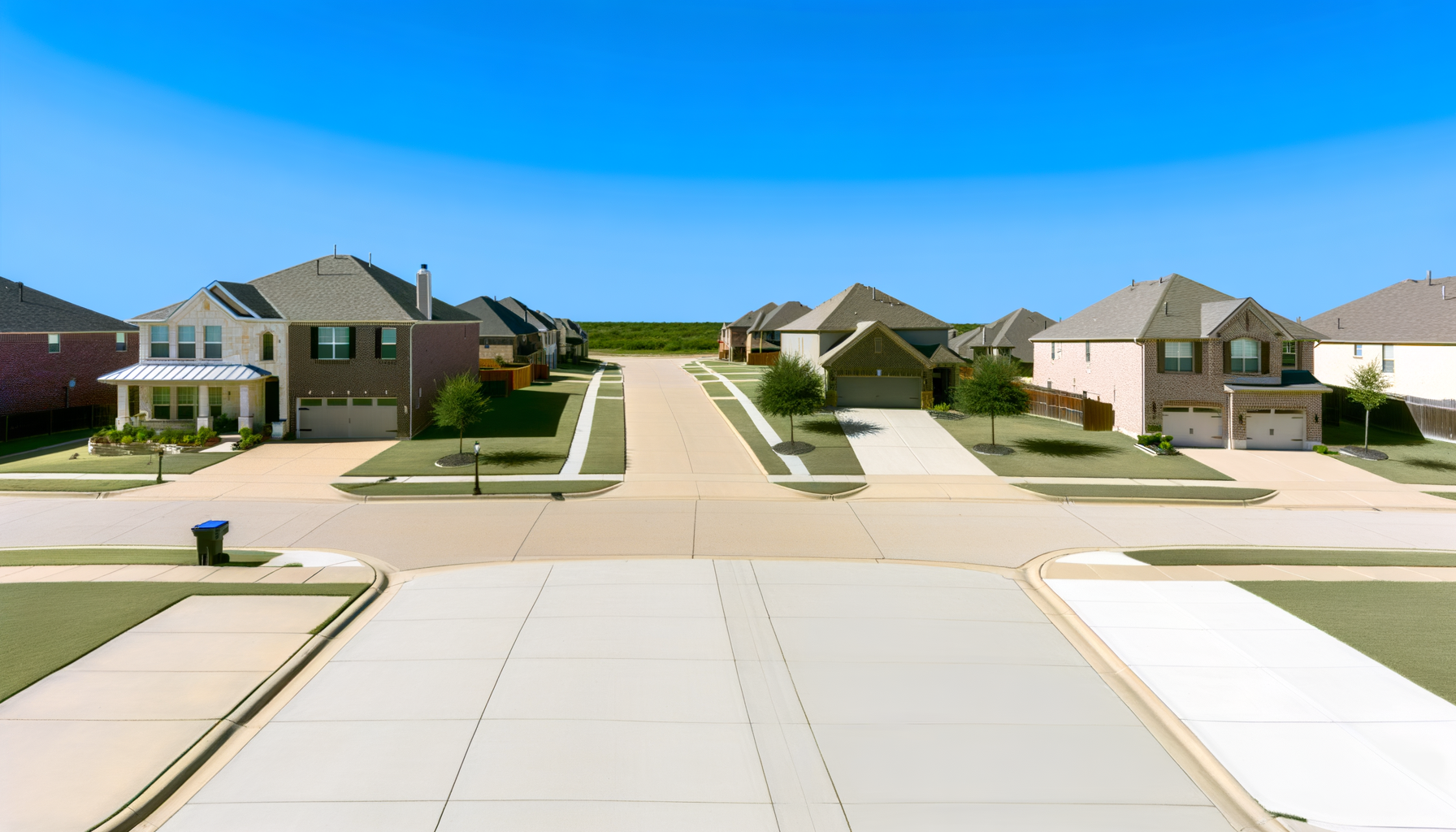
Allen and McKinney are two north Dallas suburbs that regularly come up on buyers’ shortlists. Both are established cities with strong local identities, solid infrastructure, and active housing markets. Yet how you feel about each can change once you drive the neighborhoods, look at home patterns, and think about daily routines. This guide breaks down how these two cities compare so you can decide which might fit your goals more effectively.

Having worked with many clients searching in Allen and McKinney, I’ve noticed that most buyers know the names but not the subtle differences that matter once you’re under contract. Geography, lot sizes, and city layout all influence how each one fits different lifestyles and investment priorities.
Overview of Each City
Allen sits just south of McKinney along US-75, with a largely built-out city plan and established subdivisions that connect easily to major retail corridors. Its footprint feels more compact, and neighborhoods blend into one another with quick access to arterial roads and dining areas. You’ll find a balance between newer master-planned developments and mature streets with shaded lots, which appeals to buyers seeking move-in-ready properties with stable surroundings.
McKinney extends farther north and covers significantly more land area, resulting in wider variation from neighborhood to neighborhood. Some parts close to the historic downtown maintain older homes with character; other sections toward the north and west feature newer communities with large community spaces and newer construction. The distance between pockets of McKinney can be notable, so location inside the city plays a big role in day-to-day convenience.
In short, Allen feels cohesive and easy to navigate, while McKinney provides wider contrasts and more open land still being developed. That difference in physical layout tends to shape how each market behaves and what types of homes dominate listings.
Housing Differences
Housing inventory in Allen tends to lean toward traditional single-family properties built in the late 1990s through early 2010s. Many homes fall within established HOA communities with predictable design standards and community maintenance. Remodels and updates are common, but rarely to the extent you see in older cities. Investors often see Allen as a relatively stable resale market because turnover rates stay consistent year over year.
McKinney’s housing stock spans a broader timeline. Closer to the city core, you’ll see mid-century homes and compact lots. Farther out, developments offer newer construction with larger footprints and more builder variety. Buyers drawn to topographic changes—rolling terrain and pockets of greenbelt—are more likely to find those features in McKinney’s northern area. That mix of age and size makes McKinney’s MLS search results more diverse, but also means it takes longer to compare apples to apples when evaluating value and condition.
Allen, being more centralized, offers a narrower range of pricing and housing styles but often delivers reliability in resale performance. McKinney rewards those who are patient and willing to navigate a wider range of property ages and neighborhood characteristics to find standout opportunities.
Cost of Living and Ownership Considerations
While both cities share proximity to the US-75 corridor and large employment centers, ownership costs vary based on property age, tax rates, and HOA structures. Allen’s neighborhoods tend to have stable assessments and fewer large-lot properties, which can keep overall maintenance more predictable. Utility costs can also be moderately lower in some of Allen’s established subdivisions because many homes were built before energy code upgrades changed materials and window designs, leading to manageable square footage and efficient layouts.
McKinney’s more recent subdivisions may carry higher tax assessments due to newer infrastructure and amenity funding through MUDs or PIDs. Maintenance costs depend heavily on the builder and development type—newer homes may need less immediate updating but can have larger footprints, meaning higher long-term expenses for landscaping and utilities. Those differences matter if you’re comparing two homes with similar list prices but different ongoing ownership profiles.
For buyers weighing both cities purely on budget, Allen often provides predictability in holding costs, while McKinney offers broader possibilities if you’re flexible with lot size, construction year, and neighborhood type.
Lifestyle, Convenience, and Daily Experience
When clients tour both cities, one of the first differences they notice is scale. Allen’s retail and entertainment areas concentrate near major intersections, allowing for short trips around town. That can be convenient if you want a straightforward commute pattern without crossing multiple expressways to reach dining or grocery options. Traffic within Allen is relatively linear—most routes run north-south or east-west, minimizing surprises in drive times.
McKinney’s everyday rhythm depends more on where within the city you live. Southern McKinney connects easily to Allen and Plano via 121 or 75, while northern areas feel more suburban and self-contained. Residents appreciate the established downtown district for small retail and restaurants, while newer communities farther out rely more on arterial shopping centers. These differences often determine where residents spend weekends or choose recreation spots—all part of the “fit” you can only gauge by spending time in each area.
Public spaces and local events vary in style as well. Allen’s city planning placed emphasis on centralized athletic and recreation complexes, which keeps its weekend activity condensed. McKinney’s larger footprint means events and community gatherings are more dispersed, giving it a different sense of rhythm. Neither setup is better; it just influences what daily convenience looks like in practice.
Which One Is Better for Different Buyers?
If you prefer predictability and a streamlined city layout, Allen might feel more manageable. Buyers who value mature developments, consistent property values, and proximity to established retail hubs usually prioritize Allen. Its compact geography works well for those wanting quick east-west connections or manageable neighborhood sizes.
McKinney, on the other hand, draws buyers looking for more variety in home ages and designs. If you’re willing to explore newer subdivisions or unique properties near greenbelt areas, McKinney’s northern reach may be appealing. The tradeoff can be longer commute times within the city and more need to research HOA and tax variations before closing.
Investors typically find Allen’s market steadier year to year, while McKinney offers more room for appreciation in emerging sections as development continues. Deciding between them depends on how you weigh stability versus growth opportunity.
Final Thoughts
Choosing between Allen and McKinney comes down to how you prioritize location convenience, housing style, and ownership horizon. Both cities have proven stability and strong market fundamentals, but they feel different on the ground. Touring each with a clear sense of daily routines can make your decision much clearer than comparing listings online.
If you’re early in your search, starting with a few open houses in Allen can help you benchmark what’s typical in terms of home size and layout before branching north into McKinney options.
About Dustin Pitts | Allen and McKinney Real Estate Guidance
As a local agent, I help clients at every stage of comparing buying in Allen or McKinney. My approach focuses on on-the-ground context—how neighborhoods live day to day, which factors influence resale performance, and what details often get overlooked during the decision phase.
If you’re considering both Allen and McKinney, I can help you evaluate neighborhoods, property conditions, and timing strategy to match your priorities before entering the market.
Ready to refine your search and decide which direction fits you best? Contact me for clear, data-based guidance on buying or selling in Allen and McKinney and start narrowing down the right area with confidence.