
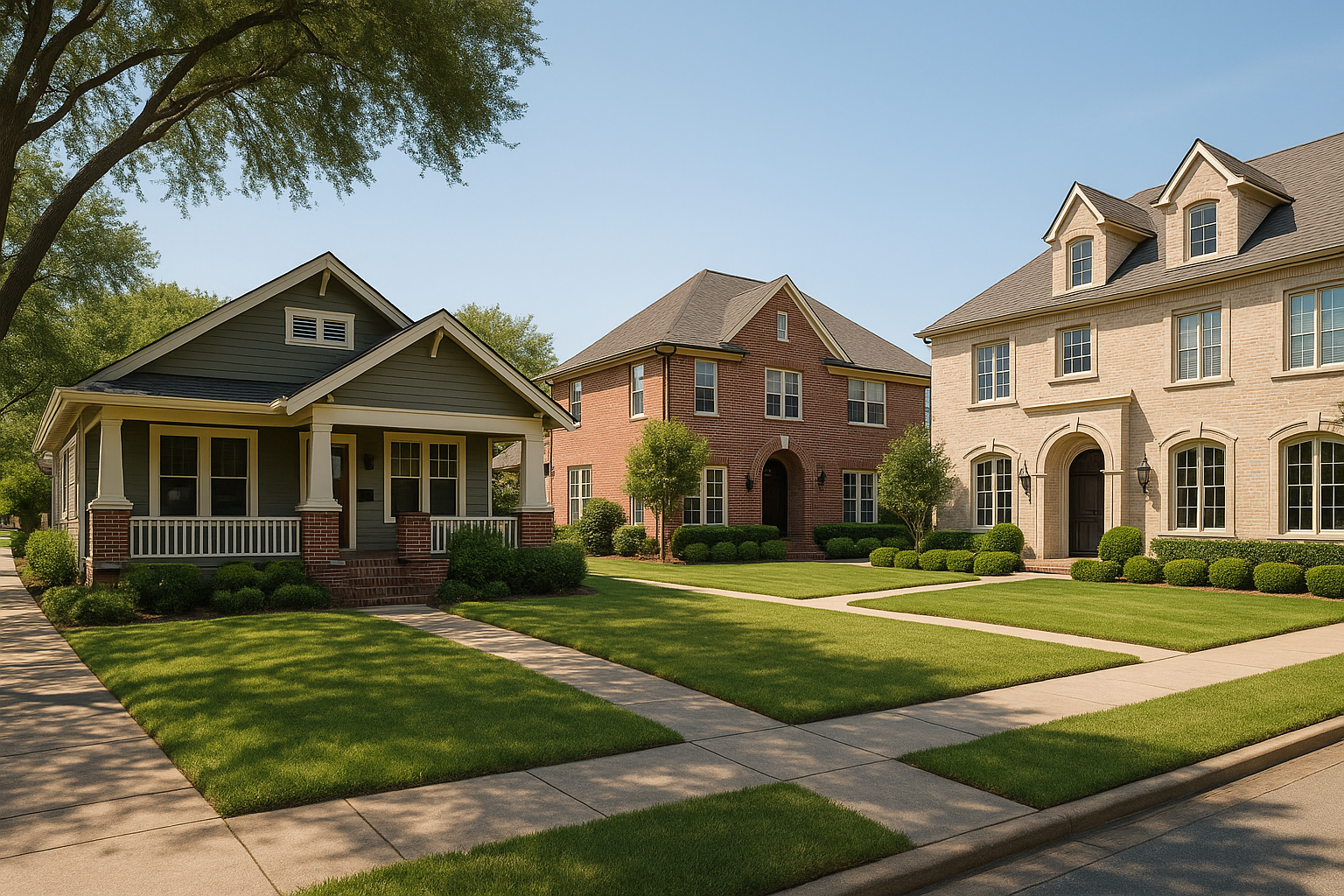
Dallas is a sprawling city with a mix of established neighborhoods and newer residential pockets, each offering distinct housing and lifestyle tradeoffs. For buyers evaluating where to put down roots, understanding how neighborhoods differ by architecture, lot size, and proximity to major routes can make or break a decision. This guide breaks down some of the most appealing residential areas within Dallas—from timeless in-town streets to more private enclaves set within reach of everything the city provides.

Many buyers focus their search by looking at location patterns—North Dallas versus East Dallas, Oak Cliff versus Lakewood—and how those areas align with daily routines. Whether you want a quick drive into Uptown or a quieter residential layout, knowing how each area feels on the ground is key. Dallas is large enough that two neighborhoods just a few miles apart can deliver very different living experiences and property types.
What to Know About Dallas
The Dallas market covers a vast area that blends urban, suburban, and transitional neighborhoods. Broadly, the northern portions of the city, including Preston Hollow and North Dallas, feature larger homes and more spacious lots, while East Dallas tends to offer early to mid-century homes with character and mature surroundings. West and South Dallas have seen a wave of renovation and redevelopment that has reshaped parts of neighborhoods like Kessler Park and North Oak Cliff.
Buyers in Dallas usually weigh tradeoffs like commute access, style of home, and renovation potential. Older areas appeal to those drawn to tree-lined streets and established architecture, while newer developments suit buyers looking for move-in-ready builds with modern layouts. The city’s highway network allows for relatively quick cross-city movement, but traffic patterns can influence where buyers decide to focus their search.
Neighborhoods to Consider in Dallas
Preston Hollow Village
Located in North Dallas, this area combines proximity to major employment corridors with a suburban feel. Homes here often sit on larger lots with mature landscaping, and the housing mix includes both original mid-century properties and newer luxury construction. Buyers looking at Preston Hollow Village typically value its immediate access to central Dallas while avoiding the denser condo-heavy zones closer to downtown.
The neighborhood attracts those who want privacy but also easy access to retail, dining, and major routes like US-75 and the Dallas North Tollway. It is worth noting that homes here often come with more extensive upkeep due to their size and landscaping—an important factor to plan for when budgeting for maintenance.
Kessler Park
Sitting west of downtown, Kessler Park is known for its hilly terrain and large trees—features not commonly found in most Dallas neighborhoods. Buyers are drawn to its distinctive early to mid-20th century architecture including Tudor, Craftsman, and Colonial styles. It’s one of the few Dallas neighborhoods where elevation changes give homes a sense of separation and privacy.
This part of North Oak Cliff appeals to those who want a residential setting that still provides quick access to central Dallas. The downside can be less uniformity—homes differ in size and updates vary widely between streets—so careful property comparison is essential. The area’s established homes often require ongoing maintenance, but the architectural diversity is part of its enduring appeal.
Lake Highlands
Lake Highlands in Northeast Dallas includes neighborhoods developed from the 1960s through the 1980s, with a mix of traditional ranch-style and updated modern designs. Homes often sit on slightly larger lots than those east of Central Expressway, and many buyers appreciate its strong sense of community identity within the Dallas city limits.
Because it stretches across such a wide area, price points and renovation levels vary block to block. Some sections have been fully updated, while others present opportunities for buyers eager to personalize older properties. Those drawn to Lake Highlands often prioritize convenience to both major roadways and outdoor recreation areas to the north and east.
Vickery Place
Tucked between Lower Greenville and the Knox-Henderson corridor, Vickery Place offers early 20th-century homes in one of Dallas’s most walkable eastside areas. The classic Craftsman bungalows and Prairie-style homes give this neighborhood architectural consistency, and many of the renovations retain historic proportions while integrating modern finishes.
Buyers looking here should expect a tighter lot layout and an active neighborhood association atmosphere. Its location makes it appealing to those who want quick reach to dining and retail hotspots without living directly in a commercial corridor. Parking can be limited on some blocks, which is worth considering for multi-car households.
Lakewood Heights
Positioned near the Lakewood and M Streets areas, Lakewood Heights provides a mix of renovated cottages, new construction, and luxury builds. Streets are walkable, and most homes are close to the major thoroughfares leading toward downtown. Buyers appreciate the blend of old and new architecture here, where a 1940s cottage can sit next to a recently completed custom home.
Lakewood Heights suits those wanting proximity to central Dallas without giving up a residential setting. The ongoing redevelopment has raised property values over time, so buyers looking here should focus on comparing build quality and long-term maintenance needs among older and newer homes on the same block.
How to Choose the Right Area in Dallas
Each Dallas neighborhood carries distinct strengths and tradeoffs. In-town buyers tend to weigh walkability and access to job centers more heavily, steering toward areas like East Dallas or Oak Cliff. Those wanting more land or space between homes look north or farther into the Preston Hollow area. Renovation tolerance also plays a major role—many older Dallas houses have been updated multiple times, and finding one with sound structure can take patience.
Commute routes are another deciding factor. Even within Dallas city limits, the drive time to Uptown or Downtown can vary greatly based on proximity to highways or arterial routes. Buyers relying on consistent freeway access may find North Dallas or Lake Highlands more predictable during peak times. On the other hand, Kessler Park and Vickery Place draw buyers willing to trade longer commutes for unique architecture and neighborhood character.
Final Thoughts on Dallas
Deciding where to buy in Dallas ultimately hinges on how you want to balance convenience, housing style, and long-term value. Touring in multiple directions from downtown helps buyers compare how each area feels—North Dallas for scale, East Dallas for architecture, and Oak Cliff for distinctive topography. The key is to align location with how you actually live day to day, not just the curb appeal that stands out initially.
About Dustin Pitts | Dallas Real Estate Agent
As a Dallas real estate agent helping buyers and sellers in Dallas, Dustin Pitts has worked across established neighborhoods and emerging in-fill corridors. His approach emphasizes matching properties with how clients use their space—an essential skill in a city where each part of town has its own rhythm, lot sizes, and architectural trends.
Dustin’s experience covers a wide range of Dallas properties, from updated craftsman homes in East Dallas to expansive estates in North Dallas. His goal is to help clients see the full picture—including condition, resale potential, and neighborhood context—before they commit to an offer.
If you are considering buying or selling in the Dallas area, reach out for personalized advice and begin the process with expert local insight through real estate help in Dallas.


