
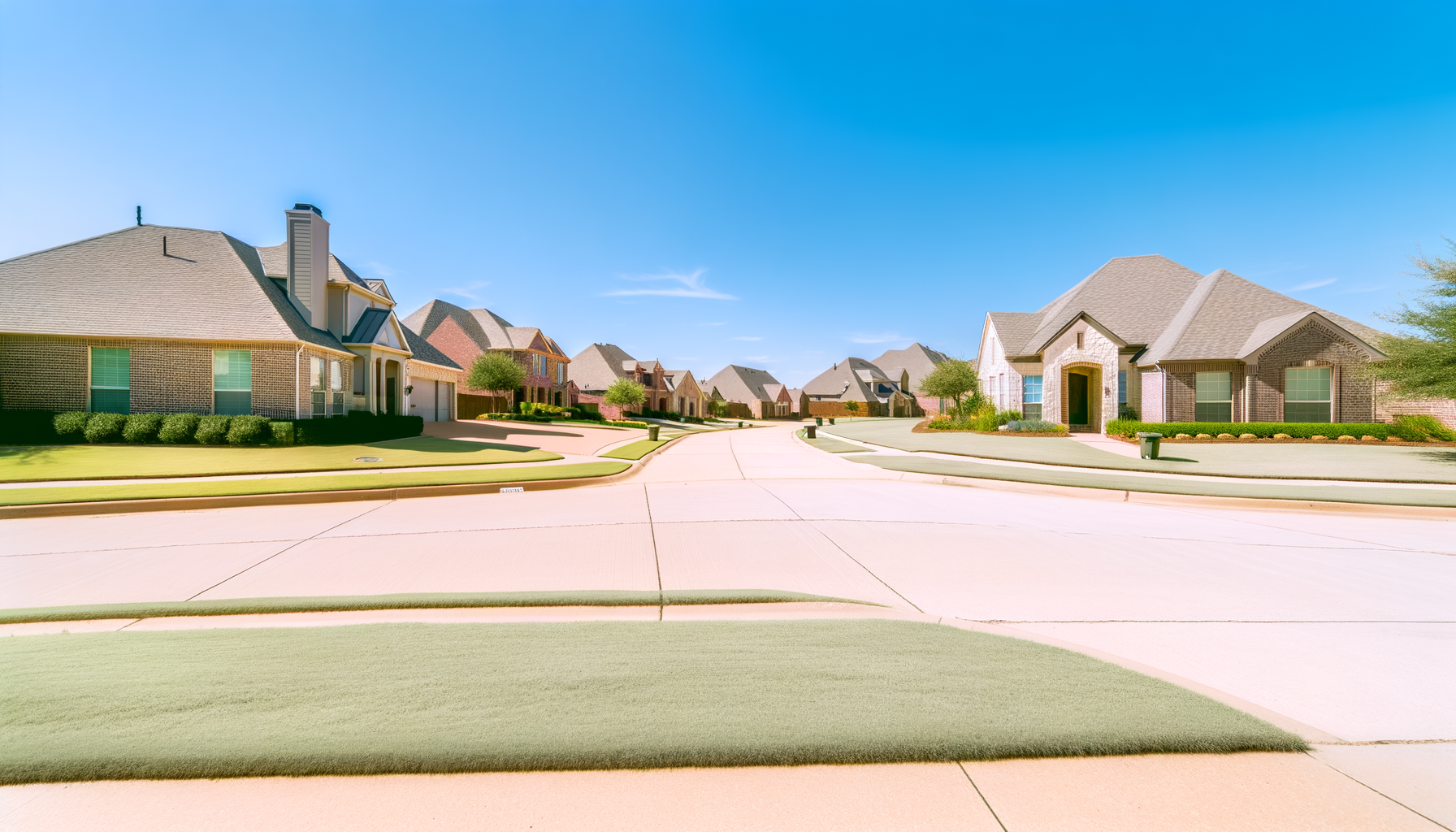
Quality of life in McKinney, Texas has become a defining factor for many North Texas buyers looking to balance space, convenience, and community character. As one of the northern anchors of the Dallas-Fort Worth suburbs, McKinney offers a distinct mix of historic preservation, newer residential developments, and practical suburban living. Buyers often weigh housing design, accessibility, and daily lifestyle when considering McKinney as a long-term home base.

Understanding McKinney’s Appeal
McKinney draws attention because it blends modern master-planned neighborhoods with a long-established town center. The city’s older core—anchored by its preserved downtown area—contrasts sharply with newer communities built over the past decade. Many buyers appreciate how McKinney keeps a cohesive small-city feel while still offering the amenities found in a larger suburb. Its location north of Highway 121 and east of U.S. 75 means easy access to major corridors while maintaining slightly lower density compared to inner-suburban areas like Plano or Allen.
Those considering a move to McKinney should understand it’s not a cookie-cutter suburb; each area has developed at a different pace. The west side features large-scale planned communities, while the east retains more acreage-style living and older homes. Reviewing the McKinney neighborhoods guide is often the best way to narrow down which sections align with specific lifestyle priorities.
Housing Patterns and Neighborhood Atmosphere
The city’s newer developments emphasize design consistency, community planning, and easy access to daily conveniences. For instance, Tucker Hill is known for its distinct architectural style and pedestrian-focused layout, appealing to those who value front porches and community interaction spaces. The homes here are typically organized along inviting streetscapes that encourage a strong neighborhood connection, but buyers should be aware these design-driven layouts can mean higher HOA fees and tighter architectural oversight.
In contrast, Trinity Falls sits on the northern edge of McKinney and provides a different tone altogether. It’s a large-scale, newer master-planned community that integrates natural surroundings into its design. The emphasis here is on larger land areas and modern construction with convenient access to recreational features. Homebuyers drawn to newer builds and active associations often gravitate here. The tradeoff, however, is distance from McKinney’s main commercial districts, which can lengthen errands or social trips.
Another example is Auburn Hills, which lies closer to the center-west portion of the city. It’s positioned within a corridor that has seen steady growth from 2015 onward, attracting buyers seeking newer construction but wanting less isolation from McKinney’s established infrastructure. Its mix of builder styles creates more variety in façade design compared with some rigidly planned developments. Buyers here often appreciate easy access to Highway 380 but should factor in the ongoing expansion work along that corridor when evaluating commute reliability.
Local Convenience and Lifestyle Factors
One of McKinney’s strongest quality-of-life advantages is its layout. Major roads like 75, 380, and 121 allow flexible access depending on where you work or where your social network is located. The city’s central corridor provides a mix of shopping, medical, and service businesses, meaning many residents can handle daily tasks without leaving McKinney. Compared to Frisco’s dense retail zones or Allen’s compact design, McKinney delivers a broader spacing of amenities, reducing traffic build-up in most areas during non-peak hours.
Outdoor enjoyment also plays into daily lifestyle here. McKinney maintains an extensive park system and a respected trail network that connects many neighborhoods to public spaces. Buyers who prioritize walkability or recreational activity can identify communities that directly tie into these green routes. That said, walkability varies widely; older central areas feature narrower blocks, whereas western community layouts remain more vehicle-focused.
The city’s downtown core acts as a cultural and social touchpoint, offering year-round public events and local businesses. While some buyers find proximity to downtown activity appealing, others choose newer subdivisions farther west for quieter surroundings and more predictable development patterns. It’s worth discussing lifestyle priorities early in the home search, as convenience and privacy often sit at opposite ends of McKinney’s residential spectrum.
Comparing East and West McKinney
East McKinney has historical depth; many homes date back several decades, and the area continues to see careful renovation projects. Buyers drawn to architectural character and mature landscaping often explore these streets. However, modernization costs can be higher, and utility efficiency may not match newer builds.
West McKinney represents the modern growth wave, anchored by subdivisions like Auburn Hills and others along the 380 corridor. Advantages here include newer infrastructure and consistent neighborhood maintenance. The downside can be higher HOA obligations or stricter building styles. These zones cater to buyers who prefer cohesive neighborhood design and predictable long-term property conditions.
Looking at north McKinney, larger communities such as Trinity Falls have become focal points for future city expansion. Buyers here often consider the long-term growth trajectory of the 75 corridor past Wilmeth and Laud Howell. Owning in this region can offer more space and future equity potential, though current construction projects may bring noise or commute disruption during build-out phases.
Tradeoffs to Consider Before Buying
- Commute and access: McKinney’s distance from central Dallas or the tollway corridor increases drive times. Buyers working in Plano or Richardson often prioritize proximity to Highway 75 exits.
- Development timing: Rapid growth means some neighborhoods remain in active construction phases. Streets and amenities evolve, and resale expectations differ for homes bought mid-buildout versus post-completion.
- Maintenance and HOA oversight: Planned communities enforce strict architectural standards that preserve property values but can limit exterior customization. Older sections of town give more flexibility at the cost of uniform curb appeal.
- Market cycles: Resale velocity varies. Homes closer to commercial cores often trade faster, while northern and far-west homes may depend on builder activity and new infrastructure support.
Final Thoughts
McKinney caters to buyers seeking more elbow room and community cohesion without detaching from the larger Dallas market. The city’s mix of historic preservation, planned neighborhoods, and expanding amenities gives each buyer type room to prioritize what matters—design, lot size, proximity, or future investment outlook. A clear sense of daily habits helps narrow the search between urban-core energy near downtown and the structured community rhythm found in Tucker Hill or Auburn Hills. Every decision here carries tradeoffs, but clarity on priorities often makes McKinney comparisons more straightforward than in faster-paced neighboring suburbs.
About Dustin Pitts | McKinney Real Estate Agent
As a local Realtor who has worked across Collin County for years, Dustin Pitts understands the practical details behind each neighborhood boundary and market shift. If you’re exploring homes or listings and need experienced real estate help in McKinney, Dustin provides data-driven guidance on pricing, resale potential, and community compatibility so you can buy or sell with confidence.
Dustin focuses on helping clients match their budget and long-term plans to the most suitable parts of McKinney—whether that’s new construction north of 380 or character properties near downtown. His approach emphasizes clarity and negotiation skill rather than sales hype, giving clients an informed advantage in a shifting market.
Ready to discuss your next move? Connect with Dustin for direct insight and personalized McKinney real estate guidance to start planning your transition with confidence.


