
When buyers start comparing Weston and Celina, they’re usually weighing two appealing options north of Dallas that share some similarities but deliver very different day-to-day experiences. Both cities have been drawing attention from people who want more space and a slower pace than central Collin County suburbs, but how that lifestyle plays out depends on what kind of home, commute, and community setup you’re looking for.

In the field, I’ve seen clients gravitate toward Weston for its rural character and privacy, while others lean toward Celina for its growing retail and housing mix. The right choice often comes down to how much development you’re comfortable with and how you balance convenience against open space. Below, we’ll look at the differences that actually impact buyers and sellers deciding between Weston and Celina.
Overview of Each City
Weston sits northwest of McKinney and remains one of the smaller cities in Collin County. What makes Weston stand out is how it has held onto its country character even as the growth corridor pushes north. There’s still plenty of acreage, quiet roads, and open terrain. Buyers here tend to value privacy and space over access to commercial centers.
Celina, on the other hand, has gone through dramatic transformation in recent years. It’s now part of the active development zone just north of Prosper and Frisco. Whereas Weston feels separated from major suburban sprawl, Celina is right in the path of it. New subdivisions, mixed-use projects, and infrastructure expansion are reshaping what was once primarily farmland.
Choosing between the two often comes down to the pace of change you want around you. Weston remains slow and deliberate, while Celina is still adding rooftops and retail at a steady pace. Neither is “better” by default — but they appeal to completely different buying mindsets.
Housing Differences
Weston’s housing landscape is defined by large parcels, often with custom or semi-custom homes that sit on several acres. Many properties have long driveways, detached workshops or barns, and minimal HOA regulation. The housing stock feels individualized, and buyers who want separation between neighbors find that consistently here.
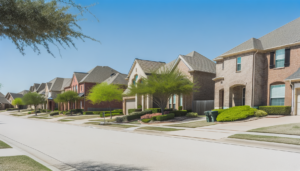
In Celina, planned communities dominate the conversation. Streets are laid out with consistency, common-area amenities, and neighborhood associations that maintain a certain aesthetic. Homebuilders are active, so new-construction opportunities are more readily available if you prefer modern layouts or lower maintenance. You’ll find more uniform subdivision options compared to Weston’s dispersed lot pattern.
The tradeoff is predictability versus independence. Buying in Celina means embracing a managed suburban environment, while Weston ownership feels more self-reliant. That distinction matters for long-term resale as well — Celina’s newer developments create a clearer market baseline, while Weston properties tend to be more unique, which can make pricing less straightforward when it’s time to sell.
Cost of Living and Ownership Considerations
From an ownership perspective, the main cost differences typically come from land size and utilities. Weston homes often rely on private wells and septic systems, which reduces municipal costs but increases maintenance responsibility. Insurance premiums may also differ, especially for rural acreage or agricultural designations. Buyers drawn to space appreciate those tradeoffs, but it’s important to budget for additional upkeep.
Celina’s suburban setup means homes are more likely to have access to public utilities, community services, and standard residential insurance policies. HOA dues are common, but they cover shared amenities and landscaping. Property tax rates can vary, but the predictable nature of newer subdivisions makes cost forecasting easier.
When clients compare monthly expenses, Celina’s costs can be more consistent even if the parcels are smaller. In Weston, there’s often a learning curve tied to owning more land and maintaining private systems — not necessarily higher overall costs, but less standardization.
Lifestyle, Convenience, and Daily Experience
Life in Weston centers around quiet routines. You’re more likely to drive into nearby McKinney or Celina for restaurants, shopping, and services. The reward for that distance is peace and open space — it’s easy to find areas with minimal traffic and unobstructed views. Many residents enjoy the sense of separation and use that space for hobbies or small-scale agricultural projects.
Celina offers more immediate convenience. Daily errands can often be handled without leaving city limits. Local businesses continue to expand, and weekend events have become more common as the population grows. That said, traffic within newer subdivisions can pick up quickly, and as growth continues, the town’s identity is still evolving.
It’s also worth considering what kind of pace fits your lifestyle. Weston appeals to those who want to step away from dense development, while Celina suits buyers who appreciate the energy and new infrastructure of a fast-developing market. In both cases, the sense of community runs strong, but how you interact with neighbors differs due to layout — acreage living versus subdivision proximity.
Which One Is Better for Different Buyers?
For buyers prioritizing acreage, privacy, or custom construction, Weston typically checks more boxes. It’s also suited to anyone comfortable with hands-on property management and longer trips for retail or dining. The real estate market there doesn’t move with the same volume as Celina’s, so finding the right home can take patience — but when you do, it’s often a long-term choice.
Buyers focused on new construction, structured neighborhoods, and faster access to established suburbs tend to lean toward Celina. The consistency of development, range of builders, and proximity to Prosper and Frisco make it easier to find move-in-ready homes with modern finishes. Resale timing is also more predictable in the near term due to steady market activity.
Ultimately, it comes down to control versus convenience. Weston gives you space and independence, while Celina prioritizes connectivity and growth. If you can define what matters more for your lifestyle — elbow room or ease of access — the decision becomes much clearer.
Final Thoughts
Both Weston and Celina deliver distinct versions of North Texas living. Weston represents rural stability surrounded by increasing development, while Celina embodies that growth firsthand. Neither market is static, so buyers considering one should also keep an eye on how infrastructure and zoning evolve over the next decade. Whichever direction you decide, consulting a local expert who’s worked transactions in both towns can help clarify which truly fits your daily life and long-term goals.
About Dustin Pitts | Weston and Celina Real Estate Guidance
As a local Realtor who has represented clients across Collin County, I help buyers and sellers make confident decisions when comparing Weston and Celina. Understanding the differences in land use, development patterns, and property types is key to finding the right fit, and I provide personalized data on each community’s available listings and resale characteristics.
If you’re ready to evaluate your options or plan a move between Weston and Celina, reach out for tailored advice backed by real experience in both markets. Start with a conversation about your goals and let’s map out a strategy that makes sense for your next step — get started today with real estate support in Weston and Celina.